Follow Dave Linkedin
Email Dave Email
Human Resources
Jan 16, 2017

Irena Sandler: The Heroine You Never Heard Of

Sponsored Content provided by Dave Hoff - Chief Operating Officer and Executive VP of Leadership Development, EASI Consult

Have you ever heard of Irena Sandler?

She was a Catholic social worker who rescued 2,500 Jewish children in the Warsaw Ghetto from certain extinction during World War II. Her story was essentially unknown until the 1980s, when it was discovered by three Kansas high school students as part of a history project. Their efforts and Irena’s story was finally written in 2011 in a book by Jack Mayer called Life in a Jar. 

The title of the book came from a play the three Kansas students – all females - wrote about Irena Sandler’s efforts. Irena used jars to store the names of the 2,500 Jewish children she and her network saved by smuggling them out of the Warsaw Ghetto. Each child’s birth name and Jewish parents’ names were recorded on paper, along with their new Polish name and “adopted” family. The papers were sealed in jars and buried in the yard where Irena lived. 

The plan was that once the war was over, the jars would be retrieved and parents and children would be reunited. Irena and the birth parents knew that, for most, this would never happen, as the parents were shipped to Treblinka, a prison camp, where over 800,000 perished.

What drives someone like Irena to get involved in such a situation and make a difference? Part of it is nurture. Her father was a physician who died of typhus at an early age. He reached out to the sick, so much so that he often knowingly put himself in danger to help others. It was a drive that ultimately cost him his life. 

The book recounts pivotal bits of advice Irena’s father told her. He taught her that “people are the same - there are only good people and bad people.”   He said, “‘If you see someone drowning, you need to rescue them even if you can’t swim.’”  Irena said, “‘If I can’t swim, won’t we both drown?’” Her father replied, “‘You must do something.’”

Given her upbringing and actions during World War II, Irena displayed numerous leadership traits as she worked in the face of death every day. 

Many of these traits and skills are transferable to the business world, including:

  • A strong moral compass - The interaction with her father about always doing something influenced her behavior. She also spoke up when she saw wrongs committed. In one instance, as a result of doing so, she was suspended from university for three years.
  • Risk-taker - In 1932, she took a job as a social worker, helping people in need of food, money, shelter and clothing. She learned how the system worked and how to bend the rules to best assist those in need.
  • Uses her position to benefit others - She realized the people most in need were living in the Polish Ghetto. Daily, she legally   entered the ghetto but smuggled in food and money for the needy. When it became apparent that those in ghetto would never get out alive, Irena devised ways to get 2,500 children to “safety.”
  • Network-builder – With such a surreptitious mission, Irena had to possess the qualities necessary to bring on the right people. She had to know who to trust and who not to trust. Fake paperwork was created, funds were obtained and a variety of methods were used to get children out of the ghetto, including taking them through sewers, on ambulances and even placing sedated babies on wagons with corpses. The families taking these children ran the risk of being discovered, so Irena had to appeal to them in a way that they would acquiesce.
  • Courage under pressure - Each day she went into the ghetto, she did so knowing she might get caught. Eventually she was sent to Pawiak prison for 100 days, where she was beaten daily. On the day she was to be executed, her colleagues bribed a guard and she escaped.
  • Humble - She never sought, but rather avoided, any public recognition for her efforts.
  • Modest - Her biggest regret was she had not been able to save more children.
  • Optimism - She believed what she was doing would someday make a difference. In a corporate setting, we would say a person like that had vision.
The end of World War II meant freedom and liberation for some countries and its peoples.  For Poland, however it meant Communism.  Poland was under Communist control from the end of World War II until 1989. Recognizing war heroes or people that took actions against “the state” during World War II was not part of the Communist agenda. 

More than 50 years had passed by the time the girls from Kansas uncovered this story. Fortunately, Irena Sandler lived until 2008, when she passed away at the age of 98. So, she was able to share her personal story, which provided a new insight into a major historical event and left lasting lessons about character that are applicable today in the business world.
 
EASI•Consult® works with Fortune 500 companies, government agencies, and mid-sized corporations to provide customized Talent Management solutions. EASI•Consult’s specialties include leadership assessment, online pre-employment testing, survey research, competency modeling, leadership development, executive coaching, 360-degree feedback, online structured interviews, and EEO hiring compliance. The company is a leader in the field of providing accurate information about people through professional assessment. To learn more about EASI•Consult, visit www.easiconsult.com, email [email protected] or call (800) 922-EASI.


Other Posts from Dave Hoff

Block ad easi 121411839
Ico insights

INSIGHTS

SPONSORS' CONTENT
Untitleddesign13 162533932

Who’s in Your Corner?

Tully Ryan - IQEXIT
Img 5694

North Brunswick Is Growing. The Chamber Is Growing With It

Thom Kelly - North Brunswick Chamber of Commerce
Ccoudrietheadshot 942542742

Last Frontier: The Opportunity to Shape What Comes Next

Chris Coudriet - New Hanover County Government

Trending News

Tech Wilmington: Upcoming Events Calendar

Staff Reports - Sep 23, 2026

Chase Bank Opens First Branch In Wilmington Market

Emma Dill - Sep 23, 2026

OPINION: We Asked About A Lower Bridge. Here’s What Happened.

Salette Andrews - Sep 24, 2026

Wilmington, Leland Officials Ask For Updated Study Related To Bridge Replacement

Emma Dill - Sep 24, 2026

Health Care Partnership Outlines Workforce Progress

Cierra Noffke - Sep 23, 2026

In The Current Issue

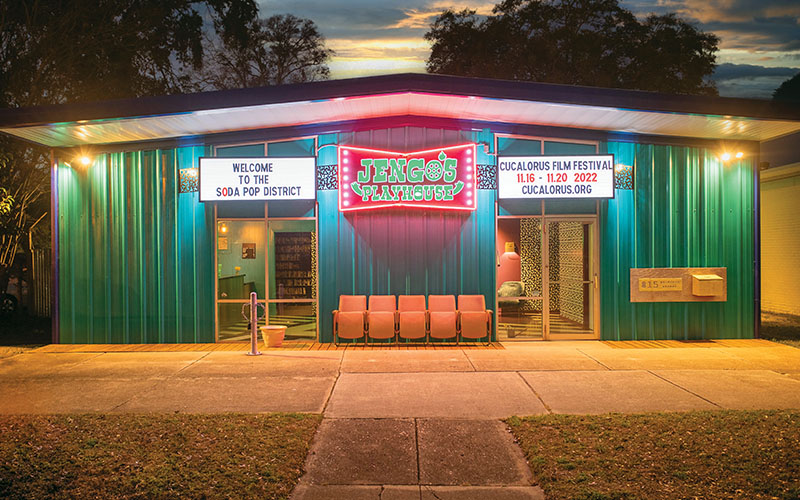
Jengo’s Cultivates Community, Artists

Dan Brawley, head of the Cucalorus Film Festival and founder of Jengo’s Playhouse, recently discussed the venue’s year-round efforts and thi...
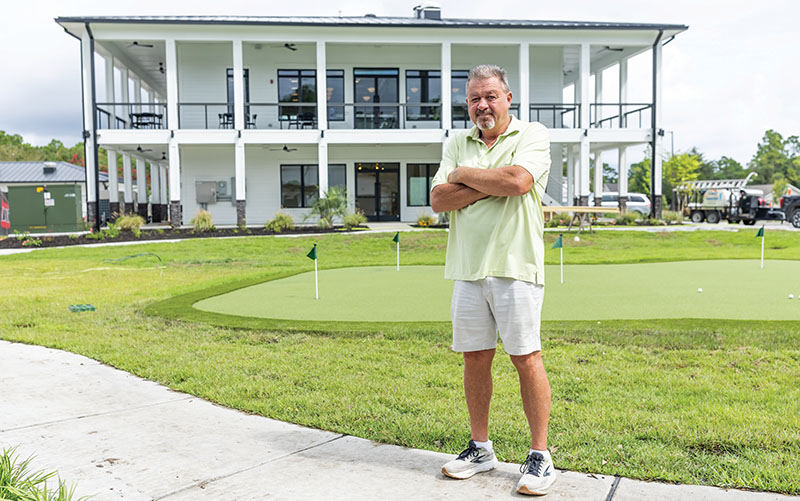

Private Clubs Cater To Social Sports

One of the clubs in Wilmington has 11 indoor pickleball courts, four covered, lighted outdoor courts, two new clay tennis courts, an outdoor...
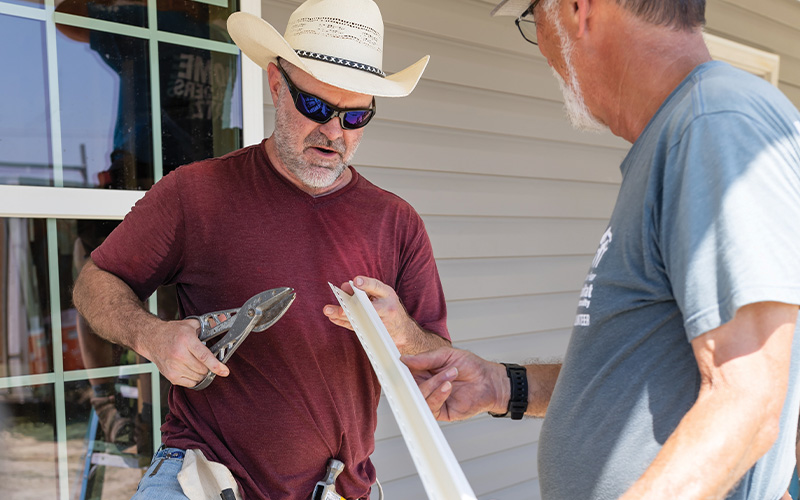

Habitat Chapters Expand, Explore Merger

“If the merger is eventually approved, it could be a significant boost to our collective ability to serve individuals in need of safe and a...

Book On Business

The 2026 WilmingtonBiz: Book on Business is an annual publication showcasing the Wilmington region as a center of business.


Order Your Copy Today!


Galleries

Videos

2024 Power Breakfast: The Next Season