Not long ago, I wrote about green space and the fleeting opportunity to preserve land for future generations before it's gone forever. That piece was about vision and collaboration, about what a community can build together when leaders are willing to think boldly and act with urgency.
This piece is about what happens when they don't.
The city of Wilmington is this year proposing a 5.75-cent property tax increase, a 20% rate hike that would push our city's tax rate to 34 cents per $100 of assessed value. By most accounts, it is the largest proposed tax increase in this city's history, imposed, remarkably, at the very moment every sitting member of council has declared Wilmington to be in an affordability crisis. It will cost the owner of a median-valued Wilmington home an additional $256 per year, on top of county taxes, on top of an inflationary environment that has squeezed every household in this region. The public hearing was May 19. The votes are scheduled for June.
Before this budget passes, residents deserve straight answers to some uncomfortable questions.
The Promise We Made and Broke
In July 2023, the Wilmington City Council unanimously voted to purchase the Skyline Center, the former PPD headquarters on North Front Street, for $68 million. I voted for that purchase.
The deal made sense: a 12-story building acquired well below market value, with the opportunity to consolidate city departments, generate lease revenue from private tenants, and sell surplus properties and the adjacent development tracts to offset the acquisition cost. That last part was not fine print. It was the central promise made to justify the purchase to taxpayers.
I opposed the decision to have city government occupy the building's top floors rather than lease that premium space for revenue. I opposed the $6.3 million upfit package to build out council chambers and city offices, voted against it, dissent while my colleagues approved it 6-1. My position then was the same as it is now: Leadership means prioritizing, not spending your way to comfort while asking residents to pick up the tab.
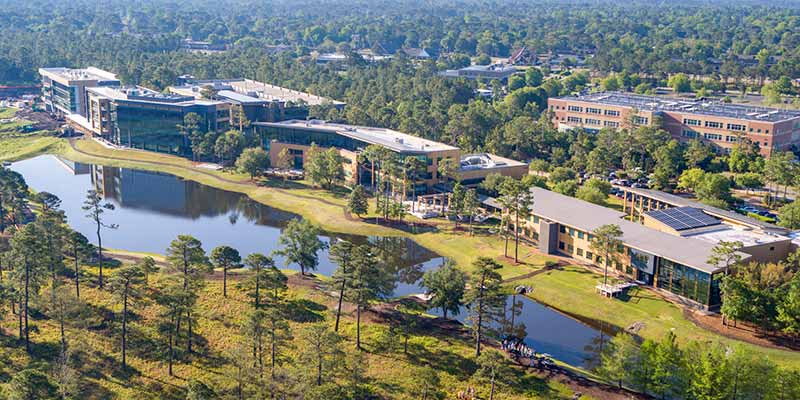
But perhaps the more consequential broken promise involves the adjacent development tracts, parcels at 825, 1001 and 1021 N. Front Street as well as 155 Brunswick St., totaling 7.72 prime undeveloped acres sitting directly adjacent to Live Oak Bank Pavilion with unobstructed views of the Cape Fear River. These were always meant to be sold. The proceeds were always meant to offset Skyline's purchase price and fund the infrastructure projects that now appear on the city's capital improvement plan as justification for a historic tax increase.
The city retained JLL, one of the country's premier commercial real estate firms, to market some of these properties. Multiple high seven-figure offers came in. And then, quietly, the listing was pulled.
No press release. No council vote to debate the reversal in public. No explanation offered to the taxpayers who were promised this income. Just silence, and a budget proposal asking those same taxpayers for the largest tax increase in the city's history to fund the very infrastructure those sale proceeds were supposed to cover.
The current council has not demanded answers. It should.
Leadership Means Prioritizing
I want to be unambiguous about something: I have been one of the most vocal advocates for increasing pay for Wilmington's police officers and firefighters. The Wilmington Police Department has roughly 40 vacancies. The fire department has nine. These are not abstract numbers. They represent real gaps in the protection of our community, and I pushed hard, repeatedly and publicly, for meaningful pay increases to address them.
There is a difference between targeted investment in public safety and a $16.7 million blanket living wage increase for every city employee on the payroll. The city's proposed living wage would set a salary floor of $45,531 for all employees, from first responders to housekeeping staff to recreation workers. That may be a worthy social goal. But it is not a public safety crisis response, and packaging it as one to justify the largest tax increase in the city's history is not straight dealing with the public.
Real leadership does not placate every staff member at the expense of citizens. It makes hard choices. It sets priorities. It asks what can be deferred, what can be phased and what can be funded differently, before reaching into the pocket of every homeowner and renter in the city.
Those questions were not seriously asked here. City management told council back in November that there was "no way" to raise employee wages without a tax increase, before the numbers were even run, before alternatives were modeled, before the public had any say. The conclusion preceded the analysis.
What Responsibility Actually Looks Like
The city's own website still lists among Skyline Center's original goals: "Lease extra space to offset operational costs and sell surplus property to offset capital investment." That commitment is now being quietly abandoned while the city simultaneously argues it has no choice but to raise taxes to fund capital projects.
The adjacent riverfront tracts, marketed to serious buyers at prices that would have generated tens of millions of dollars, sit unsold and off market. Their potential contribution both to Wilmington's tax base and infrastructure fund is apparently no longer part of the plan. No one in city leadership has explained why. No one on the current council has pressed them to.
The answer to that silence, I believe, lies in what happens when there is no meaningful opposition inside the room where these decisions are made.
The Cost of Uniformity
During my four years on Wilmington City Council, I was often the lone dissenting vote. Against the Skyline upfit. Against the Safelight red light camera program that cost $300,000 a year and lacked any data to justify its continuation. Against budgets that increased taxes unnecessarily.
That friction is not dysfunction. It is governance. A deliberative body that reaches unanimous consensus on every major spending decision is not a sign of strong leadership. It is an echo chamber.
The voters of Wilmington chose new representation last fall. The new council is finding its footing. But the pattern so far – acquiescence to staff recommendations, silence on the JLL reversal, no apparent push for the austerity measures that are plainly available before asking residents for 20% more – suggests that the lesson of the previous council's single dissenting voice has not yet been learned.
The residents of Wilmington are not simply a revenue base to be tapped. City staff said openly that there is "a lot of capacity in the tax base to afford the rate we are proposing." Capacity is not consent. And the measure of good government is not how efficiently it extracts revenue. It is how seriously it treats every dollar it has already been given.
Sell the riverfront tracts. Fund the infrastructure they were always meant to fund. Ask hard questions about what a $16.7 million wage initiative really costs and whether every element of it is truly essential. Explore the phased alternatives that council members themselves have raised.
This city does not have a revenue crisis. It has a discipline crisis. It is the citizens who pay the price.
Luke Waddell is a Wilmington business owner, former member of the Wilmington City Council and a longtime resident of Wilmington.

Tech Wilmington: Upcoming Events Calendar
Staff Reports
-
Oct 21, 2026
|
|
Live Oak Bank Reports Q3 Revenue Growth
Cierra Noffke
-
Oct 22, 2026
|
|
Corning Moves Forward With Wilmington Expansion
Cierra Noffke
-
Oct 21, 2026
|
|
Under New Owner, Pour Taproom To Add More Nonalcoholic Beverages, Events
Emma Dill
-
Oct 21, 2026
|
|
Vantaca, Live Oak Bank Chart AI Strategies
Cierra Noffke
-
Oct 20, 2026
|
|

Industry professionals say people seem much more willing these days to travel to the Wilmington area outside of the traditional summer vacat...
Support for the lower, movable-span bridge dominated spoken comments at the public hearings, and city officials have thrown their support be...
Five candidates are vying for two seats on the New Hanover County board....

The 2026 WilmingtonBiz: Book on Business is an annual publication showcasing the Wilmington region as a center of business.