Foreign markets hold promise for U.S. small businesses, and now there are local resources to help area companies translate opportunities into revenues.
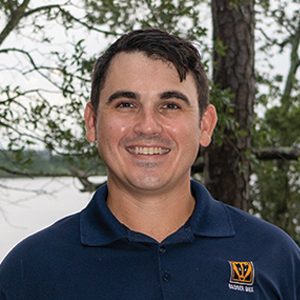
So says Paige O’Neill, international business development specialist for the Small Business and Technology Development Center (SBTDC) at the University of North Carolina Wilmington. She’s also the secretary of the recently reconstituted local branch of the N.C. World Trade Organization (ncworldtrade.org), which is creating a network of international trade organizations and agencies to bring the state’s products into a global arena.
“There has been a revitalization of interest in international trade throughout the state,” O’Neill said, adding that most of the regional branches, including the Southeastern North Carolina one, had ceased to exist through lack of interest. Now there are four chapters: Charlotte, Triad, Triangle and Southeast.
The renewed commitment to helping small North Carolina businesses spread into international markets responds to a stark reality, according to O’Neill, who quoted a 2021 statistic from the World Bank.
“More than 70% of the world’s purchasing power and 95% of its consumers are outside of the United States. Competitors are increasing their global market share while the U.S. is underperforming,” she said, adding that only 11% of U.S. gross domestic product is generated by exports.
Last July, O’Neill spearheaded a revamp of the local chapter and became its secretary. Tom Guthrie, from the N.C. State Ports Authority, is the president. Jay Schach, a member of UNCW’s management faculty, is vice president. Lauren Fuhrer, of the Michael Best law firm, is treasurer. The group formed a board of directors and an ambitious to-do list. Its mission is closely aligned with that of the Raleigh-based state organization: to promote the growth of trade between North Carolina and the world by providing education and networking opportunities for the state’s global ecosystem.
“The intention of the Southeast chapter is to host events several times a year,” O’Neill said. “Why is this important? What we notice across the state – especially in the southeastern part of the state – is that international people don’t know each other. When they get to know each other, they can share best practices. Small businesses that aren’t familiar with, say, bank lenders, legal and accounting services and freight forwarders can meet them. The beauty of having all those people in the room together is they develop relationships and [business owners] know who to go to.”
The Southeast NCWTA chapter’s education and networking efforts go hand-in-hand, and both involve a second set of relationships: those with governmental or quasi-governmental entities that help small businesses find and tap into their markets overseas.
The SBTDC itself can help a would-be exporter with free counseling on matters such as international strategy, international market research and foreign market entry, international supply chain details such as logistics and documentation, and financing options for international business.
The U.S. Commercial Service’s North Carolina division, said O’Neill, can help with in-country market research, provide recommendations for international partners and distributors, and do international company profiling through the U.S. Embassy network. This agency also hosts trade missions overseas.
The state’s Economic Development Partnership has international capabilities, O’Neill said. “EDPNC International has local people who can help small businesses with market research for specific foreign markets. It also hosts trade shows overseas,” she said. “We also have a District Export Council, or NCDEC, which has a similar structure to the WTA. They provide education and mentoring for new businesses that are going international and are our interface with Washington, D.C., for regulatory issues for each state.”
For financing, the NCWTA network includes the federal government’s Export-Import Bank, better known as the EXIM Bank, and the SBA, which works with local banks to provide loans.
In March, the N.C. District Export Council (DEC) sponsored an all-day Export University at Cape Fear Community College. The event drew an audience of small business representatives from around the state, O’Neill said.
That evening, the Southeast NCWTA chapter hosted an 85-person networking event and celebrated the success of a client company, Carroll International. Byron Carroll, owner of the Columbus County-based company, credited help from U.S. Commercial Service, the SBTDC and EDPNC International in growing his international sales capabilities.
UNCW is also developing its own relevant expertise with an initiative led by two faculty members: Mark Spaulding in the history department and Peter Schuhmann in economics and finance. The two are forming the UNCW research community focused on international trade and exchange, part of the university’s larger interdisciplinary research community program.
The potential from university research on international trade and the education and mentoring available from local entities are significant, according to Stuart Borrett, UNCW’s associate provost for research and innovation.
“The Southeast chapter of NCWTA is going to create a lot of opportunities for Southeast North Carolina,” Borrett said. “Paige O’Neill is gung-ho, and Jay Schach, the chapter vice president, is an adjunct in the management department and is deeply involved with the Center for Innovation and Entrepreneurship.”
Spaulding and Schuhmann are working to build a permanent center for research and teaching on trade and exchange issues and have identified several potential sources of external funding, university officials say.
They have convened groups and panels of specialists to explore topics such as global supply chains and the effects of COVID on the production and movement of goods, along with future opportunities for Wilmington International Airport and the state’s ports. And they have made connections with the Southeast NCWTA chapter.
A small business that wants to trade abroad faces a host of issues, from policies and processes to the nitty-gritty of getting its cargo where it needs to be and getting paid by the purchaser. The southeastern branch of the NCWTA has assembled the resources to guide a company through the details, O’Neill said.
“The SBTDC is the point of entry,” she added. “We can pull in the right people at the right time."