This Insights article was contributed by Sandy Crumrine, CPA, CIA, an audit partner at Earney & Company, L.L.P.
In a recent article, we discussed the challenges of implementing the Financial Accounting Standards Board’s (FASB) new revenue recognition standard – ASU 2014-09, Revenue from Contracts with customers (Topic 606).
The goal of this new standard is to promote comparability across industries. To comply, all entities that generate revenue through contracts with customers will need to review their existing methods for determining when revenue is recognized for financial reporting purposes. The core principle of Topic 606 is an entity should recognize revenue to depict the transfer of goods or services to customers in an amount that reflects the consideration to which the entity expects to be entitled in exchange for those goods or services.
Not-for-profit organizations have the further challenge of differentiating “restricted” contributions from “conditional” contributions when determining when to recognize revenue.
Typically, a conditional contribution would not be recognized as revenue until the condition stipulated by the donor is met, while a restricted donation is recognized when received but use of the donated funds is restricted to the donor-specified purpose. In other words, there is an important difference between being entitled to money and being told how to spend it (restricted) versus not yet being entitled to the money (conditional).
The FASB is trying to clarify the distinction so charities, museums, colleges and other nonprofit organizations have an easier time applying the new revenue recognition standard. As is the case with public and private for-profit companies, implementing the new standard will require significant judgment on the part of not-for-profit financial statement preparers.
FASB has tentatively decided that for a donor-imposed condition to exist, a right of return agreement – the ability for the donor to ask for his or her money back – must exist. But many members of the not-for-profit community believe the existence of a right-of-return agreement should not be required to meet the definition of a donor-imposed condition.
In addition to clearing up the difference between conditions and restrictions, the FASB wants to clarify whether to characterize grants and other contracts with government agencies or foundations as exchanges or contributions.
Distinguishing between exchanges is often a difficult task for not-for-profit organizations receiving funds, goods and services.
For example, if a government agency grants money to a group to conduct cancer research, it could be interpreted as an exchange transaction – a purchase of the organization’s research services – or as a contribution to provide financial support for a worthy cause. The distinction is important because exchanges must follow the new revenue recognition standard which goes into effect for not-for-profits in annual reporting periods beginning after Dec. 15, 2018.
Confusion among not-for-profits over when to recognize revenue will be compounded by the fact that not-for-profits will soon be implementing another new FASB standard on not-for-profit financial reporting. Following best practices can help not-for-profit financial statement preparers avoid common mistakes. When facing a difficult judgement call on matters of revenue recognition, not-for-profit financial statement preparers may also want to consult with their auditors and stay tuned for further clarifications from the FASB.
Chad Wouters, CPA joined Earney & Company in December 2006 and became the tax partner in November 2013. With an emphasis on strategy and planning, Chad works with his clients all year to ensure the most efficient tax strategies are put into place. Earney & Company, L.L.P. is a CPA firm that handles tax compliance, consulting and planning as well as audit and other assurance services. For more information please visit www.earneynet.com or call (910) 256-9995. Chad can also be reached at [email protected].


NCDOT Offers Revised Alternative For Cape Fear Memorial Bridge Replacement
Emma Dill
-
Nov 4, 2026
|
|
Tech Wilmington: Upcoming Events Calendar
Staff Reports
-
Nov 4, 2026
|
|
UNCW Buys Apartments Off Randall Parkway For More Than $16M
Emma Dill
-
Nov 2, 2026
|
|
Democrats Sweep NHC Races As $320.5M School Bond Passes
Cierra Noffke
-
Nov 4, 2026
|
|
Major Projects Hit Milestones At ILM, Including Parking Garage, Hotel
Emma Dill
-
Nov 3, 2026
|
|

While downtown also benefits from general fund expenditures, the municipal service district (MSD) “is a way of having some additional money...
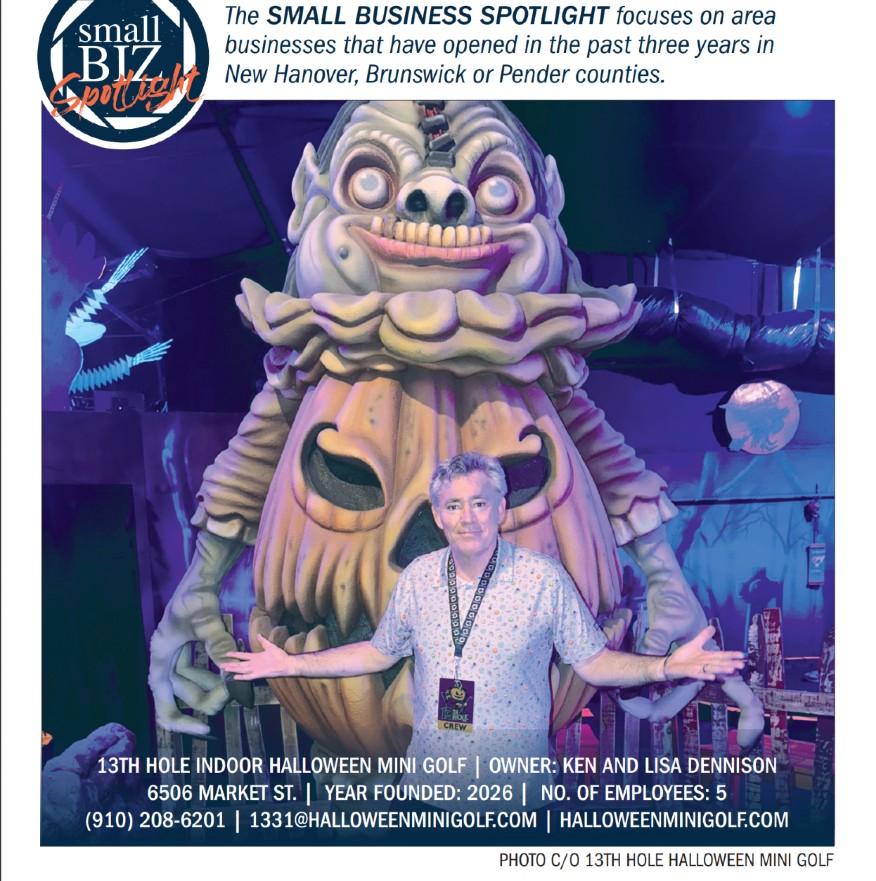
“Our vision is to create a mini-golf experience that becomes a welcoming space for everyone who enjoys a fun adventure with friends and fami...

Industry professionals say people seem much more willing these days to travel to the Wilmington area outside of the traditional summer vacat...
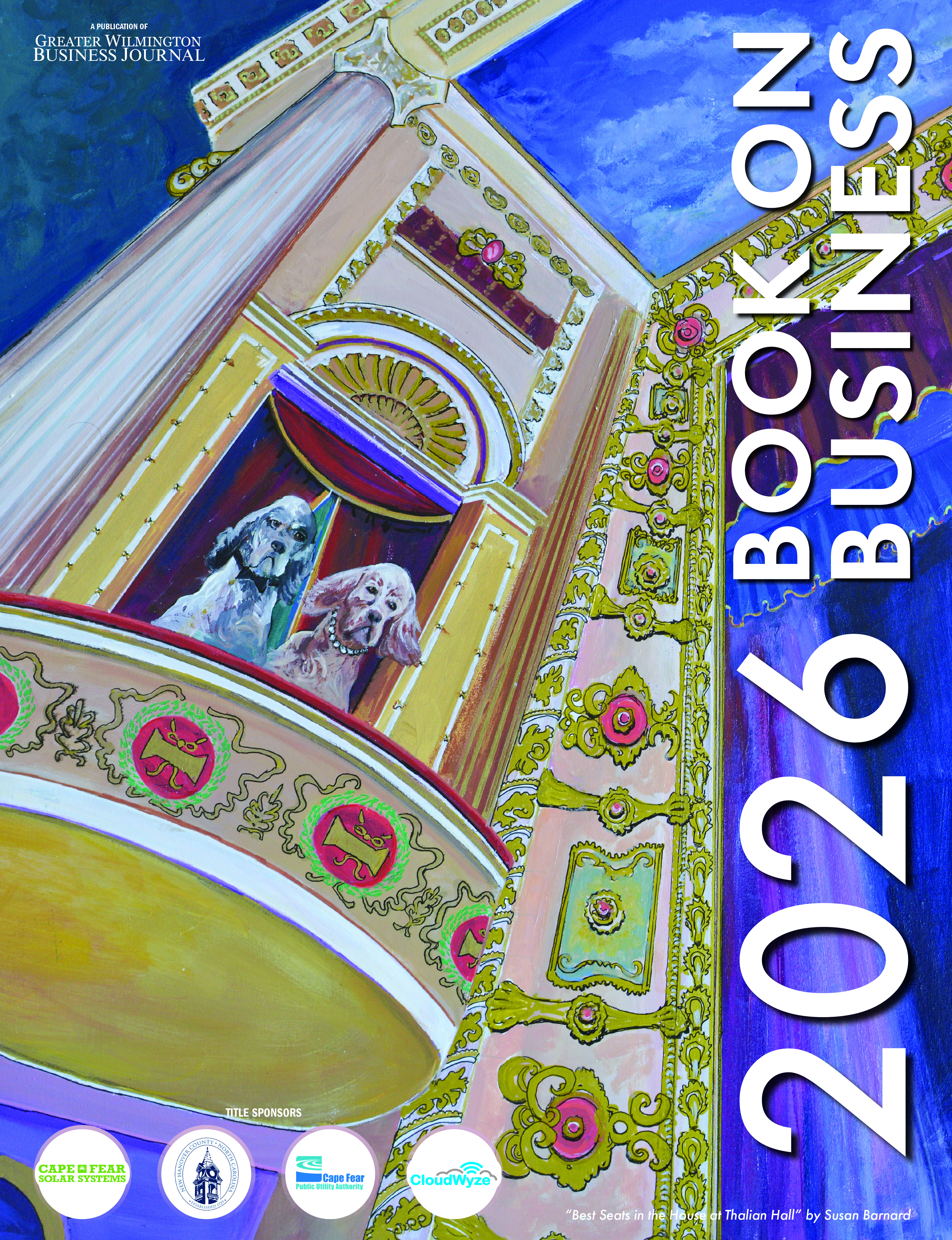
The 2026 WilmingtonBiz: Book on Business is an annual publication showcasing the Wilmington region as a center of business.