Even before Clay Pierce Boardman III took the podium on a crisp April morning to announce his involvement with a development team tasked with exploring the possibility of minor league baseball in Wilmington, it became abundantly clear the game had changed.
An Augusta, Ga. native of dapper style, Boardman, 53, announced his firm — Flywheel Projects — would finance and construct the stadium at its own risk to bring an Atlanta Braves franchise to the Port City.
“I’ve never developed a baseball stadium before, and I can’t tell you why I’ve decided to take this project on,” Boardman said. “But there’s something about this project that seems right, and I’m ready to move forward.”
But for the philanthropic, urban protagonist, father of three, securing the land and finances for the project is half the battle. In a city like Wilmington, it’s all about connections, which -- with the help of a distant cousin, an established Wilmington family and support back in Augusta — Boardman may well be on his way. Connection.
A partnership begins
For Raiford Trask, a Wilmington native and principal owner of Wilmington-based Trask Land Company, adhering to business over the weekend is a regular occurrence.
So it came as no surprise that nearly a year ago, on a warm summer Sunday in Charleston, S.C., he received a business-related call while visiting his daughter. It was long-time friend Agnes R. Beane, requesting his prompt presence back in Wilmington to be introduced to her cousin from Augusta.
“She said I needed to be back in Wilmington by noon,” Trask recently recalled with a chuckle. “I told her I could be in Wilmington by 3 p.m.”
Beane — a Wilmington native involved with a number of civic and business organizations, including Wilmington Business Development — forged the meeting between the two after Boardman expressed interest in purchasing and redeveloping some historic properties in downtown Wilmington.
“I first met Clay at a family reunion back in Augusta about six or eight years ago. I knew from our discussions then, Clay had an interest in historic preservation,” Beane said. “He came down in June of last year to visit and look at several projects, and I felt it was appropriate for the two to meet.”
Boardman also had his sights set on some of the most prime riverfront property in New Hanover County: the site of the former Almont Shipping Company, which was founded by Beane’s father along the river on Nutt Street as a major shipping terminal.
In 2008, however, years after the company folded, USA InvestCo President and CEO Chuck Schoninger purchased the property to make way for the Northern Riverfront Hotel and Marina development, which is currently under construction.
After Trask made the three-hour trip back to the Port City, he, Boardman and Beene discussed a variety of topics at his office -- and later over dinner -- related to future plans and possible investments in downtown Wilmington.
“We shared a lot of the same interests,” Trask said. “We hit it off from the start.”
One of those interests was bringing minor league baseball to Wilmington, a topic of discussion here for nearly ten years before April’s press conference, when Mandalay Baseball and Atlanta Braves officials announced that Trask and Boardman would work as co-developers financing the construction of the stadium.
Early estimates place the proposed 6,000-seat stadium’s costs between $35 million and $40 million. Boardman and Trask would shoulder any overages related to the construction of the stadium under the proposed arrangement.
The pair, along with the rest of the Mandalay and Braves development team, will present their proposed sites, costs and total economic impacts to Wilmington during a May 15 city council meeting.
“There were a series of conversations,” Beane said of their decision to offer to finance and build the proposed stadium. “Clay would bring his development expertise in urban planning and financing to the table, while Raiford would use his local presence and expertise of the area to help move the project forward.”
Beane said her role during this exploratory phase of the project is strictly to advise Boardman, and work with Trask to formally introduce her cousin to the business leaders and community of Wilmington, many of whom support the idea of bringing minor league baseball to the region.
“We both know different people in the community,” Beane said. “So it’s been a collaborative effort between the both of us to introduce Clay to all the right people, and navigate through that process.”
And as the pair continues gathering, receiving and compiling information related to the stadium’s future location and costs, one thing remains constant: bringing minor league to Wilmington is a priority.
“The importance and overall dynamic change baseball can bring to Wilmington is something that makes this project worth pursuing,” Trask said. “We have such a great team, and when you can partner with Mandalay and the Braves, you have to jump at the chance . . . Clay shares that vision, and I’m glad we’re going to be working together on this endeavor.”
Prior business experience
Carrying on the legacy of his late father, Clayton P. Boardman, Jr., Boardman’s first business venture was as chief operator of the family’s gasoline convenience store chain called Boardman Petroleum, Inc.
The company operated three separate oil and gas ventures: Smile Gas, a vehicle gas and convenience store chain; and Fuel City, a large truck stop convenience store chain. It also owned Charter Triad Terminals, a firm that specialized in the construction of large storage tanks for crude oil and gasoline.
“We had a number of locations throughout the Southeast, including locations in North Carolina and South Carolina,” Boardman said. “My father started in the petroleum business, and that’s what we’re known for in Augusta.”
But as the oil and gas business began consolidating many of its divisions in the late 1990s in an effort to shut out small, independent gas companies like Boardman Petroleum, Inc., the business heir realized it was time to invest in something different.
He sold off the family’s Smile Gas and Fuel City chains in 1999 to the Tempe, Ariz.-based Circle K convenience store chain. Shortly thereafter, he sold the family’s Charter Triad Terminal Company in 2004 to Houston-based Kinder Morgan, an international firm that specializes in pipeline transportation and storage for oil and gas products.
While unloading his family’s businesses proved bittersweet, it did allow him to pursue another passion — historic preservation. And in an historic city well established before the signing of the Declaration of Independence, projects quickly became Boardman’s for the taking.
“I’m passionate about historic preservation,” Boardman said. “By selling off our oil and gas interest, I was able to reallocate that capital on the redevelopment of historic structures here in Augusta.”
In 1997, Boardman founded Flywheel Projects, a redevelopment firm that acquires historic properties and converts them into class-A retail, residential or office space. Since its inception, the firm has completed over $150 million in redevelopment and historic rehabilitation projects involving more than seven historic structures in Augusta. Its first major project was a 236,000-square-foot conversion of Enterprise Mill, turning the old industrial facility into a mixed-use, class-A development.
The firm’s redevelopment portfolio also boasts a similar industrial mill conversion called Sutherland Mill — a 56,000-square-foot, LEED Gold-certified development that currently houses medical office condominiums.
Boardman’s passion for historic preservation goes hand-in-hand with his philosophy on development: anti-sprawl all the time.
“It costs a lot of money to run sewer and water lines to podunksville,” Boardman said. “People are getting tired of driving far for work, and the costs to provide such services in the suburbs are growing more costly. The trend is more redevelopment and growth in the urban cores, and my developments have been successful because of that philosophy we’re growing in Augusta.”
Wilmington Mayor Bill Saffo got to see Boardman’s redevelopment efforts first hand after being invited by the developer to tour some of his sites in Augusta last summer.
Saffo said he was impressed with his many projects, along with his interest in investing in the Port City, which at the time did not include providing financing for the construction of Wilmington’s proposed baseball stadium.
“As the mayor, when a developer wants to meet with me to express interest in developing something in our city, I will take the time to meet with them,” Saffo said. “I was absolutely amazed . . . obviously he’s a hometown fella that loves his city and wanted to do some nice things there. He’s studied urban renewal and open space, and has embraced that concept in Augusta and is looking to invest in similar developments in Wilmington.”
Boardman said Augusta and Wilmington share many qualities.
For starters, both cities are similar in age, were founded along large riverfronts, have similar county and city populations and are experiencing reinvestments in their urban centers — all factors Boardman says makes the Port City a great investment for his future business endeavors.
But like the many celebrated businessmen preceeding him in family name, Boardman carries a philosophy that his father instilled in him, his brother and two sisters: if doesn’t feel right, it’s not right.
“I want to be transparent about all this,” Boardman said of current stadium negotiations. “I want to do the right thing because we’re spending money on this and so are the taxpayers . . . there will be no deal done if the taxpayer gets screwed, because I’m not going to be a part of it.”
Augusta accolades
Like the Trask name in Wilmington, the Boardman name carries historic and legendary weight in Georgia’s second-largest city.
Not only has Boardman continued his family’s legacy; his investments in downtown Augusta have made him a pivotal force across the Antebellum east Georgian landscape.
“When you hear the Boardman name, it is synonymous with philanthropy and quality,” said Deke Copenhaver, Augusta, Ga. mayor since 2005. “Clay is one of the strongest philanthropists in Augusta, and one of the most talented businessmen I’ve ever had the honor of working with.”
Copenhaver has known Boardman for more than 15 years. His wife is also Boardman’s second cousin. He said he was first introduced to Boardman in South Carolina, where he helped broker a real estate deal for him on Pawleys Island, near Myrtle Beach.
Copenhaver said Boardman is an instrumental force in helping forge bonds between community and business leaders to benefit various causes across the city, including the development of a baseball stadium in downtown Augusta.
“We’ve been working on this for a number of years,” Copenhaver said. “Clay has been an advocate for this, and has helped bring people to this project. We’re not as far along as Wilmington, but I still think we can get this project done.”
Along with possessing a strategic, business-savvy nature, Copenhaver added that Boardman is also a community man who strives to help grow and nurture his hometown through many philanthropic fundraising efforts. One such effort was sponsoring a fundraiser in 2008 for the construction of a new 17-acre, 77,000-square-foot Salvation Army Kroc Center in Augusta’s Harrisburg Mill area — a location long in decline after the community’s namesake closed decades ago.
Copenhaver said the Salvation Army’s $1 billion Kroc Endowment was willing to provide $34 million for the project if Augusta matched that with $22 million for the development. Not only did Boardman donate to the project, he also spearheaded fundraising efforts across the city during the worse economic recession since the Great Depression to deliver the $22 million for the project as promised.
“That was a major milestone in Augusta during that time,” Copenhaver said. “And it’s certainly one many in Augusta will never forget.”
Copenhaver added that Boardman recently headed up an initiative to raise $5 million from private interests for a new education commons facility at the future Georgia Health Sciences University of Augusta campus. As result of his fundraising dedication, the Peach State matched Augusta’s $5 million contribution with a $28 million allocation for the new school.
Boardman’s current nonprofit project is working to bring developers and project managers together to fund a $20 million redevelopment of an historic downtown Augusta theatre that will soon house the Symphony Orchestra of Augusta.
“My civic work is very important to me,” Boardman said. “It’s where I spend two-thirds of my time.”
Copenhaver said he’s not surprised, adding that Boardman’s work in Augusta redevelopment and rehabilitation is catching on throughout the Deep South.
“He’s just somebody you want on your side in a business deal,” Copenhaver said. “He’s a great negotiator, and Augusta is lucky to have him.”
Even at their Augusta, Ga. family reunion, Beane said Boardman was very approachable and jovial.
“He’s not ego-driven,” Beane said. “He’s a very ‘glass half-full’ kind of guy that’s very bright and forward thinking . . . he’s an excellent listener and always, always wants to know all points before taking something on.”
Beane said as the proposed stadium project pushes forward in Wilmington, she hopes her cousin will be received well within Wilmington’s social and business community.
“The bottom line is he doesn’t have to be here,” Beane said. “But he choose to come here and pursue the project, and make a positive impact on our community . . . and to me, that speaks volumes.”

In Lawsuit, Luxury Homebuilder Accuses Defendants Of Defamation
Cece Nunn
-
Jun 5, 2026
|
|
Endowment Appoints New Community Advisory Council Members
Staff Reports
-
Jun 3, 2026
|
|
From A Grocery Store To Convention Center Growth, Officials Talk Downtown Priorities
Emma Dill
-
Jun 3, 2026
|
|
Endowment Fields Questions On School Bond, Food Co-op Funding At Public Meeting
Cierra Noffke
-
Jun 4, 2026
|
|
Amid Recent Sales, Independence Mall Owner Talks Real Estate Strategy
Emma Dill
-
Jun 4, 2026
|
|
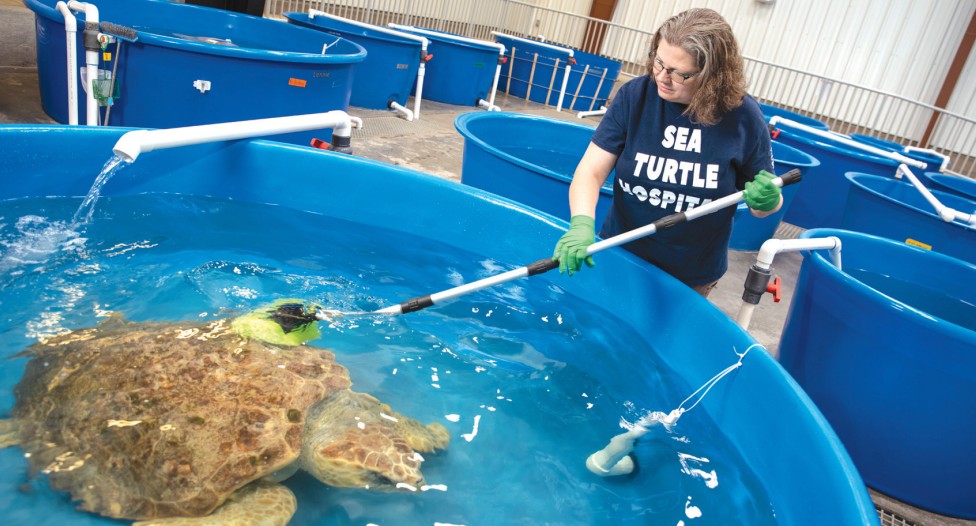
"We underwent a strategic plan in 2021. Jean was an integral part of that. The organization was transitioning from a founder-led organizati...
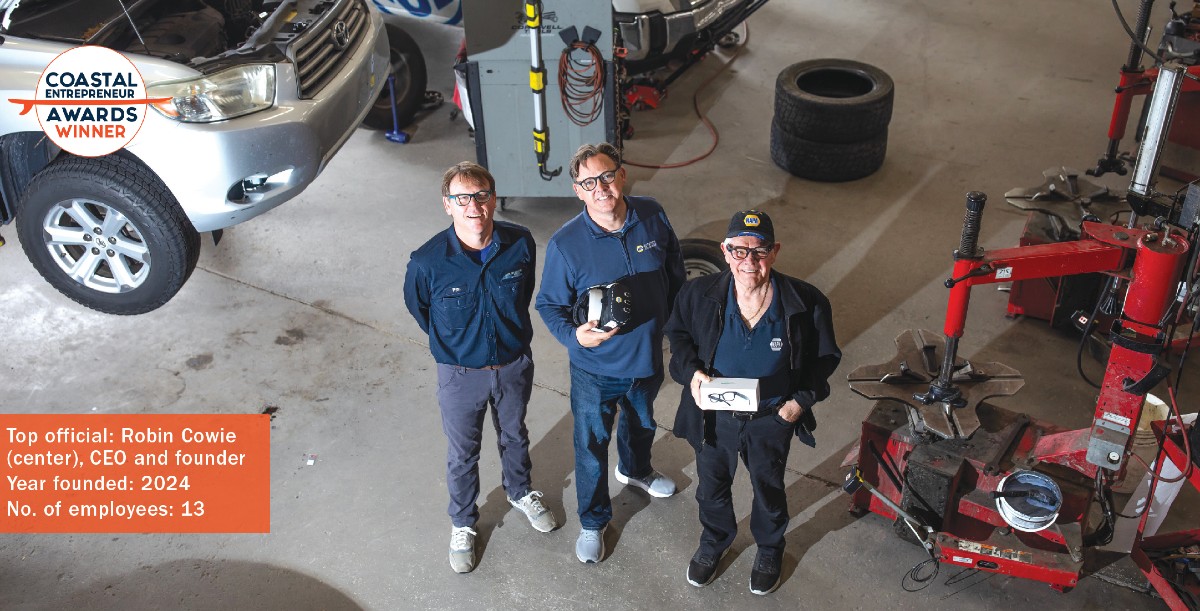
Eventually, while working with his father on a trade-skill training project during the pandemic, Robin Cowie began fleshing out the concept...

Brunswick County businesses offer a variety of activities for those seeking some adventure....
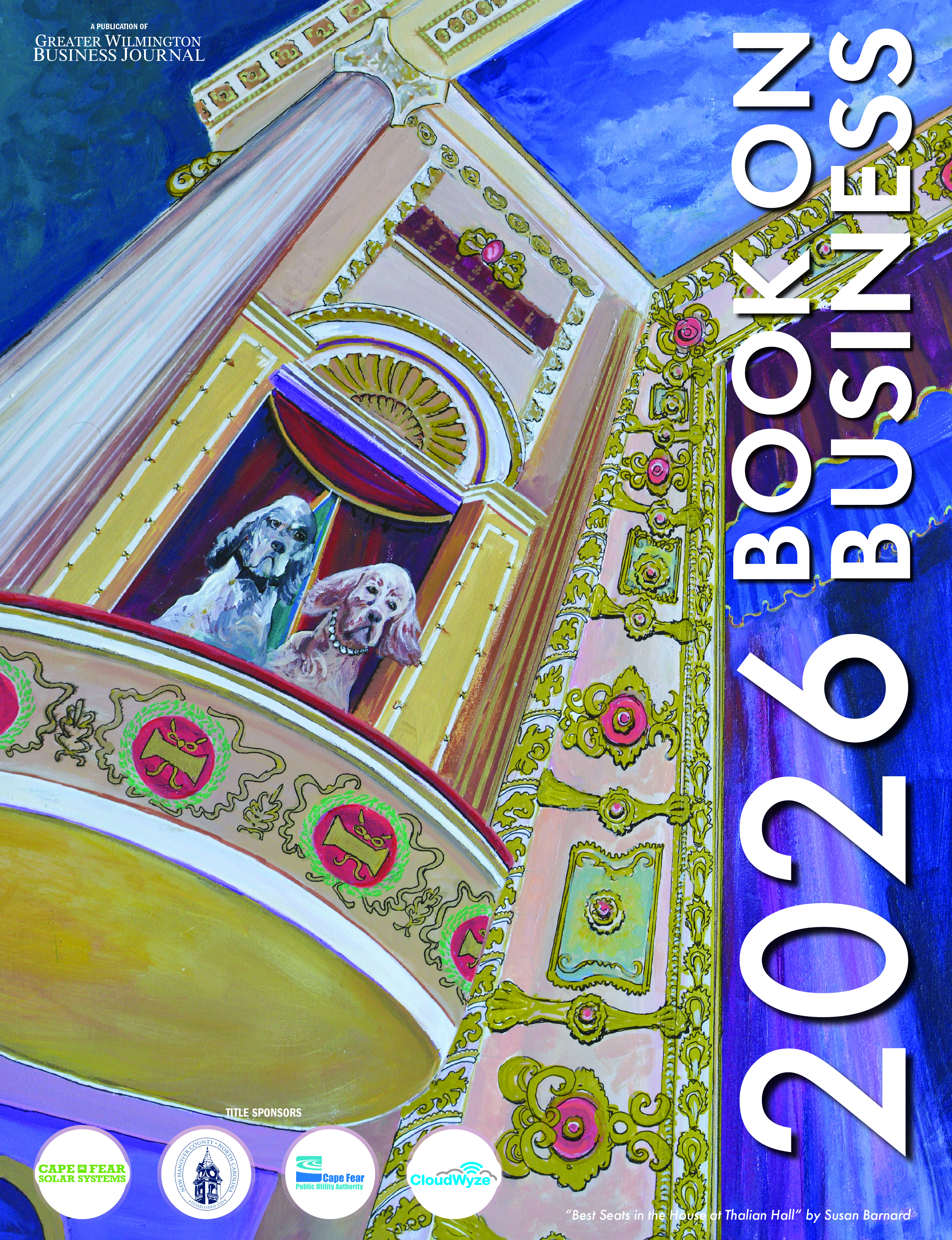
The 2026 WilmingtonBiz: Book on Business is an annual publication showcasing the Wilmington region as a center of business.