Follow Heather Linkedin Twitter Facebook
Email Heather Email
Education
Mar 1, 2018

Non-profit or Social Enterprise: Why it Matters

Sponsored Content provided by Heather McWhorter - Director, UNCW Center for Innovation and Entrepreneurship

This Insights article was contributed by Katrina M. Harrell, President of KM Harrell Group.

There is no denying that entrepreneurs are change agents in the world.

We are able to identify opportunities amid challenges and are nearly always willing to take the risk of embarking on a journey often unpaved.

Regardless of whether you are interested in solving community, social-level problems or addressing a gap in the marketplace with a product or service, nonprofit leaders and entrepreneurs share the aforementioned traits, though they have a different methods and end goals.

This similarity, however, also brings up an increasingly significant challenge: nonprofits are tasked with finding innovative ways to sustain their organizations while managing board and community expectations, all in an increasingly competitive funding space.

That said, a social enterprise can be either nonprofit or for-profit, as both are simply tax and legal structures. A social enterprise simply denotes that your business - whether it retains a profit or not - offers a solution to a social issue through its products or services.

So, social entrepreneurship is rising as a solution to the challenges nonprofit organizations (NPOs) face, while also inspiring traditional for-profit entrepreneurs to utilize their products and services as a means to both impact community social issues and satisfy profit goals without needing to become a nonprofit organization.

But, how does an entrepreneur decide if their idea should be structured as a nonprofit or as a for-profit with a social enterprise focus?

Here are three important initial questions to ask yourself.

What is your motivation for creating this solution?

In other words, do you simply want to create a solution to a social problem for the benefit of others and not reap any personal financial benefit from it?

Years ago, I worked for a large NPO in New York funded largely by a billionaire investment banker. His motivations were purely to create impact for his social issue, not to be personally sustained by it.

Because the organization had a sole funder, it has been able to effectively and sustainably focus on its social issue.


Can you effectively mobilize (and pay) a team to help you deliver this service?

It goes without question that nonprofit organizations are typically known for paying staff on “passion” salaries and relying on very lean staffing, while requiring the type of expertise that also comes with higher salary requirements.

As you decide, ask yourself if executing this idea would mean mobilizing a skill set for which you can’t avoid paying competitive salaries. Volunteers are wonderful lifelines to many organizations, but in many cases, volunteers have the option to stop when they want.

If you cannot pay, and funding sources will take more time than you may have patience for, consider becoming a for-profit organization with a social impact mission. This allows you to create a competitive product or service that meets a marketplace demand and hire effective staff to carry it out while still solving a social problem.


What are all the funding or revenue opportunities available for this idea?

You may have a solution to a social problem and sure, there may be grants and many fun fundraising opportunities available, but many funders want NPOs to demonstrate they can actually operate and generate revenue like a traditional for-profit business.

That said, can you make more money selling your product in the marketplace, make a profit and decide how to spend your profit on a social level?

I shared a panel with Half United co-founder Carmin Black, where she revealed that her for-profit social enterprise sells their jewelry for profit and shares a portion of the revenue with charitable organizations.

Doing so allows her business partner and her to maintain control of their business, goals, and how profits are spent. They can decide, at their own discretion, how to expand their impact and not be limited by relying on grants and fundraisers.

Katrina M. Harrell is President of KM Harrell Group, a business development and strategy firm focusing on helping CEOs and entrepreneurs balance impact and profit. She is also co-founder of The Launch Project, which helps early-stage entrepreneurs develop profitable business models.

Diane Durance, MPA, is director of UNC Wilmington's Center for Innovation and Entrepreneurship (CIE). The CIE is a resource for the start-up and early-stage business community to help diversify the local economy with innovative solutions. For more information, visit www.uncw.edu/cie.
 

Other Posts from Heather McWhorter

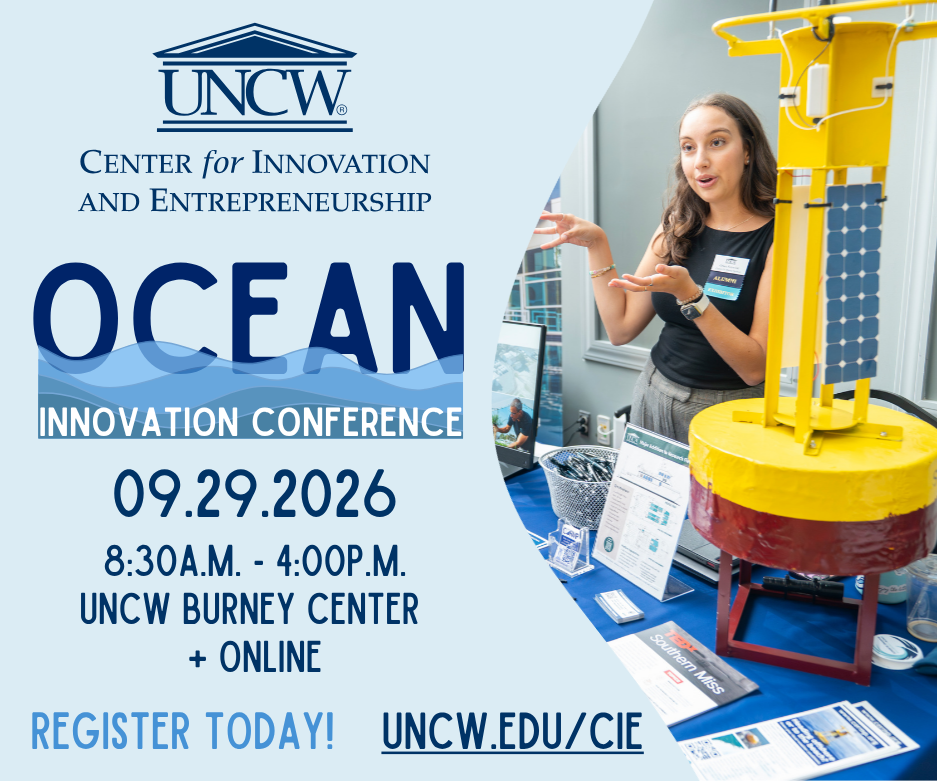
Oic2026ad
Ico insights

INSIGHTS

SPONSORS' CONTENT
Ccoudrietheadshot 942542742

A New Investment Model for Workforce Housing in New Hanover County

Chris Coudriet - New Hanover County Government
Untitleddesign7

Avoiding Selective Enforcement in HOAs: How Boards Can Enforce Rules Fairly and Consistently

Dave Orr - Community Association Management Services
Geoff21 6292624148

Good Communication Is Good Business

Geoffrey Losee - Rountree Losee LLP

Trending News

UNC Health, Wilmington Health Move Forward With Cancer Center Plans

Cierra Noffke - Aug 13, 2026

Area Companies Land On 2026 National List Of Fastest-growing Firms

Cece Nunn - Aug 11, 2026

Tech Wilmington: Upcoming Events Calendar

Staff Reports - Aug 12, 2026

Starbucks Brewing New Location On Carolina Beach Road

Emma Dill - Aug 13, 2026

Brunswick Board OKs Victaulic Expansion

Emma Dill - Aug 12, 2026

In The Current Issue

Castle Hayne Remains Growth Frontier

It's only natural, developers say, that the area has been the scene of commercial and residential development activity in recent years....


Kure Beach Keeps An Eye On The Future

The Pleasure Island municipality has less than 170 buildable vacant lots left, said Kure Beach Mayor Allen Oliver, but aging infrastructure...


Small Business Spotlight: Specialty Dental Practice Takes Root On Market St.

"Our goal is to preserve teeth that might otherwise need to be extracted and replaced with implants. Saving a patient’s natural tooth is alm...

Book On Business

The 2026 WilmingtonBiz: Book on Business is an annual publication showcasing the Wilmington region as a center of business.


Order Your Copy Today!


Galleries

Videos

2024 Power Breakfast: The Next Season