Project Grace is officially moving forward, following a narrow approval Tuesday by the Local Government Commission.
The commission’s 5-4 approval marks a green light from the state government body that's responsible for approving most debt issued by North Carolina’s local governments. Project Grace, a $56-million project from New Hanover County, aims to develop a modern facility that will house the downtown library branch along with the Cape Fear Museum and a private, mixed-use development on a block in downtown Wilmington.
The project has faced pushback from State Treasurer Dale Folwell and other members of the Local Government Commission. They’ve raised concerns about the county’s decision to
finance the project through a debt issuance instead of leaning on existing funds along with the
involvement of Wilmington-based Cape Fear Development, the development arm of real estate firm Cape Fear Commercial.
New Hanover County officials sparred with Folwell through news releases and other public statements after Folwell declined to put Project Grace on the commission’s September agenda.
Instead, the commission opted to further discuss the proposed development with New Hanover County leaders at the September meeting. There, Folwell and other members of the commission stated their intent to vote about the project in October.
On Tuesday, the commission discussed Project Grace for nearly an hour.
Folwell voiced concerns about the developer behind the project and said he intended not to support it.
“There’s been nothing graceful about this thing called Project Grace,” he said.
Dane Scalise, a member of New Hanover County’s Board of Commissioners, represented the county on Tuesday. He told the commission he was ready to answer any questions about the project but said he believed the commission had the information they needed to make a decision.
“At no point have we shied away from answering any questions,” Scalise said.
Folwell initially made a motion to deny the project. His motion garnered a second but ended in a 4-4 tie after one member of the nine-member commission abstained from the vote. A second motion made to approve the project succeeded in a 5-4 vote.
A statement issued by the New Hanover County Board of Commissioners on Tuesday after the meeting thanked the state group for approving the debt issuance.
“This is an important milestone for a project that has been backed by unanimous, bipartisan support across multiple New Hanover County Boards of Commissioners, allowing us to advance a key community initiative that will benefit our residents and visitors for years to come,” according to the statement. “We commend the Commission's thorough review and are eager to progress with the project and bring a new public facility into downtown that will spark curiosity, exploration, and learning.”
New Hanover County Manager Chris Coudriet reiterated the importance of the decision in the project’s future.
“As we advance, we're eager to see this collective vision come to life and look forward to seeing this block transform and meet our community’s needs, with a purpose-built museum and library that is in sync with the private investment to come,” according to Coudriet.
The latest iteration of Project Grace is an effort from New Hanover County in partnership with Cape Fear Development. In August, the New Hanover County Board of Commissioners
unanimously approved an amended agreement with Cape Fear Development that cut the price of the project’s construction by $4.6 million, to just under $57 million.
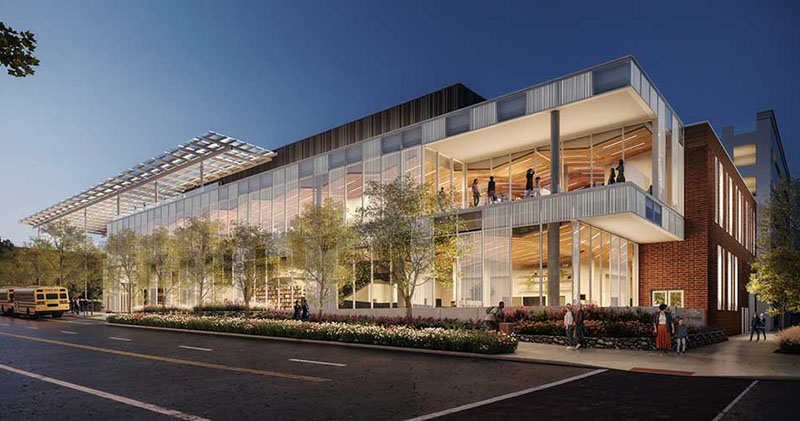
Their plans would transform the county-owned block bordered by Chestnut, Grace, Second and North Third streets into a modern development that’s set to include a 95,000-square-foot facility that would house both a new library and Cape Fear Museum. A private mixed-use development is slated for the site of the current downtown branch of the public library.
Folwell and the Local Government Commission objected to a previous Project Grace proposal between New Hanover County and Wilmington-based Zimmer Development Co.
That plan died last September
when the commission failed to approve an $80 million lease agreement the county wanted to enter into with Zimmer. Back then, Folwell said the county should finance the project itself because it could borrow money at a lower rate.