While just a stretch of the 200-mile-long Cape Fear River runs through the Wilmington area, it serves as a backbone – not only geographically, but economically, supporting the port, livelihoods and recreation that define the region. The river links the Port of Wilmington with the ocean, bringing in vessels from around the world, and serves as a centerpiece of the local tourism industry. It’s also faced challenges in recent years, including contamination from per- and polyfluoroalkyl substances (PFAS), runoff pollution from upstream farms and the threat of water removal from a proposed inter-basin transfer. From dawn to dusk, the Cape Fear River plays an evolving role in the lives of those who live in the Wilmington region.
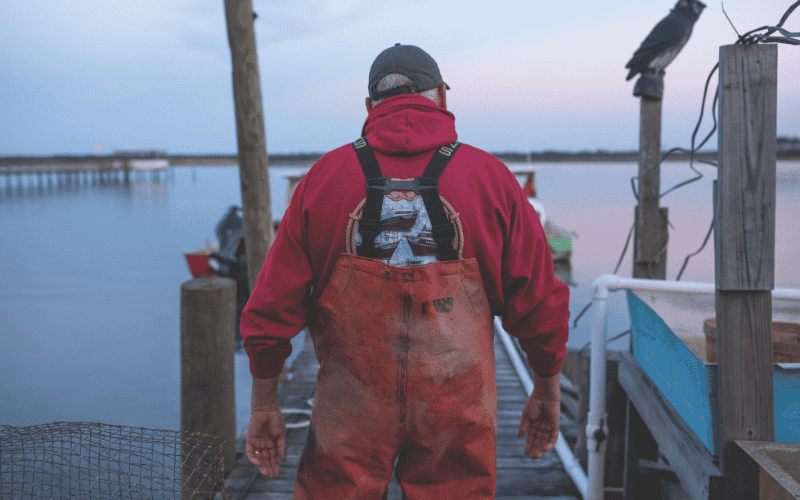
 When the crabbing and fishing are good, Luke Ingraham’s anticipation of getting out on the Cape Fear River sometimes keeps him up at night.
“Back when there was a lot of stuff to catch, I couldn’t even sleep to make sure I got up the next morning,” he said. “I didn’t want to miss it.”
On a typical day, Ingraham said he wakes up at 4 a.m. and goes out on the water around daylight. Most days during the spring and summer, he crabs in the Cape Fear River, Ingraham said, and when the crabbing isn’t good, he fishes in the ocean.
This spring, he’s been fishing much more than usual. Ingraham said he believes maintenance dredging in the Cape Fear River’s main channel over the winter disrupted the crab’s normal cycles. During a recent day on the water in May, Ingraham said he caught around seven bushels of crabs. Normally, he’d catch about 25 bushels, he said. The number of crabs in a bushel varies by the size of the crab and can range from five to seven dozen.
“I don’t understand it,” he said. “Never seen nothing like it.”
Crabbing runs in Ingraham’s family. His father was a crabber and passed the vocation down to him. At 16, Ingraham got his commercial fishing license, allowing him to sell what he caught, and he’s been at it ever since. Today, Ingraham sells his crabs to Seaview Crab Company in Wilmington and Blackburn Brothers Seafood in Carolina Beach, among other customers.
Ingraham said he worries about how future dredging, including the proposed deepening of the Port of Wilmington and its adjacent channel, could affect the crab populations. He also has concerns about the impacts of PFAS on the river’s marine life.
“It just kills the habitat for the little stuff,” Ingraham said. “It doesn’t matter how many babies hatch in the river or anywhere. If they can’t live in the environment they’re hatched in, it’s just not going to work.”
 Launching their boats for a 5:45 a.m. practice time on weekdays, members of the Cape Fear River Rowing Club can be among the first people out on the Cape Fear River.
Some days the river is glassy and calm, said Allison Potter, the group’s head coach, while other times the wind stirs up the river. Potter rowed in college and joined the local rowing club in 2009.
The group practices early to avoid windier conditions that tend to crop up later in the day, Potter said. They typically row in a large loop that takes them south from their launch point behind Wilmington Marine Center down to a cove in the river and then back up to the club’s dock.
The rowers stay out of the river’s main channel, Potter said, sticking to areas protected by marshy islands. They often share the river with ships heading to or leaving the Port of Wilmington, tugboats and crabbers or fishermen.
For Kim Futrell, the club’s president, the camaraderie of rowing, the workout it offers and the beauty of the river keep her coming back to the sport.
“You can literally be out there and have the sun on one side and the moon on the other side at the same time,” she said. “It’s just absolutely peaceful and gorgeous.”
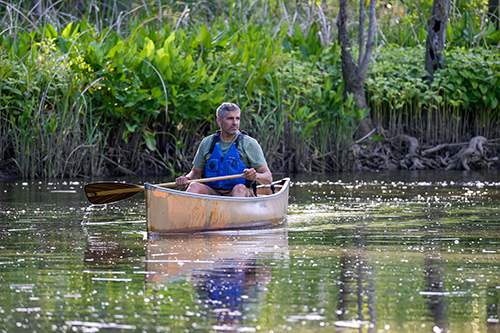 As the Cape Fear Riverkeeper, Kemp Burdette spends a fair bit of his time on the river and its tributaries, but not as much as he’d like to.
“I spend a lot of time on my laptop, just writing emails, responding to citizen concerns, writing public comments, talking to partner groups, reading legal decisions, reading scientific articles,” he said.
Burdette leads Cape Fear River Watch, a nonprofit that aims to protect and improve water quality in the Cape Fear River Basin – an area encompassing more than 9,000 square miles.
Founded in 1993 by residents concerned about water quality, the group continues to lead local advocacy and public education efforts related to key issues facing the river. With limited time and resources, Burdette said it’s become important to prioritize.
“We kind of try to triage,” he said. “So, we try to say, ‘What things are the biggest threats to the Cape Fear?’”
Today, that includes contamination by PFAS and emerging contaminant 1,4-Dioxane and runoff pollution from large-scale farms or concentrated animal feeding operations located in counties upstream from Wilmington. In 2019, a consent order between Cape Fear River Watch, upstream chemical company Chemours and the N.C. Department of Environmental Quality required Chemours to address its sources of PFAS and river pollution. Contamination remains an ongoing issue, Burdette said.
The group has also raised concerns about the proposed deepening of Wilmington’s harbor and river channel and opposed an inter-basin transfer request from Fuquay-Varina. The proposal would transfer more than 6 million gallons per day from the Cape Fear River basin to the Neuse River basin to address Fuquay-Varina's projected water shortages.
 The crews at McAllister Towing of Wilmington help maneuver large ships into and out of the Port of Wilmington and other docking berths on the Cape Fear River.
According to Glenn Turbeville, the towing company’s general manager, it typically takes a ship about three hours to travel up the river to the port.
A local river pilot calls the towing company about an hour after he boards the ship to guide it up the river. McAllister crews will then wait an hour before heading out to meet the ship, Turbeville said.
“We get (the boats) when it’s time to slow them down,” he said. “It’s a very slow and controlled evolution once we get alongside and have the tugs made up.”
The tugboats help the ships maneuver into the berths at the port and help turn them, if needed. Each crew is made up of a deckhand, an engineer and a captain. The crews rotate working on call 24 hours a day for two weeks, and then they’re off for one week.
“We get a phone call whenever they’re passing Southport, and then we know that we have an hour to get down here and leave the dock,” said Joseph Newton, an engineer with the company, about being on call.
Tim Boyd, a tugboat captain with McAllister Towing, said he’s watched the Port of Wilmington grow and boat technology evolve since getting his captain’s license in 1980.
Alex Benton, a deckhand, said he came to work for McAllister Towing after working at the port. He said he likes the schedule and being on the river.
Turbeville said they’ve seen a shift in the type of ships coming into the port. They no longer see the massive neo-Panamax ships.
“It was kind of like an event when they first started coming, just because of the size and because of the extra crews you had to put on,” he said about the large ships. “Now, we’re back to like it used to be.”
 Little Drum Landing’s proximity to the Cape Fear River is one of the biggest draws for those renting out the event venue, according to Jodi Stine and Lindsey Miller, the facility’s event coordinators.
Situated near the southern end of downtown Wilmington’s Riverwalk, the venue offers both indoor and outdoor space, with views of the riverfront, the Cape Fear Memorial Bridge and the Battleship North Carolina.
Most of the venue’s events take place in the evening, Miller said, as guests look to take advantage of the often-vibrant sunsets over the Cape Fear River.
“People want to use that sunset for their backdrop,” Stine said.
The venue hosts over 100 events each year, with spring and fall – peak wedding season – being its busiest times. Last year, Wilmington’s wedding industry generated an estimated $90.4 million in revenue for local vendors and businesses, according to The Wedding Report, an industry research group.
Stine said Wilmington is increasingly becoming a destination city for couples, especially those who want a wedding with a coastal aesthetic. If they don’t want to deal with sand, she added, Little Drum Landing pitches itself as an alternative to the beach.
 Ship arrivals set the schedule at the Port of Wilmington, said Brian Clark, executive director of the N.C. State Ports Authority.
“Whether it’s nights or weekends or holidays, if a ship’s going to call,” he said, “then we’re going to accept that ship and handle the cargo.”
Many container ships that call at the port are in and out in one day. Ships transporting general cargo operate on more sporadic schedules and can dock for days at a time, depending on what they’re carrying.
Once a ship docks, its cargo is unloaded, some of it by crane, and transferred onto a truck or a railcar to be brought to its final destination.
 From a volume standpoint, forest products are the largest cargo type moving through the port, Clark said, which includes wood chips, wood pellets, dimensional lumber, pulp and paper. The port is also seeing increasing growth in refrigerated cargo, including perishables like bananas, pineapples and grapes, along with pharmaceutical components.
As of May, neo-Panamax ships were not calling on the Port of Wilmington like they have previously. Clark said the shipping line ZIM, which had brought neo-Panamax vessels to the port, paused their service to some East Coast ports, including Wilmington, due to a drop in customer demand.
“Consumer sentiment is down,” Clark said. “People are not buying as much as they used to buy, and … the costs have gone up. (That) could be driven by tariffs, but spending in general in the U.S. is down.”
Port officials are also pushing for a deepening of the harbor from its current depth of 42 feet to 47 feet. The harbor deepening aims to make the port more competitive and accessible to larger ships in the future.

Tech Wilmington: Upcoming Events Calendar
Staff Reports
-
Sep 16, 2026
|
|
Leone, Capone Chair This Year's United Way Campaign
Staff Reports
-
Sep 15, 2026
|
|
Singletary Selected To Lead Southport Parks And Recreation
Staff Reports
-
Sep 15, 2026
|
|
Brunswick County Planning Board To Consider 450-home Development Plans
Cierra Noffke
-
Sep 14, 2026
|
|
LS3P Announces New Leadership Roles For Miller, Adams
Staff Reports
-
Sep 15, 2026
|
|

The expanding footprints of Perennial Harbor and Blossom Bay are among the latest examples of growth in the Soda Pop District, which stretch...
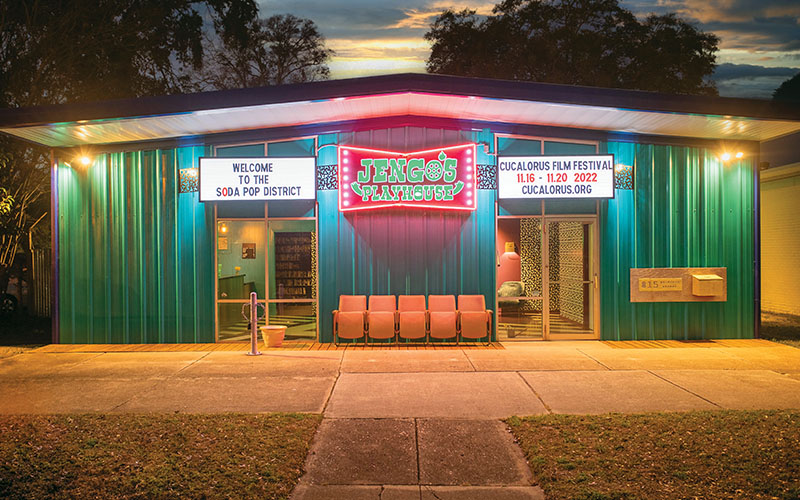
Dan Brawley, head of the Cucalorus Film Festival and founder of Jengo’s Playhouse, recently discussed the venue’s year-round efforts and thi...
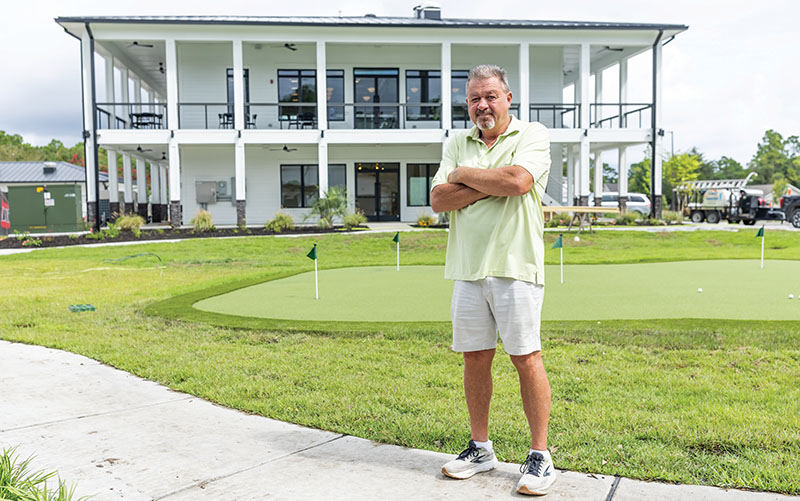
One of the clubs in Wilmington has 11 indoor pickleball courts, four covered, lighted outdoor courts, two new clay tennis courts, an outdoor...

The 2026 WilmingtonBiz: Book on Business is an annual publication showcasing the Wilmington region as a center of business.