This month, a couple of major office building proposals made it past a state group that previously blocked or slowed local officials’ other construction timelines.
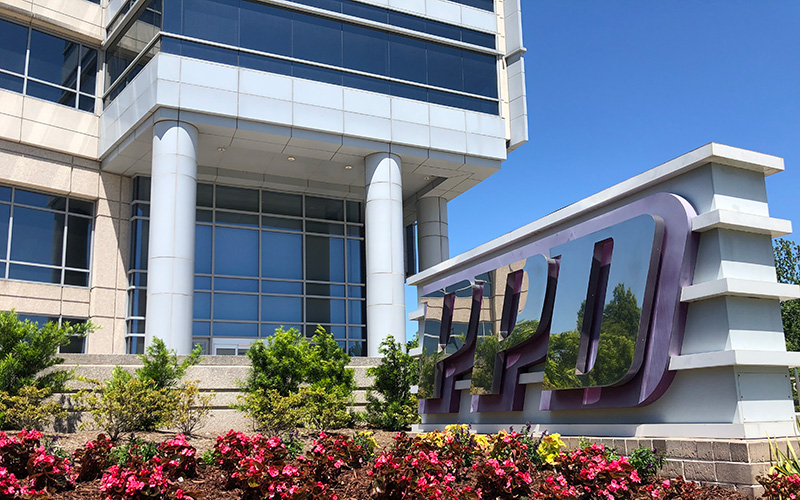
The state’s Local Government Commission in June voted to give Wilmington city officials the go-ahead to issue $70 million in limited obligation bonds to buy the former PPD headquarters campus at 929 N. Front St.
The state group, which provides guidance and oversight to more than 1,000 local governments across the state in areas including their budgets and bond financing, also granted financing approval related to New Hanover County’s purchase of a downtown Wilmington building intended to expand Cape Fear Community College's nursing programs.
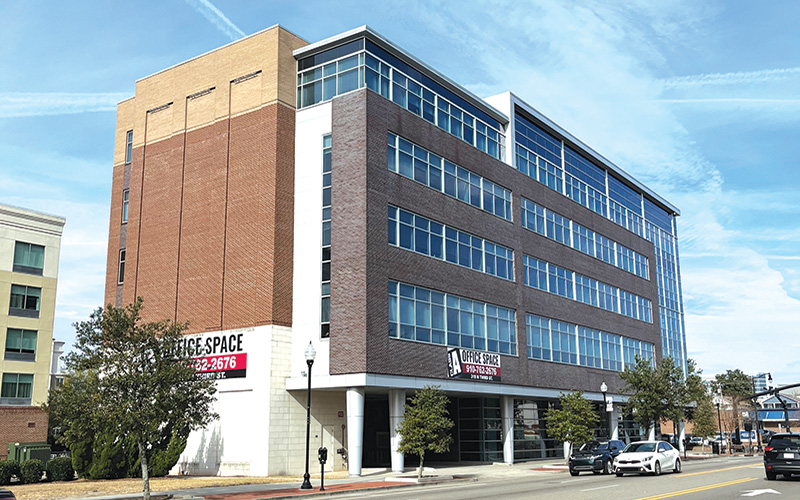
Earlier this year, the county paid nearly $11.4 million for that former Bank of America building at 319 N. Third St., minus 14 parking spaces that were in dispute, to seller River Bend #1 LLC. Refurbishing the five-story, 55,000-square-foot building for use by CFCC to expand its nursing and allied health programs would cost at least another $14 million, according to a previous Greater Wilmington Business Journal story.
Financing for both projects, though approved this month, didn’t come without some pushback from members of the state board – particularly from State Treasurer Dale Folwell, who serves as chair of the Local Government Commission and also is running for the Republican nomination in next year’s gubernatorial race.
With the former PPD headquarters, Folwell’s criticism focused on the project’s cost.
“I guess as I’m talking about this topic, I’m still very uncomfortable with the price,” Folwell, who was the only LGC member to vote against approving the $70 million in bonds, said at the meeting.
Under the plan, the city of Wilmington intends to consolidate its currently scattered offices in about half of the 12-story building, which sits on 12.5 acres, that Thermo Fisher Scientific absorbed when it acquired PPD in 2021.
According to city officials, the cost would be offset by selling the vacated city properties and leasing part of the 12 stories to other tenants.
“We will do everything in our power to make sure we get the maximum amount of return from the sale of those properties,” City Manager Tony Caudle told LGC members. “It is crucial for us to be able to do that. Not that we need the money (to put) back into our fund, not that we need the money to be able to make the model work. But we believe that it’s imperative that we get our top dollar for those pieces of property.”
The city earlier this year entered into a purchase contract with Thermo Fisher, and the agreement has a closing date of July 31.
Although the city’s staff had proposed a tax increase to help pay for the campus, that idea was later scratched after council members questioned the need.
In the case of the former Bank of America building, Folwell and another LGC member, Paul Butler, questioned the timing of the county’s request (after the sale had gone through) to approve limited obligation bonds to reimburse the county itself for the purchase of the Third Street building.
“It is not uncommon for us to use our cash liquidity to purchase large assets on the front end with an expectation when we go through the process to go to the bond market and reimburse ourselves. We’ve done this before,” County Manager Chris Coudriet told the treasurer and the rest of the LGC. “If there’s a policy change that we need to explore, we’re certainly fully committed to that, but we had the ability to close on the property to go ahead and give certainty to the community college and community that there would be a chance to expand the nursing school.
“We did not want to bring down permanently our fund balance, and so the expectation of our board was that we would come and ask to be reimbursed, but we did have the ability to pay for it in cash at the time,” Coudriet added. “We do want to return our fund balance to its very solid position.”
The county’s bond counsel, Rebecca Joyner, added, “It is a common practice not just by New Hanover but by the large majority of our local government clients, and it really relates to the timing of capital project expenditures. You wouldn’t want them to have to go back to the bond market every time there’s an opportunity to purchase something. So sometimes folks purchase something with an anticipation of reimbursing so that they can collectively put projects together and finance them all at once.”
Folwell has questioned New Hanover County’s decisions before in his role as LGC chair and as state treasurer, including other redevelopment plans and the county’s sale of New Hanover Regional Medical Center to Novant Health.
Last fall, the LGC halted an earlier plan for Project Grace after failing to approve the financing arrangement the county wanted to have with its previous development firm partner on the project, Zimmer Development Co.
New Hanover County Commissioners in May unanimously supported a reconfigured Project Grace proposal that now could also go before the LGC.
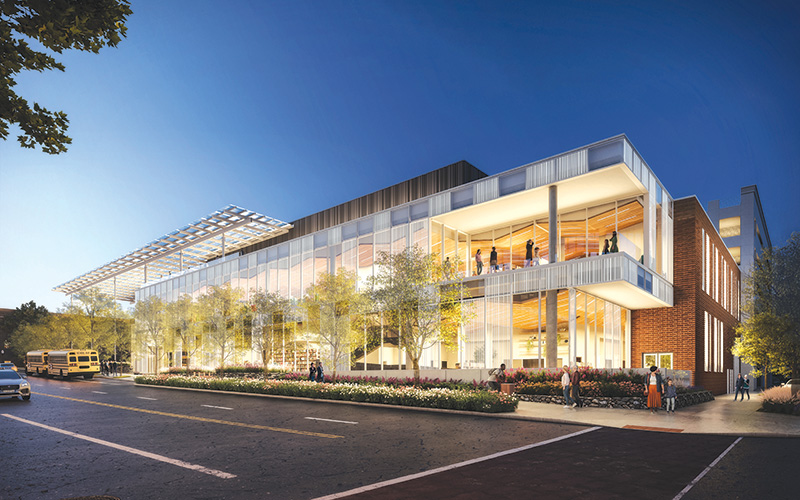
Through the development agreement commissioners approved, the county is working with Wilmington-based firm Cape Fear Development to create new buildings on a county-owned downtown block bordered by Chestnut, Grace, Second and North Third streets.
“Cape Fear Development has reviewed design plans that were purchased by the county (from Zimmer for $2.5 million) to determine value-engineering items that can reduce the cost with little impact to the customer,” Assistant County Manager Lisa Wurtzbacher said. “The plans still include a purpose-built that includes a modern library and museum. That’s a three-story facility that’s approximately 94,000 gross square feet inclusive of programmable space throughout the library and museum, shared space, a loading dock and an outdoor terrace.”
In the new plan, the county’s cost for the new museum and library, parking deck improvements and development fee of $3.5 million would not exceed $60,524,860.
“The deal is distinctly different from the previous arrangement that you saw primarily due to the method of financing the public facility,” Wurtzbacher said. “Rather than financing through a lease with the developer, the public facility would be financed through limited obligation bonds, taking advantage of our triple-A bond rating and our borrowing capacity. This leads to a reduced interest cost for the county.”
The agreement with Zimmer Development would have resulted in the county paying $80 million to the firm to lease the library and museum facility for 20 years.
Wurtzbacher said the county’s staff believes the new deal will likely be more palatable to the Local Government Commission.
According to the agreement with Cape Fear Development, once the new museum and library facility and parking deck improvements are substantially complete, the county would sell the south parcel of the property to Cape Fear Development for mixed-use private development.
“Cape Fear Development has committed to pay no less than $3.5 million for the south parcel property (where the existing main branch of the library is located),” a county news release stated. “Two appraisals will also be conducted for the property, and Cape Fear Development will pay the higher of the two appraisals if it is more than $3.5 million.”
The development company’s private investment, which could include residential and commercial space, is expected to be at least $30 million, and construction on that part of Project Grace would have to start within 24 months of the library and museum facility’s completion.
New Hanover County officials hope the LGC will vote on the new financing method at its September meeting so construction on the new library and museum could start in October. That’s only if county commissioners give their final approval to the plan in July.