In the span of six hours each week, Mother Hubbard’s Cupboard distributes a mix of canned goods, produce, meat, milk and other food essentials to more than 500 families.
In the past year alone, the emergency food pantry has seen more than 200 new families, according to Roxann Lansdowne, the group’s executive director and board chair. Many more, she said, have returned to the food pantry after several years without needing food assistance.
Rising food costs have hit low-income families particularly hard, Lansdowne said, while cuts and other changes to the federal Supplemental Nutrition Assistance Program (SNAP) have left others unable to buy what they need to get by.
“Mother Hubbard’s Cupboard is not the solution to the problem,” Lansdowne said, “but we are a piece of the quilt that can solve the problem, and that is taking care of our neighbors.”
The food pantry is part of a network of local nonprofit groups working to provide food access in the Cape Fear region, even as rising food costs and changes to SNAP and other government programs have increased food insecurity and driven up demand for affordable, nutritious foods.
The latest available estimates, based on 2024 data, show that 36,000 residents in New Hanover County, or 15.3% of the population, are food insecure, according to Feeding America’s Map the Meal Gap study. In Brunswick County, nearly 20,900 residents, or 13.7% of the population, are food insecure, while Pender County had about 9,000 food-insecure residents, or 13.7% of the population. The U.S. Department of Agriculture defines food insecurity as a household-level economic and social condition of limited or uncertain access to adequate food.
Between 2023 and 2024, the number of food-insecure residents climbed by nearly 4,000 across the Cape Fear region, with a more-than-2,500-person increase in New Hanover County alone, said Amy Beros, president and CEO of the Food Bank of Central & Eastern North Carolina. The current numbers are likely much higher, she added.
Over the past year-and-a-half, the Food Bank’s partner organizations have seen service needs increase by 20% to 60%, according to Beros.
“Everything is rising at a time when wages are not keeping up,” she said. “It’s impacting our neighbors who are facing hunger, and the math just does not add up at the end of the month because of how fast costs have risen.”
NourishNC saw a spike in demand last fall when SNAP benefits were paused during the government shutdown, said Steve McCrossan, the group’s executive director.
Over the past year, the number of children and families receiving assistance from NourishNC’s Backpack Program and its Market on Market grew by approximately 32%, according to McCrossan. Today, the two programs serve more than 3,200 kids or roughly 1,900 families across New Hanover County.
“We’re in disaster relief here at NourishNC,” McCrossan said, “and we used to think of disasters as hurricanes, and then we added global pandemics, and now we’re adding what I would call policy disasters.”
A wave of policy changes, including stricter eligibility requirements for SNAP, changes to Medicaid requirements and the suspension of the Healthy Opportunities Pilot (HOP) program, have contributed to the uptick in demand, McCrossan said. The state budget, approved in early July, restored funding for the HOP program.
Higher food costs are also resulting in what McCrossan calls a “triple squeeze” that affects the organization and those it serves. NourishNC is paying more to get the food it distributes, the families NourishNC serves are paying more for food, and so are the donors that help keep the organization afloat.
NourishNC purchases approximately 75% of its food from wholesalers and other national suppliers and has felt the impacts of rising food and freight costs. It’s a balancing act, McCrossan said, but the group aims to offer high-quality meat, dairy and eggs, along with at least 10 types of produce at its Market on Market.
“For now, our main driver is giving (families) good stuff and a good variety while trying to maintain a reasonable price point,” he said.
As Feast Down East’s mobile market manager, keeping food costs low is top of mind for Susannah Spratt. She periodically runs price comparisons, and the market’s prices are typically in line with or below what Food Lion charges, Spratt said.
Feast Down East works with farmers and growers within a 100-mile radius of Burgaw, Spratt said, purchasing their produce, meats, cheeses and other products and bringing them to local partners, including grocery stores and restaurants. The goods also stock the mobile market, Spratt said.
The mobile market has 18 regular stops around the region in areas that typically lack access to fresh food. The mobile market accepts EBT and runs a Fresh Bucks program, which offers a dollar-for-dollar match on purchases, and it recently launched a voucher program aimed at seniors.
“Consistently what we’re seeing is that with food prices going up, the cost of living going up,” Spratt said, “our seniors continually kind of fall through the cracks of a lot of service programs and access programs.”
Beros said that the Food Bank’s partners are seeing increased demand coming from working families, seniors and grandparents serving as caretakers for their grandchildren.
The Food Bank itself is emerging from a year of reduced government funding due to federal funding cuts, Beros said, and the lack of a state budget last year.
The budget included $9.1 million for food banks statewide, Beros said, and her organization will use its share of the funding to purchase protein and produce – types of food that can be expensive and challenging to get.
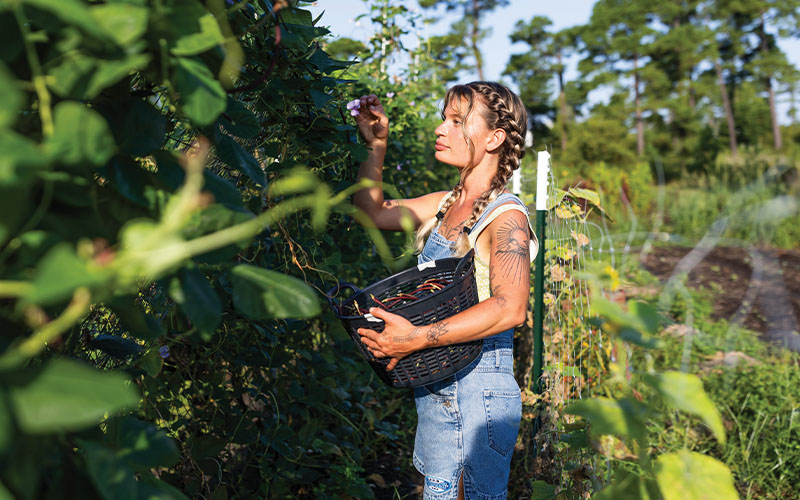
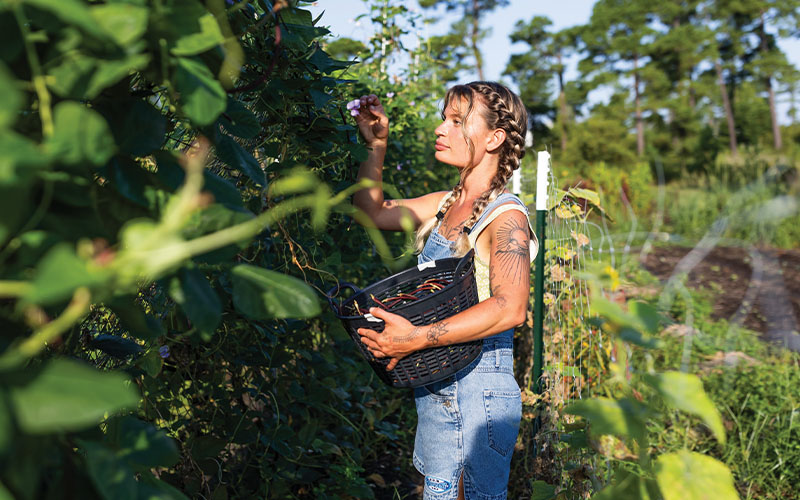
Rise Up Community Farm was founded in 2019 to grow and teach people how to grow nutritious foods. The 1-acre farm produces a diverse range of produce from okra, carrots, cucumbers and tomatoes to kohlrabi and Asian noodle beans.
“We pick varieties that grow really well in a hot, humid climate,” said Elly Colwell, the farm’s executive director, “and what is particularly special about that is that there are hot, humid climates all around the world, so a lot of the varieties we grow might not be like super common for an American diet.”
The farm currently donates more than half of its produce to food banks in the Wilmington area. The rest is used to stock the group’s produce subscription boxes. For Colwell, locally grown food is just one part of a resilient food system. She sees a growing demand for more fresh produce and food access in the community.
“We have the infrastructure for sure,” she said, “but I think everyone feels the reality that there is more demand than there is assistance to meet that demand, so that’s kind of the hard reality.”
Read more on Nonprofits & Fundraising:
Nonprofits Navigate Funding Shifts
Nonprofits Stretch to Meet Food Need
OPINION: A Look at What Nonprofits Need to Succeed
Habitat Chapters Expand, Explore Merger
Pastor Helps Those with Addictions