The Supreme Court struck down sweeping tariffs imposed under emergency powers in February, unlocking the potential for $175 billion in refunds.
Mouhcine Guettabi, regional economist with the University of North Carolina Wilmington’s Swain Center, said last week that the costs of the tariffs have been absorbed largely by U.S. businesses and consumers.
“Most of the economic literature seems to be consistent in finding that a world with as few barriers as possible is conducive to economic growth,” said Guettabi.
Wilmington’s economy is not heavily dependent on goods, Guettabi said, making it relatively less sensitive to tariffs. Even so, potential tariff pressure has trickled down to the city’s ports and logistics sectors.
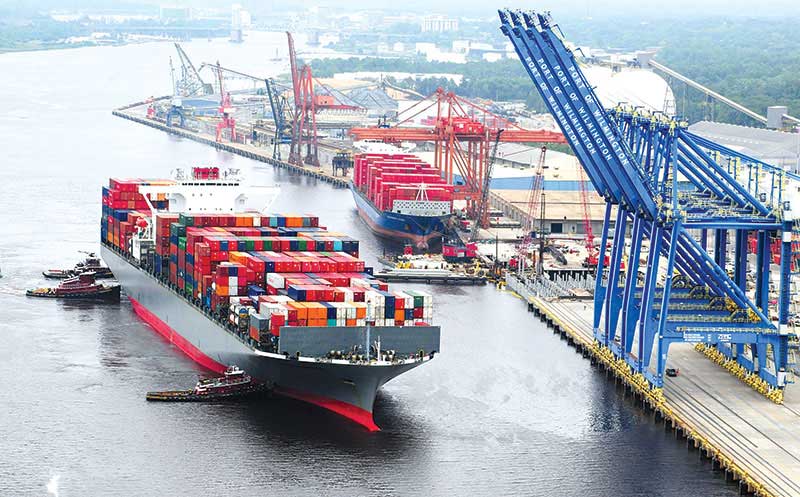
The N.C. State Ports Authority reported a $6.3 million operating loss between 2024 and 2025, and reported a 2.9% decline in containers and 3.2% decline in general cargo in its latest report.
In December, N.C. Ports Executive Director Brian Clark acknowledged that the past year had been challenging for the Wilmington and Morehead City Ports, partially attributing the decline to a decrease in consumer spending.
“I think it’s a pretty common theme across all the ports that volumes are down,” he told the Business Journal in December.
While it might be too soon to know the full impact of tariffs on Wilmington's overall economy, the recent rulings offer more certainty for business owners about what to expect.
On March 5, Judge Richard Eaton of the Court of International Trade issued an order directing U.S. Customs and Border Protection to refund money collected from tariffs instituted under the 1977 International Emergency Economic Powers Act to importers of record.
According to court filings, more than 2,000 lawsuits have been filed with the Court of International Trade seeking tariff refunds, including industry giants FedEx and Costco, which have pledged to use the funds to lower prices for consumers. The new ruling paves the way for tariff refunds to be processed without claimants needing to file a lawsuit, although the process is still unclear.
Customs and Border Protection officials have since told Eaton they are unable to issue refunds with the current operational and technical systems, but that they are “making all possible efforts” to have a new system in place “ready for use in 45 days.”
Chris Edwards, an attorney at Ward and Smith specializing in appellate litigation and the U.S. Courts of Appeals, said there’s a good chance that the federal government will appeal the ruling.
"If the government appeals... they'll go to the Federal Circuit to seek an injunction pending appeal,” Edwards said. “If the Federal Circuit denies that, they'll go to the Supreme Court."
As for when importers of record can expect a refund, Edwards said it will most likely take a long time. “These things normally don't move swiftly,” he said.
Following the ruling, the administration imposed a new blanket tariff of up to 15%, set to expire after 150 days unless Congress votes to extend it.
"They're not going away; they're just changing form,” Edwards said of tariffs.
Doug Milburn, the Nova Scotia-based co-founder of multiple manufacturing companies with operations in Wilmington, said the tariffs have brought uncertainty – and forced Milburn to turn to the Canadian market for materials. His companies with local facilities make storage servers and custom metal parts.
“This (tariff situation) has cracked the Canadian market just wide open for us,” Milburn said. “What we couldn't do has been done for us by tariffs. And I kind of have mixed feelings on it… I don't think that there's going to be any net gain in that for the U.S.”
Jim Hundley Jr., executive vice president of Thomas Construction Group, a general contractor and construction manager in the region, said the company has been minimally impacted by tariff-related inflation; however, uncertainty remains a primary driver.
"We do not, and nor do our clients, want us to carry some number as additional insurance or contingency for tariffs, because it's an unknown whether or not it would apply,” Hundley said.
"The tariffs have been so inconsistent in their application, he said, “which has caused a lot of uncertainty in the market."
According to Guettabi, now that the framework and maximum percentage of the new tariffs are known, businesses can better prepare, which offers an advantage.
“If, after these 150 days, we know that the cost they’re going to be bearing is X, whatever X is, I think that allows them to make long‑term decisions,” Guettabi said.
“I think the days of significant tariff‑related uncertainty are behind us,” he added, “and that’s a positive.”

The Takeaway: Disc-o Fever
Staff Reports
-
Oct 2, 2026
|
|
Investors Buy Leland Apartments In Nearly $58M Deal
Staff Reports
-
Oct 2, 2026
|
|
Big Projects Having Or Set To Have Major Local Impacts
Emma Dill
-
Oct 2, 2026
|
|
Comfort Food In Burgaw
Beth A. Klahre
-
Oct 2, 2026
|
|
Trends To Watch: Economic Development
Emma Dill
-
Oct 2, 2026
|
|
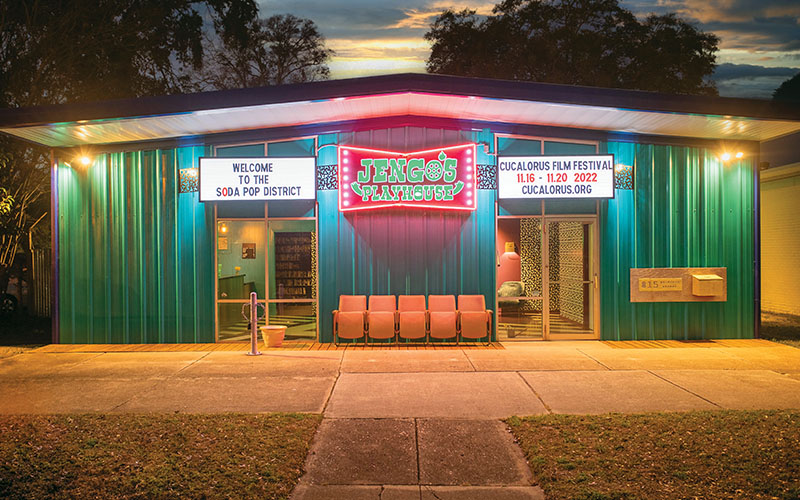
Dan Brawley, head of the Cucalorus Film Festival and founder of Jengo’s Playhouse, recently discussed the venue’s year-round efforts and thi...

Rising food costs have hit low-income families particularly hard, a nonprofit organization official said, while cuts and other changes to th...

S. Fletcher Daniels writes, "Nonprofits work at the intersections of complex social issues, so there isn’t a single 'bottom-line' metric lik...
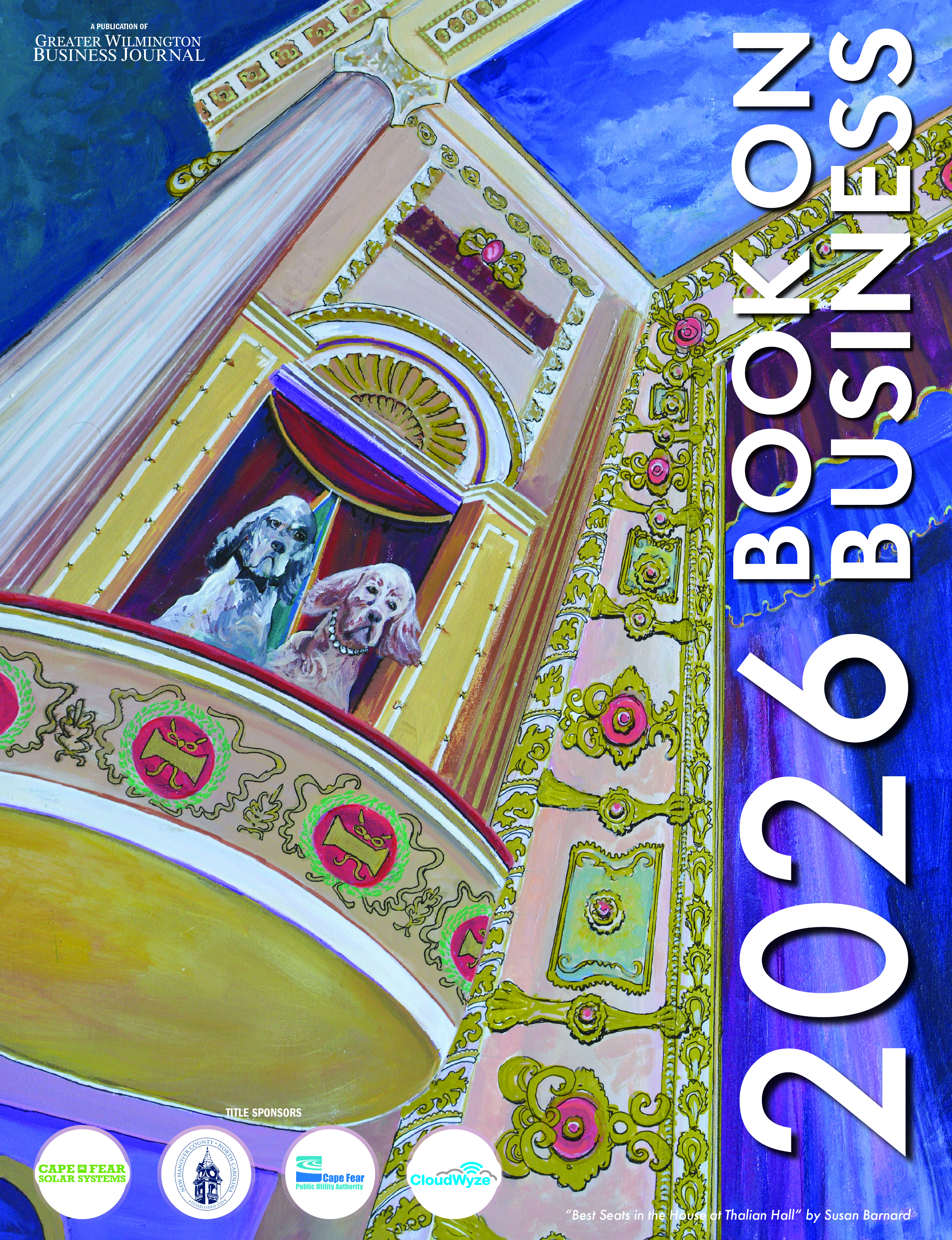
The 2026 WilmingtonBiz: Book on Business is an annual publication showcasing the Wilmington region as a center of business.