Although today’s economy may feel “shaky” for some American consumers, Tom Barkin, president and CEO of the Federal Reserve Bank of Richmond, said he sees stability ahead.
“The ground may look shaky on both sides of the Fed's inflation and unemployment mandate, and that may cause you and others to stress that the economy is about to lose its balance,” he said on Wednesday. “But if you focus on the horizon, I think the path forward feels a lot more stable.”
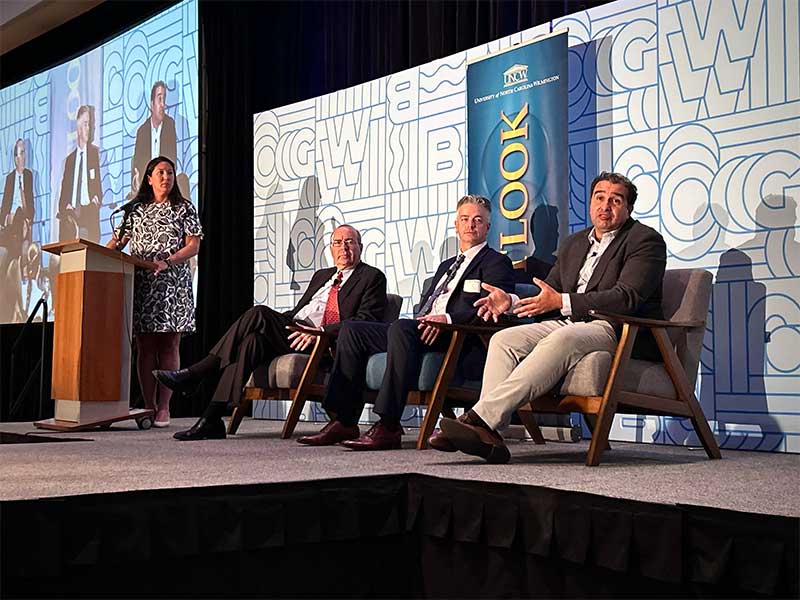
Barkin highlighted trends in the national labor market and inflation during the keynote lunch at Spark ILM, an event hosted on Wednesday by the Greater Wilmington Business Journal. Other keynote speakers included Brian Daley, the managing director and head of equity strategy for Bank of America’s Chief Investment Office, and Mouhcine Guettabi, an associate professor of economics at the University of North Carolina Wilmington and Wilmington’s regional economist.
In the current economic environment, businesses are taking a cautious approach; they haven’t been cutting back jobs, but they’re also not hiring.
“Instead, what people have been doing is cautiously downsizing through attrition,” he said. “This sustained caution has put downward pressure on the jobs market.”
That’s brought hiring rates to levels seen during the Great Recession and caused the unemployment rate to tick upward, Barkin said. At the same time, however, the labor market is shrinking as border crossings drop and Baby Boomers retire.
“There may be fewer jobs to fill, but there are also fewer people vying for each job, and that's what the data shows us,” he said. “While job growth has fallen considerably, the unemployment rate has stayed relatively stable.”
Inflation remains above the Federal Reserve’s 2% target, but it’s been over target for more than four years, Barkin noted. Tariffs are set to raise input costs, along with other factors like rising health insurance premiums, he said.
However, Barkin said, he expects businesses to be hesitant to fully pass price increases onto consumers. He’s also seeing a spike in productivity as companies use new technologies like AI to get more done.
“Higher productivity growth is important when it comes to inflation, because it helps offset margin pressure in a way that limits inflation,” Barkin said. “So we saw that in the second quarter, where earnings grew despite higher costs and limited price passes.”
From a market perspective, Daley said he, too, is seeing signs of stability. He said it’s important to take a “nonemotional” stance when looking at investments, relying on market data trend lines and not the headlines.
“It's pretty clear to us right now, from our perspective, with talking with companies, talking with the consumer, that the economy is on a pretty healthy platform, despite all the noise,” he said.
Daley pointed to continued growth in consumers’ year-over-year spending, along with higher-than-expected earnings growth in the equity market during the second quarter of the year. He also said that he expects the Federal Reserve’s recent interest rate cut to help kickstart more activity in a “frozen” housing market.
AI has the potential to boost productivity for U.S. companies, Daley said, with hundreds of billions of dollars set to be invested in the technology and the data centers that support it. That productivity increase helps support increased earnings.
“AI is going to give us an innovation boom and a whole regime change where companies are going to be more efficient,” Daley said. “Productivity numbers are already starting to move higher.”
On a local level, Guettabi said Wilmington’s population is still growing but at a slower rate compared to the years following the COVID-19 pandemic. Many areas, like Wilmington, that benefited from domestic migration, remote work and retirements during the COVID-19 pandemic have seen a slowdown in their growth rates in recent years.
“We're still growing, but we're no longer one of the standout areas in terms of growth and one of the reasons for that is because we benefited from a lot of the (COVID tailwinds) that have injected a ton of money into the area, a lot of retirements, a lot of employment growth, a lot of good things that have slowed down,” Guettabi said. “So the sky is not falling, but there are some things that are flashing orange.”
The Wilmington area is relatively insulated from the impacts of ongoing federal actions, Guettabi said, because the area has a low number of federal employees and a relatively small manufacturing sector, which could see potential tariff impacts. The area’s largest area of exposure to tariff measures is the Port of Wilmington, he said.
Guettabi said the economy in the Wilmington area has continued to diversify, with “tremendous growth” in the health care and professional business services industries. He added that the influx of workers and new residents in the years during and after the pandemic has forced local residents and leaders to consider how to approach the area’s ongoing development, along with traffic and other quality-of-life issues.
Local leaders will have to address issues like housing affordability, including the current mismatch between wages and housing costs, to ensure that the region remains an attractive place for employers and prospective workers alike.
“There is this debate between quality of life and more building,” Guettabi said, “but unless we address the supply side of our housing, these numbers are going to start scaring future employers and future individuals, so we really need to pay attention to them.”