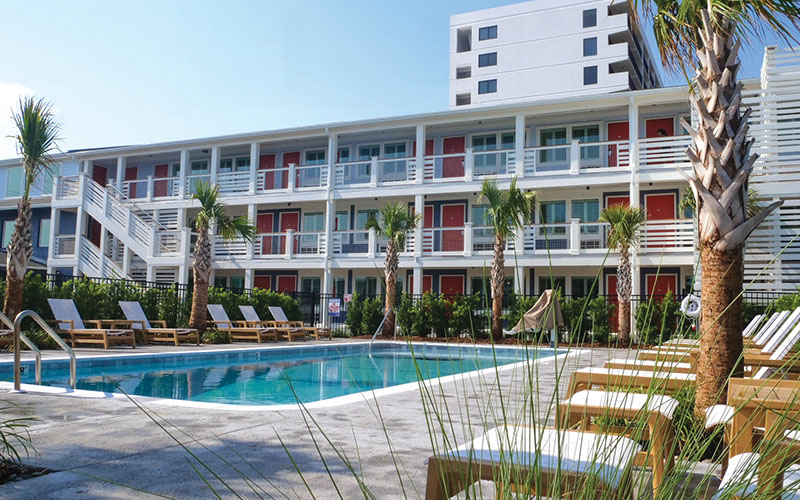
As Sailfish LLC’s inaugural hotel development project, The Oceaneer Hotel – a boutique hotel in Carolina Beach – has emerged this summer from a transformative three-year, multi-million-dollar renovation.
According to Sailfish, this journey has been marked by a commitment to detail, revitalizing the 50-year-old structure to embody both eco-friendliness and luxury and creating a beachfront oasis for tourists and locals alike.
“We like to refer to the hotel as ‘the beach hotel that loves the beach back,’” said Rob McCord, managing director of Sailfish LLC. “(During) my decades of beachcombing, I have developed my own appetite, and we tried to provide the kind of small hotel we ourselves would want to use during a great vacation.”
Sailfish purchased the Oceaneer, 1621 S. Lake Park Blvd., for $5 million in June 2022 and owns several other vacation rentals in the area. The investment firm based in Wilmington specializes in acquiring, developing and managing properties, with a focus on short-term rentals. The company concentrates on the East Coast and aims to improve rental experiences through renovations and partnerships with designers and contractors.
“This is the only boutique hotel we own,” McCord said. “We will probably wait at least four years before we do another boutique hotel. We’ll let this mature. We’ll see how it goes. We’ll learn.”
The hotel features 26 rooms with eco-friendly elements, such as Rocco fridges designed for longevity and low energy consumption, ethically sourced biodegradable coffee pods and canned water that replaces beach-threatening plastic bottles. Complimentary water bottles promote reuse and waste reduction, while eco-friendly soap and bath products further enhance the hotel’s dedication to a greener future, said McCord.
McCord said Sailfish has taken care to extend its considerations beyond the hotel grounds, being mindful of the local wildlife, the islanders and the flora and fauna of the beach environment. As a result, Sailfish has preserved the native plants to maintain the existing ecosystem and prevent beach erosion. The project also used turtle-safe lighting throughout the property to protect nesting habitats along the beach.
“We also encourage guests to explore the island in eco-friendly ways – providing free access to beach cruisers and easy on-site e-bike rentals; both prove much more fun than sitting in beach traffic, and they both provide a low-impact way to see the island,” McCord said.
Sailfish aimed to foster community by prioritizing harmony and preserving local views over building a towering hotel, he said.
Development near the beach can disrupt natural plants, leading to erosion and flooding, so they focused on minimizing impermeable surfaces, according to McCord. By increasing permeable surfaces, Sailfish enhanced the customer experience while protecting the environment, McCord said.
“As a privately held business, we have the advantage of discussing these investments directly with our investors,” said McCord. “They understand that such expenditures can lead to benefits that go beyond just financial returns.”
One of Sailfish’s partners in the Oceaneer project was pghArchitecture, led by architect Philip Humphrey, who noted that there were few challenges beyond adhering to the island’s strict building codes. The project was ultimately successful in preserving the existing building, which was a paramount goal.
“We were able to keep a cool old beach building that has always had its own character,” said Humphrey. “The most sustainable aspect of this project is that we didn’t demolish a giant building and send it to the dump. To me, the highest level of sustainability is to reuse a building.”
McCord said the investment firm found the hotel’s location particularly appealing due to its proximity to local amenities. These include the Carolina Beach Boardwalk, just a 1.5-mile walk along the beach. Nearby, Carolina Beach State Park offers 50-foot dunes and numerous hiking trails. Other local attractions include the Fort Fisher State Historic Site, known for being the site of the largest land-sea battle of the Civil War, and the N.C. Aquarium at Fort Fisher.
“We built this lovely boutique hotel experience for people who would come not just for the beach but also for easy, bikeable access to the national caliber amenities this Island has to offer,” said McCord.
Supporting the local economy, building strong connections within the community and fostering relationships with local vendors and businesses is vitally important to the hotel’s overall success, said McCord.
“We are also working to connect with local vendors to encourage our guests to explore well beyond their beach chairs,” he said. “We have a great alliance with Tony Silvagni, a world-class surfer, who teaches surfing and provides great beach chairs, umbrellas and e-bikes for our guests.”
Read more on Pleasure Island:
Town’s History Stretches a Century
Beach Hotel Sails into New Chapter
Town Aims to Buy Boardwalk-Area Parcels