For most of us, a front door is so ordinary that we barely notice it.
We pull it shut when we leave for work. We hear it open when family arrives. During the holidays, it may frame a grandparent carrying in an armful of presents, a neighbor dropping by, or someone wrestling a Christmas tree into the living room.
At night, we lock it.
For most of us, that door simply means home. And that sense of safety and belonging can be easy to take for granted.
For a 71-year-old man we know as Mr. Henry, that feeling had begun to fade from memory.
For much of his life, Mr. Henry worked with his hands. He repaired homes for other people. A leaking pipe, a broken hinge, an appliance that needed coaxing through another year. He knew how to fix the ordinary things that keep others’ households running.
Then, after losing his wife, he learned to live carefully on a fixed income.
And his rent went up.
Mr. Henry did the math. Then he did it again.
He cut what he could. But after prescriptions and groceries, there simply was not enough left to keep paying for the place he called home.
By the time he arrived at Good Shepherd Center, he was carrying medication in a grocery bag, a few folded clothes, and an envelope containing the important papers he could not afford to lose.
He had called everyone he knew.
He had spent what he had.
And before he asked us for help, he apologized.
“I’m so sorry. I just don’t know where else to go.”
There are sentences you hear in this work that stay with you.
That is one of them.
No one should have to apologize for needing help. No family. No Veteran. No elder.
Mr. Henry’s story is his own, but the circumstances that brought him to Good Shepherd are increasingly familiar.
A rent increase. A health problem. The loss of a spouse. Reduced hours at work. An unexpected expense that consumes the small cushion someone spent years trying to build.
For a household already living close to the edge, there does not always have to be one catastrophic event.
Sometimes, there is simply no math that will make it work.
At Good Shepherd, our job is to be here when that happens.
For Mr. Henry, help began with something simple: a hot meal.
That meal was not the solution to his homelessness. It was the first point of connection.
From there, he could rest safely. He was connected with Good Shepherd’s on-site Medical Clinic for help addressing chronic health concerns. A Case Manager/Housing Specialist sat down with him to sort through paperwork, understand his income and needs, and begin working through the barriers between his crisis and housing.
This is what our mission to feed the hungry, shelter the homeless, and foster transition to housing looks like in practice.
And all of that work is directed toward the door that matters most: a safe, stable home.
Mr. Henry is one person.
Last year, Good Shepherd provided over 38,000 nights of emergency shelter to 334 homeless adults and children in need of safe refuge.
And through intensive, comprehensive interventions, 267 men, women, and children returned from homelessness to safe, stable housing of their own.
That number deserves a moment.
267 homeless adults and children.
Behind that number are parents turning a key to a home their children can settle into.
Seniors with a safe place to keep their medications and belongings.
Veterans rebuilding stability.
Neighbors who had experienced homelessness for years finally moving into housing with the support they need to remain there.
Some returned to housing on their own. Others went home together as families.
Every story is different.
But each begins with someone reaching a moment when they cannot solve the problem alone.
What happens next depends in large part on whether a community has built something strong enough to catch them.
Around the holidays, charitable giving can become abstract.
We talk about generosity. We talk about year-end giving. We talk about Giving Tuesday.
But a gift to Good Shepherd becomes remarkably concrete.
It becomes groceries being unloaded in our kitchen.
A warm plate passed across the Soup Kitchen counter.
A bed made for someone unsure where they will sleep that night.
Transportation to an appointment.
A staff member helping replace an ID, complete an application, resolve an old utility balance, or find an affordable apartment that will work.
Medication stored safely.
A signed leased.
A rental deposit.
A move-in.
A door.
A key.
That continuum of services matters because homelessness is rarely solved by one thing.
A meal alone cannot restore housing. Neither can a shelter bed. But when food, shelter, health care, case management, transportation, housing assistance, and community support work together, a moment of crisis can become the beginning of a path back to wellness and a better life.
We know because we see it happen.
This year, Good Shepherd has set a goal of raising $100,000 through our year-end campaign to help feed and shelter neighbors in crisis.
It is an ambitious goal because the need is significant.
But $100,000 is not really the story.
Mr. Henry is.
So is the homeless mother arriving with children who need somewhere safe to sleep.
The Veteran trying to find his footing again.
The person eating their first hot meal of the day in our Soup Kitchen.
And the former shelter guest turning a key months later and stepping into a place that is finally theirs.
Those are the people behind year-end giving.
And whether you make a gift on Giving Tuesday, before December 31, become a monthly donor, purchase needed items, volunteer your time, or find another way to support Good Shepherd, you become part of what happens after someone says:
“I just don’t know where else to go.”
Because there should be an answer to that sentence.
There should be someone ready to help figure out what comes next.
And there should be a path toward a new address.
One with a door and a key.
One that closes at night with the blankets warm and the person inside finally able to exhale.
This holiday season, help us open that door.
Make your Giving Tuesday or year-end gift to Good Shepherd Center and explore other ways to get involved on our Donate page.
Ending homelessness requires collective action. By becoming more involved with Good Shepherd this year, you become part of the solution.
Donate:
Explore ways to donate here.
Financial contributions support our shelter, meal programs, housing initiatives, and the Home for Good Campaign.
In-kind donations—food, clothing, hygiene supplies—help us direct more resources to housing placements.
Learn:
Visit endhomelessness.org to explore national data and solutions.
Read Homelessness Is a Housing Problem or watch Dr. Gregg Colburn’s presentation on how the lack of affordable housing drives homelessness.
Learn more about our efforts at goodshepherdwilmington.org.
Spread Awareness & Advocate:
Share accurate information about homelessness and solutions like Permanent Supportive Housing.
Support policies that expand resources for affordable housing and homelessness prevention.
Volunteer:
Help serve meals, assist with grocery giveaways, or support behind-the-scenes efforts. Even a few hours make a difference.
Thank you for standing with us in this important work.
Katrina R. Knight, MSW
Executive Director, Good Shepherd Center

Landfall Home Sale Shatters Community's Previous Price Record
Cece Nunn
-
Nov 9, 2026
|
|
On Oleander Drive, Flaming Amy's Building Listed For Sale, Ground Lease
Emma Dill
-
Nov 10, 2026
|
|
Wilmington Developer Takes First Video Game To Market
Cierra Noffke
-
Nov 10, 2026
|
|
Flex Space Project Pitched Near Leland
Emma Dill
-
Nov 9, 2026
|
|
Paterson Joins Margaret Rudd & Associates Inc. Realtors
Staff Reports
-
Nov 10, 2026
|
|
This category honors a nurse practitioner or physician assistant whose performance is considered exemplary by patients, peers and other heal...
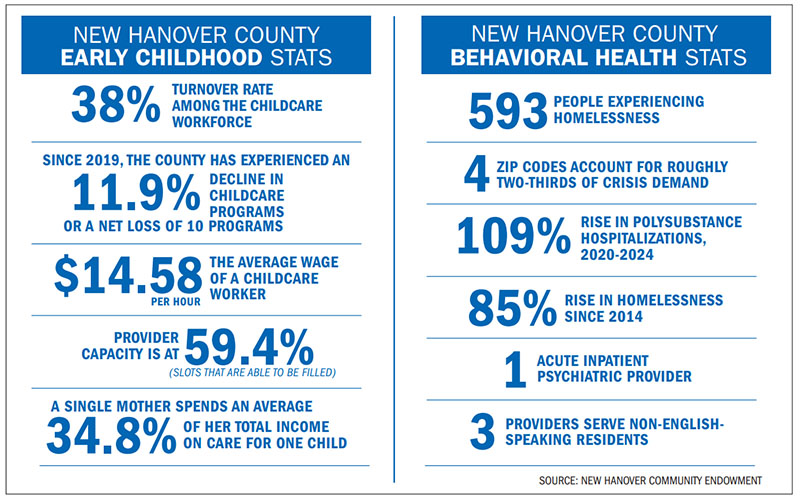
The endowment shared its plan to use data-based research to develop its grantmaking strategy....
With commercial uses already in place, Riverlights is getting additional businesses in the coming months and years....

The 2026 WilmingtonBiz: Book on Business is an annual publication showcasing the Wilmington region as a center of business.