Editor’s note: In March 2020, hospitalist pediatrician David Hill wrote the editorial “Current sacrifice for future gain” during the early stages of the pandemic. The Business Journal invited Hill to reflect on the past two years since, for this column.
I’d really like to think we’re done with COVID-19. The last time things looked this promising was late July 2021, when our family gathered in Lookout Mountain, Tennesee, to celebrate the remarkable life of my paternal grandmother, who had died peacefully at age 102 the previous December. We embraced and told stories in the dappled summer light of the churchyard, shared pasta at her favorite restaurant and gossiped over drinks late into the night.
Then came Delta. Then Omicron. With masks on our faces and vaccines in our arms, we continued to travel, shop and dine, but our audacity came at a price. All five of our kids at some point missed work or school from exposures or infections. My wife’s half marathon training runs shrank to exhausting slogs from the bedroom to the kitchen after a careless in-law brought COVID to a family gathering. My fully vaccinated son unwittingly carried Omicron from his college campus to his girlfriend’s dorm at another school, wreaking havoc on spring break plans and friendships across two states.
And yet at this moment, with redbuds blooming and azaleas waiting in the wings, it appears we’re emerging into a new season of freedom and safety, the operative word being “appears.” SARS-CoV-2 is mutating with the speed of a trillion monkeys typing on a trillion typewriters. They don’t have to write
War and Peace; they can just edit a few letters of DNA to get marginally better at evading our defenses, and here we go again.
Already scientists are collecting concerning signals from
wastewater in some communities. China has locked down an entire province of 37 million in a new wave of infections. Omicron variant
BA.2 is spreading rapidly, but we’re not sure how dangerous it will be. I’m not stocking up on soup and toilet paper just yet, but I’m also not tossing out the masks I have stashed in every car door and coat pocket. We’ve seen this movie before, but we don’t know what part we’re in: Is this the end or the middle?
Wherever we are, it feels like an appropriate time to express gratitude, not to a disease whose death toll is closing in on 1 million American lives, but to those people whose efforts have made this ordeal a little more bearable. Here’s my partial list, in no particular order:
• The Environmental Services staff at both hospitals where I attend. When I’m on call the hospital is my home for as long as 48 hours at a time, and their work literally saves lives, possibly even mine.
• The pediatric transport teams at Vidant East Care, Duke Life Flight and Carolina Air Care. Unlike New Hanover Regional, Wayne UNC Memorial has no pediatric intensive care unit. When children and newborns
become critically ill with COVID and its complications, these teams arrive like the cavalry and carry my patients to facilities with the resources they need to survive.
• The COVID-19 Pediatrician Group on Facebook. Those of us caring for children with COVID have faced a near-constant barrage of questions regarding diagnosis, treatment and prevention, and my peers are always ready to share the best answers they can find. We also support each other in coping with attacks on science and medicine that at times became very personal.
• Our neighbor with the electric guitar, who set up his amp on the porch less than a week into lockdown to entertain an audience on lawn chairs in the street. We needed that.
• The staff at the New Hanover Regional employee vaccine clinic. They just kept smiling as a seemingly endless line of my colleagues and co-workers crowded the old surgical pavilion, excited to no longer be one leaky mask away from a possibly life-threatening infection.
• The entire medical community, who risked their lives to deal with crushing waves of illness, but two especially. Dr. Paul Kamitsuka brought his expertise in infectious diseases and infection control to bear to keep not only the medical staff, but the entire community updated and safe as we rode the learning curves of a novel and evolving threat. Dr. Philip Brown lent his voice and leadership to supporting social justice and racial equity, knowing that a community is only as safe and healthy as its most vulnerable members.
• My ex-wife’s father. An internationally renowned physician scientist with a major role in the U.S. COVID response, he convened the whole family, including my new family, on a weekly Zoom call both to update us and to help us support each other. Those meetings not only helped us make sense of the pandemic, but they also allowed me to reconnect with my former in-laws and nieces, whom I sorely missed.
The list could go on to include the management of Coastal Horizons, which allowed my wife to work remotely, the park rangers who kept us safe and informed on our camping trips, the restaurateurs and patrons who found new ways of doing business, the business owners who pivoted to contactless delivery, the teachers who adopted new technologies on the fly and more.
There are so many people to thank because in a pandemic, immunity is not just a property of individuals. Our strongest immune system is a community that works together to protect the vulnerable, innovate in the face of change and support the humanity of all.
As this story continues to unfold, I am proud to live in just such a community.
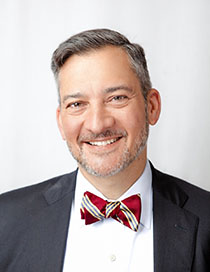
David Hill is a Wilmington-based hospitalist pediatrician working at Wayne UNC Memorial and Novant Health New Hanover Regional Medical Center. He serves on the Council Management Committee of the American Academy of Pediatrics and the Policy Committee of the N.C. Pediatric Society and hosts the AAP’s official podcast, Pediatrics On Call.