Just as the past several years have proved a rough ride for many investors, they have been challenging for financial advisers. COVID-related restrictions meant a rapid transition to remote meetings and digital communications. Advisers have had to emphasize the need to plan for the unexpected as they reassure jittery clients. Helping educate clients has become more important, according to industry experts.
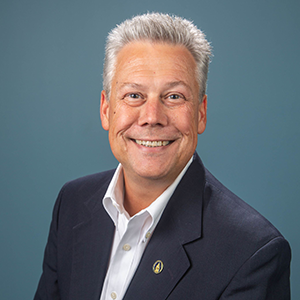
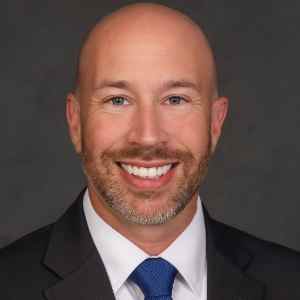
“We do active coaching around the markets, the economy and risk management,” said Vinton Fountain III, principal of Captrust in Wilmington. “People ask, ‘Will my money last? How much risk should I take?’”
So even as more adviser-client meetings have moved online and more advisers work remotely, engagement with clients has never been more important, according to a US News & World Report article last December. In looking at trends in the financial advising industry, engagement was at the top of the list, according to the piece.
“Financial professionals will have to continue to adapt how they engage with clients in order to educate them and connect them to resources,” Bill McManus, vice president and managing director of Applied Insights at Hartford Funds, said in the story.
Some Wilmington-based advisers have increased their electronic communications with clients through regular email market reports and economic recaps. But they try to balance the use of technology with personal service.
Fountain said that answering the phone is an important way his office shows clients they are valued.
“It’s all about clients,” he said. “They want access to their adviser and our team without hassle. This is culturally consistent with our values.”
Another trend, according to the US News article, is the consolidation of firms and services. Fountain achieved greater reach for Fountain Financial Associates when, in 2020, Captrust acquired it.
Not only did the firm become part of a nationwide network and gain back-office support through the Raleigh-based company, but it also increased its capabilities to serve endowments and foundations.
With improved technology and streamlined communications, geographic consolidation is easier than ever, without sacrificing efficiency.
For example, Wilmington-based Pathfinder Wealth Consulting acquired Keystone Financial Partners of Cary last September and integrated the Keystone team into its overall operations. The blended entity, now under the Pathfinder flag, has expanded capacity to reach into broader markets in the Triangle and Eastern North Carolina.
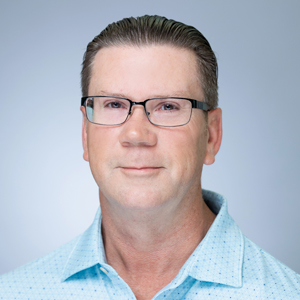
But there is another model, said Scott Winslow: the small, boutique firm. He likes the “deep relationships” that he and his colleagues develop with their clients.
Before Winslow and fellow managing partner established their firm, Nabell Winslow Investments and Wealth Management, in 2013, the two worked in the financial advisory arm of a bank, which meant they were limited to recommending the bank’s proprietary investment products. They opted for independence.
One focus of Winslow’s work is research. He was recently appointed to the board of the Granum Center for Financial Security, a part of the American College of Financial Services.
“We are doing a ton of research on regulatory issues that are coming up,” he said.
One of those issues is the need for a unified approach to regulation of the financial advisory industry, he said. Currently, according to Winslow, the Financial Industry Regulatory Authority (FINRA), the Securities and Exchange Commission and the state of North Carolina have different sets of regulations and compliance is a major time consumer for advisory firms.
“Being a compliant firm is really hard,” he said. “Different regulatory entities are coming at it from different perspectives. We would love to see the various regulatory bodies come up with safe harbor [that would include] strong fiduciary language for advisers to follow.”
The issue of what advisers are fiduciaries – meaning that they are legally obligated to put their clients’ interests ahead of their own or their company’s – has gained visibility since the U.S. Department of Labor adopted its Fiduciary Rule in 2020. Fountain said investors are slowly getting up to speed with the benefits of their financial adviser being a fiduciary. For one thing, he said, fiduciaries earn their money by charging a small percentage of the value of a client’s portfolio, not by getting a commission from every product sold.
“A fee-based adviser is compensated throughout the life of that account,” Fountain said. “If those investments don’t earn, there is a negative impact on the fiduciary.”
So, the adviser does well when his or her clients do well, unlike a commission-based adviser, who must maintain a certain volume of product sales to make ends meet.