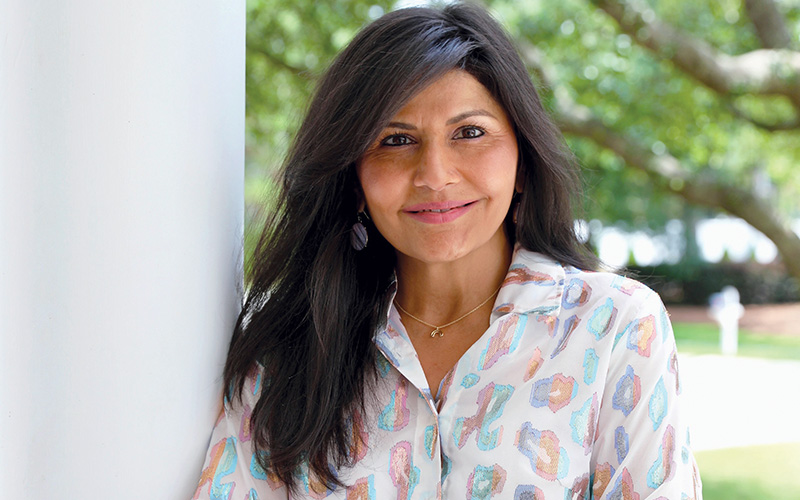
It was the worst day of Shital Patel’s life. It had no right to start like it did, so normal and unassuming, with plans to accompany her husband to his dentist in Leland for a simple appointment, maybe duck out for a quick trip to the grocery store. Then they’d take their boat from Wrightsville Beach into the Intracoastal Waterway later in the afternoon.
She and her husband, Wilmington cardiologist Hemant "Henry" Patel, couldn’t know that a dental implant appointment would lead to Henry’s death by anoxic brain injury, caused by the administration of anesthesia.
A little after 1:30 p.m. on July 30, 2020, Henry was called back into the procedure room of oral surgeon Mark C. Austin for the implant. Shital was told the appointment would only take 20 to 30 minutes, so she nixed the idea of grocery shopping, figuring that wouldn’t be enough time. The minutes ticked by with no Henry emerging from the procedure room. She was then told there was a delay because the oral surgeon had gotten a late start.
As more minutes went by, and Shital Patel knew something was wrong.
“I thought something must be happening. I never in my wildest dreams … never, never, never, never, never did I think it was this kind of serious,” Shital Patel said.
Henry Patel’s heart had stopped, and his oxygen saturation levels had plummeted, but neither the oral surgeon nor his staff tried to perform CPR, according to a review by the state’s dental board and Shital Patel. Excruciating minutes later, an ambulance arrived, and emergency medical service workers gave him CPR for 23 minutes. They were able to get his heart beating again, but four days later, the 53-year-old otherwise healthy Henry Patel was gone.
In the aftermath of the well-known and respected cardiologist’s death, his wife has been crusading to make the state’s dental board change its rules so an anesthesiologist or a certified nurse anesthetist (CRNA) has to be present when a patient is undergoing a procedure requiring deep sedation.
In Henry Patel’s case, he had never asked for deep sedation, only checking the box in his dental paperwork that indicated moderate sedation, Shital Patel said.
A year after that day, Austin permanently surrendered his license to practice dentistry in the state of North Carolina.
The N.C. State Board of Dental Examiners found that even though Henry Patel’s oxygen levels and heart rate had dropped to life-threatening levels and did not improve, Austin “did not successfully place an advanced airway adjunct, create a surgical airway via cricothyroidotomy, take specific intervention to treat bradycardia, nor initiate CPR prior to EMS’ arrival.” Austin, according to the board’s consent order, denied that his actions resulted in Henry Patel’s death.
The Patels filed a wrongful death lawsuit against Austin that’s been settled. But nothing can bring Henry back.
“We had this perfect life,” Shital Patel said, “and it got taken away. All of it.”
These days, she has channeled her grief, and that of her son and daughter, into pushing state officials to change the rules, which now only require a permit from the dental board to administer anesthesia.
The board has been considering rule changes, part of which would require dentists and oral surgeons to have a CRNA or an anesthesiologist present when a patient is put under certain types of sedation, according to NC Health News.
The proposed changes state, “During a sedation procedure involving the administration of general anesthesia, moderate conscious sedation, or moderate pediatric conscious sedation, the permit holder performing the surgical or other dental treatment shall utilize either a dedicated sedation provider or a dedicated sedation auxiliary as set out in this Rule.”
Bobby White, CEO and legal counsel of the N.C. State Board of Dental Examiners, said the proposed changes garnered the most comments the board has ever had, with more than 1,300 pages of comments that the board’s volunteers have to go through.
“The proposed rules, in light of the comments received from the public, are being reviewed by the board’s advisory committee on sedation and general anesthesia,” White said June 6.
“We’re working as quickly as we can. It is a slow process.”
But officials are pushing hard to have the latest revision, which incorporates the public comments, to them at the June or July meeting of the dental board, White said. The revised rules will then be available for public comment before being put forward to the state’s rules review commission.
That commission is a subcommittee of the General Assembly, White said, and that’s where the actual rules could be approved.
Shital Patel said she won’t give up until they are.
“Nobody knows the pain we feel every day. Nobody knows the tears that have flooded our cars, our homes, our beds, our pillows, our friends’ shoulders,” she said. “My goal is so nobody else has to know this.”