Nuclear fuel, an alternative to coal and oil-produced energy that emits no greenhouse gases may be the answer to climate change, but the challenge of what to do with used radioactive fuel still lingers.
An estimated 53,000 metric tons of nuclear waste sits in containers from 110 nuclear power plants across
the country.
Only a percentage of that is radioactive. But, that waste grows every day. Until recently, the answer of what to do with the waste laid in a Nevada desert ridgeline.
But the Obama administration has clearly stated that depositing the nuclear waste into Yucca Mountain, 80 miles northwest of Las Vegas, is now no longer an option. A viable solution is up in the air. And, one man in Wilmington says he has the answer that could solve this.
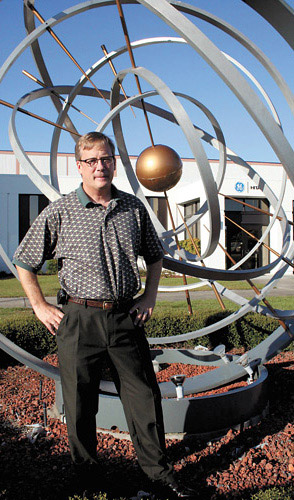
A nuclear scientist with 1950s-style browline glasses has been testing and refining a new design for a nuclear waste recycling center at GE Hitachi’s world headquarters in Wilmington since 2006.
Dr. Eric P. Loewen, a chief consulting engineer heads up a team comprised of associates from IBM, Lockheed Martin, Fluor, Burns and Roe that is developing the Advanced Recycling Center (ARC), a new design that would take spent nuclear waste and recycle it as a metallic fuel cooled by sodium to produce more energy. Recycling would reduce the half-life of the radioactive material from millions of years to 300 to 700 years, Loewen said.
“We’re in North Carolina. We invented flight here. The first flight was 110 feet,” he said. He sees the ARC as an opportunity for North Carolina and Wilmington, specifically, to take the first leap and build the nation’s confidence in nuclear fuel recycling.
He describes what we can do with nuclear waste currently as the “Three R’s.” Repository is taking the used fuel and storing it, which is the path the U.S. is currently on.
Reprocessing is taking out the plutonium, putting it in a water-cooled reactor to convert into energy and then storing the rest, which now happens in France, Japan, and the U.K. And, recycling is what Loewen and his team at GE Hitachi proposes.
But, in the first week of October, Loewen’s federal funding for ARC ran out. It’s yet another hurdle in a long battle within the history of nuclear energy recycling.
“The reason why a company like General Electric is not going to invest private capital is because there’s too much risk,” Loewen said. “We are linked to government policy.”
General Electric began working on the sodium coolant reactor, which is part of ARC in 1985, when it received federal funding. In 1992, the Energy Policy Act was passed along with legislation to build this reactor, Loewen said.
But in 1994, with the change in Administration, the project was canceled. General Electric was able to work on it from 1995 to 2000 with funding from Japan and Korea, but stopped shortly after.
When the U.S. government changed its policy in 2006, GE Hitachi recruited Loewen from the Idaho National Lab to jump-start the project again.
“I inherited a beautiful design. Taxpayers had invested about $100 million in this,” he said.
“This is America’s solution. So, what frustrates me the most is that we’re not turning to this solution,” Loewen said.
One of the main reasons nobody has turned to it is because uranium is cheap, said Dr. Charles Forsberg, the executive director of the MIT Nuclear Fuel Cycle Study, who is studying what economic conditions need to be in place to make nuclear recycling a viable option.
“It depends on the ultimate costs of the PRISM reactor. The bottom line is it’s very hard ahead of time to know what the cost will be. That’s the big uncertainty of the GE Hitachi system,” Forsberg said.
Additionally the price of uranium and how large nuclear energy will become as an energy source will ultimately decide when nuclear recycling will be a viable solution.
Forsberg’s study and recommendations will be released in December.
Still, the estimated $3.2 billion project design is at least two years away from being ready for submittal to the U.S. Nuclear Regulatory Commission for review. Even if the commission approved the design, construction will still take at least 10 years, Loewen said. “We have enough naysayers saying I can’t fly – only birds can fly – and these guys (our international competitors) are leaving the clouds in the nuclear industry. This is where North Carolina can step up and fly for 110 feet to initially get confidence,” he said.
No other group has expressed an ambition to propose a design for nuclear recycling, said Roger Hannah, a spokesman for the U.S. Nuclear Regulatory Commission southeastern division. “ If this is going to be built, it’s going to be because of political will. The Administration is going to have to get behind this,” Loewen said.
As the Obama Administration looks for answers to the nuclear waste problem, Loewen sees his 7,000-page design proposal as a chance for Wilmington to be a part of the solution.
How does GEH make nuclear fuel?
Outside a warehouse on the sprawling 1,600 acres at GE Hitachi, trucks sit with large drums filled with a gel-like substance called uranium hexachloride or UH6.
The gel is pushed through one of three identical machines inside the warehouse, where steam and hydrogen turn this gel into a fine talcum powder-like brown substance called uranium oxide or UO2. In one year, the factory produces about 1,000 tons of this powder, which is the basis of nuclear fuel.
The powder is cinerated in a 1,600 degree Celsius furnace, mixed in an auger, and compressed into a metallic casing called a pellet, which looks like a small bullet the size of the tip of your pinky finger.
One pellet filled with the brown UO2 powder weighs 6 grams and yields the equivalent of 17,000 cubic feet of natural gas or 1,780 pounds of coal.
In other words, five pellets that fit would in your palm can power a household’s electricity needs for a whole year.
At the factory, the pellets are loaded into about 9-foot long thin, metal rods. The rods are bundled into a batch of 100, sold, and shipped to nuclear power plants, where they will be used for about 6 years before they are considered nuclear waste.
How would the proposed nuclear recycling work?
The idea is to take the used bundled rods and separate the uranium from them by passing an electric current through a salt bath.
That uranium would be separated and reused in three reactors.
Uranium would be extracted in structurally sound buildings with three feet thick concrete walls. And the material would be transported in fortified shipping containers.
If GE Hitachi’s Advanced Recycling Center (ARC) plan came to fruition, Loewen said the power generated from the spent fuel could provide enough electricity for the entire U.S. for 70 years.

Tech Wilmington: Upcoming Events Calendar
Staff Reports
-
Sep 30, 2026
|
|
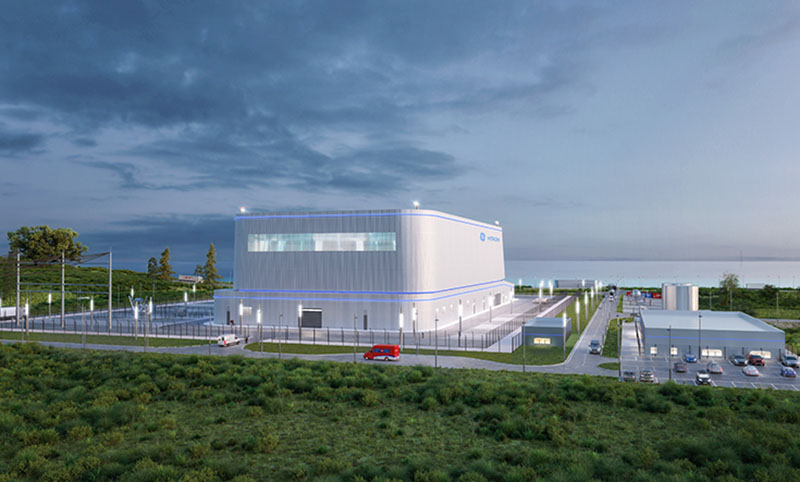
Regulators Issue First U.S. Construction Permit For GE Vernova Hitachi Reactor
Emma Dill
-
Sep 29, 2026
|
|
Much Of $15.8M In Endowment Grants To Impact Local Swimming Pools, Beach Towns
Cece Nunn
-
Sep 29, 2026
|
|
MacRae Promoted To Associate Broker
Staff Reports
-
Sep 29, 2026
|
|
Redevelopment Of Market Street Shopping Center Makes Progress
Emma Dill
-
Sep 29, 2026
|
|

Rising food costs have hit low-income families particularly hard, a nonprofit organization official said, while cuts and other changes to th...

S. Fletcher Daniels writes, "Nonprofits work at the intersections of complex social issues, so there isn’t a single 'bottom-line' metric lik...

Funded by donations, offerings and grants, Hope Recovery is permanently housed in the former Devon Park United Methodist Church and hosts mo...

The 2026 WilmingtonBiz: Book on Business is an annual publication showcasing the Wilmington region as a center of business.