As I contemplate the reality of starting my 35th year in the investment business, I’m reminded by the facts from 2020. Every year offers lessons for investors who are open to learning them. The lesson learned (again) was a reminder of just how unpredictable financial markets can be.
If a time machine could take us back to January of 2020 and we knew then that a deadly pandemic would sweep the world killing millions and sending every major economy into the sharpest recession ever recorded, not one of us (regardless of experience) would have suggested that market returns for 2020 would have been almost double the historical average annual rate. Understanding why this unexpected result occurred is of critical importance in thinking (and learning from) investment history.
The stock market is constantly talked about, especially by folks making predictions about its direction and valuation or forecasters foretelling investment returns. At the beginning of each new year, countless Wall Street firms parade out their top analysts forecasting where the market will be going and predicting what stocks or asset classes will be more rewarding. 2020 was another example of how difficult this forecasting is, particularly when it comes to financial markets. Financial markets are domains in which the rules of the game are poorly understood, information is invariably incomplete and expertise often confers surprisingly little advantage in predicting future moves.
Many cognitive biases affect human judgment, especially when investing. Recency bias leads us to think that current or recent past trends will continue and therefore can affect our expectations of the future. Many times, all of us, investors or not, make decisions based on simplistic extrapolations of the past, especially recent ones. If you can extrapolate anything from 2020, it’s that the world is a surprising place and that we should use those surprises as a guide and an admission that we have no idea what might happen next.
Since Live Oak Private Wealth manages individual portfolios, we think deeply and deliberately about uncertainty and risks as it relates to decisions we make with your family’s money. We are, in fact, in the decision-making business. Since we were just reminded again that forecasting and predicting is folly, we strive for better decision outcomes based not on extrapolating history from the past, but on smart “estimates” of the future. Philip Tetlock, co-author of “Superforecasting: The Art and Science of Prediction,” writes about reconciling two approaches to decision making: scenario planning and probabilistic forecasting. Each approach has a fundamentally different assumption about the future. Scenario planners have hundreds of imaginable ideas, but probabilistic forecasters look more at odds of possible outcomes and transform the uncertainty into quantifiable risk.
Elroy Dimson of the London Business School once defined risk as meaning more things can happen than will happen. That is a fancy way of saying we don’t know what will happen, but it is a useful framework when we take up the task of risk management. If more things can happen than will happen, we can devise probabilities of possible outcomes, but as last year proved (and 9/11 and the 2008 financial crisis) we will never know in advance the true range of outcomes we may face.
At the end of the day, from our desks, we think deeply about the businesses we own and are invested in. We contemplate, discuss worry and weigh probabilities against different scenarios that may unfold this year and beyond. Since we can’t predict what will happen with our portfolio companies in the short run and certainly not the market, we continue to invest with a margin of safety so that forecasting is not necessary. Maintaining a margin of safety, or room for error, is the only way to navigate an uncertain world.
Given today’s increasingly speculative backdrop and environment of Bitcoin, Gamestop day trading, etc., investing your family’s wealth is not an endeavor we take lightly. Investing with a margin of safety drives everything we do – asset allocation, security selection and amount of cash reserves. Maintaining a healthy room for error will allow us to endure the range of potential outcomes that lie ahead.
I will leave you with this thought: What are the similarities between a forecaster and a one-eyed javelin thrower? Answer: Neither is likely to be very accurate, but they are good at keeping the attention of the audience.
Disclosures


Defendants Seek Dismissal Of Luxury Homebuilder's Lawsuit
Cece Nunn
-
Jul 24, 2026
|
|
New City Position Hasn't Changed WDI Role Downtown, Officials Say
Emma Dill
-
Jul 24, 2026
|
|
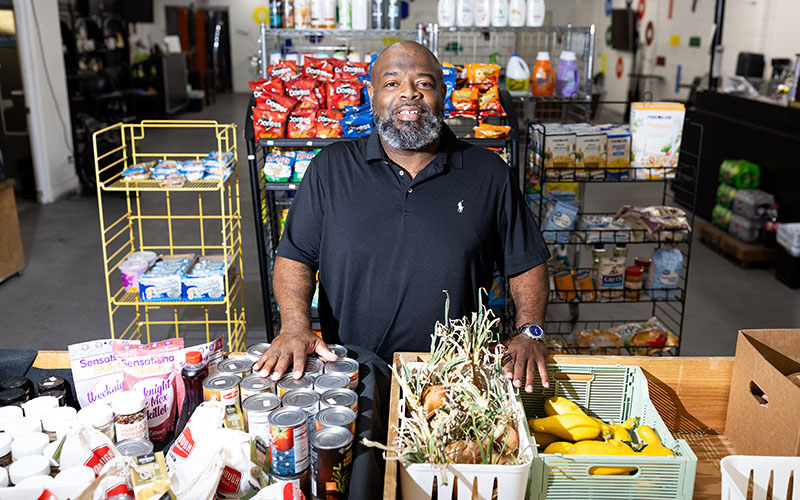
Some locally owned convenience stores in Wilmington have morphed into food and beverage destinations, including Bevvy Mart and Front Street...
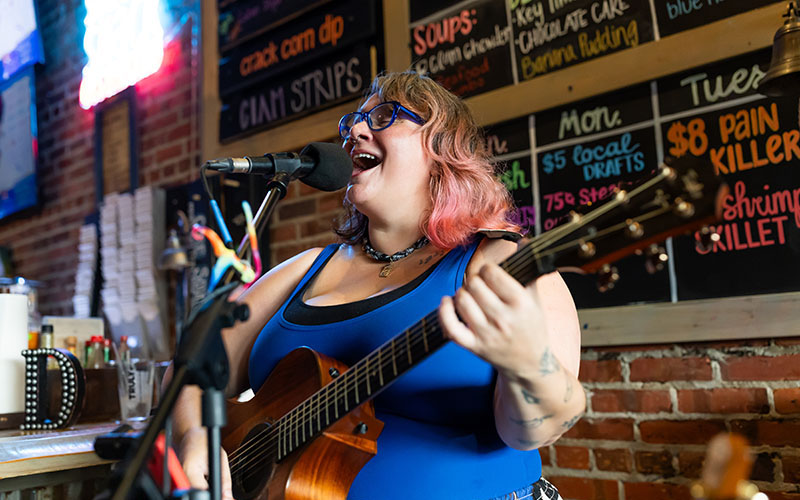
Wilmington's live music scene includes a mix of options and genres, but also faces challenges....

"Mayfaire has evolved into one of the most important commercial submarkets in Southeastern North Carolina because it offers a combination th...
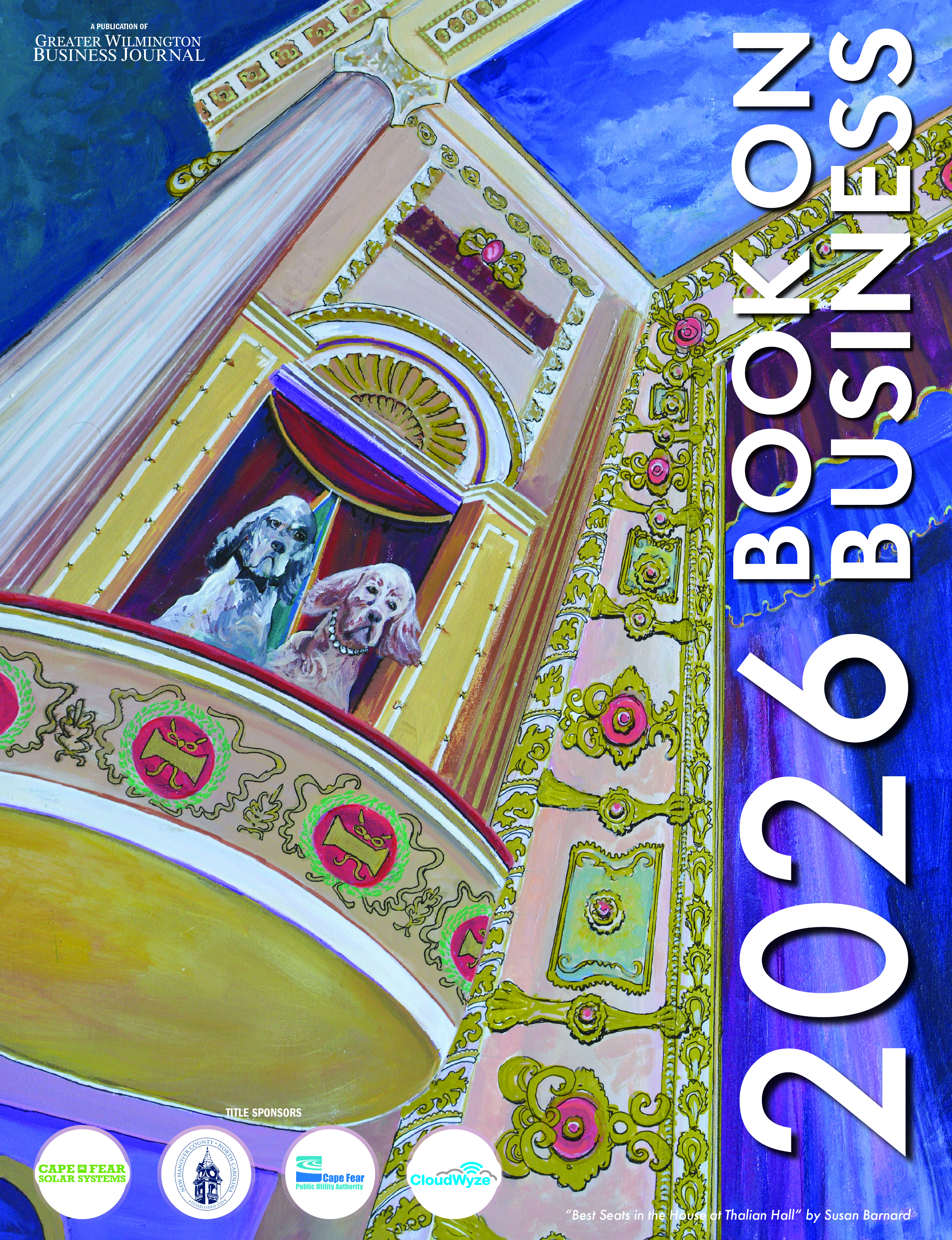
The 2026 WilmingtonBiz: Book on Business is an annual publication showcasing the Wilmington region as a center of business.