On a conference room windowsill overlooking Third Street and the Cape Fear River, Chuck Schoninger, is surrounded by smiling faces.
In pictures posing with Wilmington mayor Bill Saffo are Schoninger’s Chinese clients and their families who have visited the Port City for both leisure and business.
For many of the visitors, it was their first foray into Southern culture, but it was also an opportunity to see firsthand where their investment – in some case in excess of $1 million – is being funneled.
And there could be additional photo-ops added to Shoninger’s windowsill.
Chinese investment in greater Wilmington is growing, and with new projects on the horizon, a contingency of Chinese, local and state economic officials may soon be smiling all the way to the bank.
Local investment
By the first quarter of 2014, pending the approval of various city, state and federal agencies, more than $165 million in new foreign investment is slated for the region – with nearly 90 percent of that funding coming from Chinese investors.
Schoninger, CEO and president of Wilmington-based USA InvestCo, a firm that links foreign investors to economic opportunities and is heavily funded by a number of Chinese and international investors, said much of the money being generated for these projects is being raised through the federal Immigrant Investor Program, or EB-5, program.
For a minimum of $500,000 invested, individual investors are granted expedited green cards to move their families to the U.S. It’s also become an alternative form of funding for large-scale commercial developments that would have difficulty in retaining a loan with a bank for their project in the current economy.
Schoninger is well versed in such investments.
USA InvestCo is a leader of EB-5 funding for a number of regional projects that are currently under construction or pending.
The firm currently operates offices in the China cities of Guangzhou and Shanghai to match foreign investors with viable projects in greater Wilmington and the Southeast and Mid-Atlantic regions.
Wilmington is slated to see the bulk of such foreign investments in the southeastern North Carolina region, Schoninger said.
That bodes well with similar Chinese investment occurring in other parts of the state.
The Tar Heel state is the fifth-largest state for Chinese investment, according to data released this summer by New York-based Rhodium Group, an organization that studies economic growth and output in China and its effect on the global and U.S. economies.
Only California, New York, Texas and Illinois outperformed North Carolina.
Since 2000, the Rhodium Group estimates, Chinese investors have pumped nearly $400 million into the state – the bulk of the investment being funneled into the information technology, financial services, aviation and consumer product and services industries, the report stated.
Many of these transactions are occurring in the more urbanized sectors of the state, particularly in metro Charlotte, the Triangle and the Triad.
But Wilmington and Greenville, according to the report, are the two most active cities in the state netting Chinese investment east of Interstate 95 – mostly because of their universities and community college systems and being primary population hubs.
That investment is already evident in the Port City.
While work continues on the $42 million Northern Riverfront Marina and Hotel Indigo project, Schoninger said his firm would begin marketing and raising money for its long-anticipated next phase of the project starting in 2014.
Called the Wilmington Urban Redevelopment Project, plans call for three, seven-story buildings to front the Cape Fear River and future marinas with a total of 120 residential units and 75,000 square feet of ground-level retail throughout the $120 million mixed-use development, Schoninger said.
Both projects are expected to be funded through EB-5 financing.
USA InvestCo officials have also raised $10 million through EB-5 money of the $15 million needed to start work on a new freezer facility at the Port of Wilmington. The 75,000-square-foot cold storage facility would store fruit, vegetables and meat and could be expanded to 300,000 square feet.
And there are others.
Pending the sale of a nearly 1-acre tract wedged between the Wilmington Convention Center and Wilmington Chamber of Commerce headquarters, Virginia Beach, Va.-based Harmony Hospitality plans to construct an eight-story, $33.6 million, 186-room Embassy Suites hotel.
Company officials, if they receive approval from federal officials, plan to solicit EB-5 funds to pay for the construction. If the EB-5 request is further delayed or denied, Harmony officials plan to seek traditional financing to build the new hotel.
Additional investments from Chinese investors are also pending in Brunswick, Columbus and Duplin counties.
“In terms of economic development and growth, this region has a lot to offer the Chinese,” Schoninger said.
Big spenders
A number of economists and historians have compared China’s current economic expansion to that of the Gilded Age of America during the mid-19th and early-20th century – it’s fast, it’s opulent and it may stick around for while.
The country’s economic output expanded “nearly sixfold between 2002 and 2012, from $1.5 trillion to $8.3 trillion,” according to a recent column in The New York Times by Henry Paulson Jr., the former Treasury secretary and chairman of the Paulson Institute – a think tank that promotes sustainable economic growth in the U.S. and China.
With rapid economic expansion comes new wealth, and in China, there’s plenty to go around.
A number of international economists estimate that more than 300 million Chinese nationals are classified as mid- to upper-middle class citizens – roughly the entire population of the U.S.
In many cases, this class of Chinese middle class citizenry are entrepreneurs who have built and rapidly grown their businesses, are college educated, spend twice as much in the U.S. while on vacation than the average international traveler and have paychecks that exceed the average U.S. middle-income salary, according to local business experts who have worked with Chinese investors.
“They are looking to diversify their investments,” said Peter Reichard, one of two managing directors of Chapel Hill-based Tryon Capital Ventures. “In the Wilmington, Pender, Brunswick and New Hanover region, there are lots of opportunities to be had.”
Reichard should know.
His firm represented a wealthy Beijing millionaire during the June purchase of Sunset Beach-based Sea Trail Golf Resort at a Chapter 11 bankruptcy auction in Raleigh.
Officials closed on the $8.5 million transaction in mid-July, Reichard said.
As part of the sale, the Chinese businessman now owns three golf courses that were designed by Rees Jones, Dan Maples and Willard Byrd. The resort also includes two golf clubhouses, a 50,000-square-foot convention center, roughly 1,300 single- and multifamily homes, 600 rental villas, numerous unsold lots and 200 acres of undeveloped land.
Reichard, who also serves as the resort’s CEO, said the investor has pumped a large sum of money into the facility to help update its look, including more landscaping, painting and some minor golf course improvements.
“He is a big fan of golf and enjoys golf all over the world,” he said. “I think he feels that this is a good opportunity for him.”
It could possibly be a bigger opportunity for the southern Brunswick County coastal town of Sunset Beach.
Reichard said during the first quarter of 2014, officials plan to present the Chinese businessman with a master plan for his newly acquired 2,000-acre property that includes developing the 200 acres of undisturbed property at the resort into a new hotel, restaurant and spa.
“We would seek EB-5 financing to fund the retail components of the development,” Reichard said of the resort’s future growth. “I think the overall goal plan for Mr. Pan [the investor] is to fix up the course so that he can entertain his friends and business clients.”
Schoninger, who was also involved with the Sea Trail transaction this summer, said wealthy Chinese nationals are not only eyeing golf courses for future investments, some are unloading their capital into farmland and timberland, distressed subdivisions and various commercial developments – many paying cash for their newfound ventures in greater Wilmington and across the U.S.
And while the investment may appear on the surface as a way to grow personal capital, Schoninger added that some of the real estate purchases are a front to keep about face with other wealthy Chinese investors.
“It’s almost like they are keeping up with the Joneses,” Schoninger said. “A wealthy Chinese investor may go buy an office building in New York or Los Angles just because another business associate did the same thing. Someone may go and buy a golf course in North Carolina just because their associate has a similar golf course somewhere else … they want to do business with people that have money and these purchases signify wealth.”
There is also a more personable reason for these investments – family ties.
Schoninger said while a number of his Chinese clients are rooted in the initial incentive to invest, a main priority is to gain citizenship into the U.S. to help their families.
“They absolutely love this country and the opportunity to be apart of it,” he said. “They want their children to attend our schools, especially our universities. And if they have a child that attends school in this country, they want to be nearby.”
Schoninger said in many cases the idea to invest in the U.S., especially through the EB-5 program, is to help quickly move their family to America.
“We send their attorneys monthly letters and updates about their clients’ investment and how things are progressing,” he said. “In many cases they’ll respond ‘Yeah, that’s great, but how soon can we get a green card?’ They could care less about the investment, they just want to get their family to America.”
Continued growth
Steve Yost, president of North Carolina’s Southeast, one of seven regional economic development partnerships in the state, said he expects Chinese investment to continue to grow in the greater Wilmington region because of the area’s port access and strong ties to agriculture.
“They are coming to us to seek those food products to meet their demands,” Yost said. “We are in a much better situation to grow crops and process foods, and they want to invest in those operations here.”
In September, shareholders with Smithfield, Va.-based Smithfield Foods Inc. approved Shuanghui International Holdings Ltd.’s $4.7 billion acquisition – the biggest purchase of a U.S. company ever by a Chinese firm that could affect roughly 10,000 farmers and employees throughout North Carolina and Virginia.
North Carolina also exports large quantities of corn and timber to China, Yost said. He added the region’s strong manufacturing base is also appealing to Chinese investors.
Within the last 18 months, Yost said his office has received notice of three to four projects from various Chinese investors who are looking to establish manufacturing operations in the greater Wilmington region.
Yost would not discuss the details of the projects, adding that the firms “have not made a decision” about their plans to grow in the region.
“We have a huge metalworking cluster in the southeast region,” Yost said. “Some of the companies want to establish their companies here and have their products shipped to China just to have the ‘Made in America’ label on their product because it sells well.”
Other investments could occur with the region’s growing film industry.
Joy Donat, a Wilmington resident and board member of the Carolina China Council, a nonprofit organization formed in 2006 to promote business, cultural and educational exchanges between North Carolina and China, said there are preliminary talks to partner with Chinese filmmakers to have movies and documentaries shot in Wilmington and beyond be viewed by moviegoers in China.
“Right now, only a limited amount of American films can get into the Chinese market,” Donat said. “What we are hoping to do is have American filmmakers partner with Chinese film companies so more American-made films can receive more capital and be viewed in China, but the talks are very, very preliminary.”
George Schell, a professor of information systems at University of North Carolina Wilmington’s Cameron School of Business who has taught business classes at two Shanghai universities, said continued education exchanges would also become pivotal in making the region attractive for additional Chinese investment.
“Education is an industry that the Chinese are interested in,” Schell said. “The more that we understand about them, the better we will understand how they consume products and what we can give them.”
But while Chinese investment is growing in the region, Schoninger said getting the investors to keep greater Wilmington on the radar requires a lot of work at all levels.
“We know that this is a great place to live, raise a family and have a high quality of life,” Schoninger said, “but so is New York, Atlanta, Chicago and Los Angeles, and many of them want to invest in those bigger cities than in places like Wilmington. So, if we want to be serious about keeping this type of investment in our area, it’s going to take building relationships and learning about their culture … and that takes time.”

'Best Places To Work' In Wilmington Recognized
Staff Reports
-
Oct 13, 2026
|
|
Business Journal Announces WilmingtonBiz 100
Staff Reports
-
Oct 13, 2026
|
|
Bitty & Beau’s Expands Mobile Coffee Franchise Network
Cierra Noffke
-
Oct 12, 2026
|
|
Fox Named Partner, Summerlin Vp At Sun Coast Partners Commercial
Staff Reports
-
Oct 13, 2026
|
|
Landscape Equipment Business Buys Property In Winnabow, Opens New Location
Cece Nunn
-
Oct 12, 2026
|
|
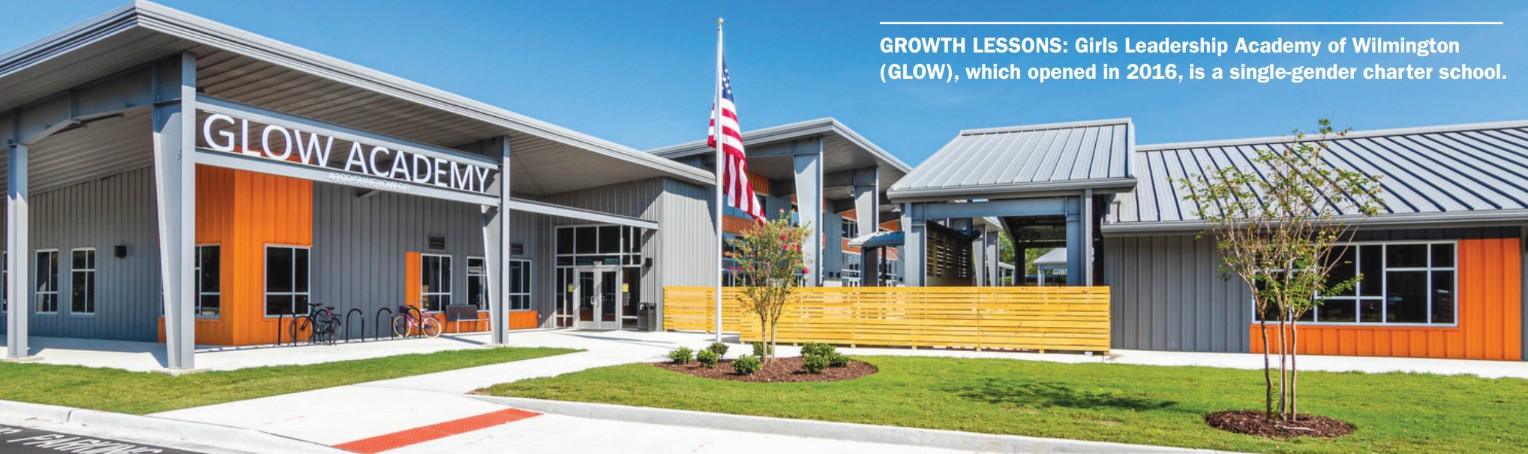
While the state’s charter school sector grows, Wilmington charter schools are seeing demand of their own – presenting both opportunities and...

Mitchell is facing many of the same struggles as other restaurants. Despite the challenges, Mitchell said she won’t compromise on food quali...

While downtown also benefits from general fund expenditures, the municipal service district (MSD) “is a way of having some additional money...
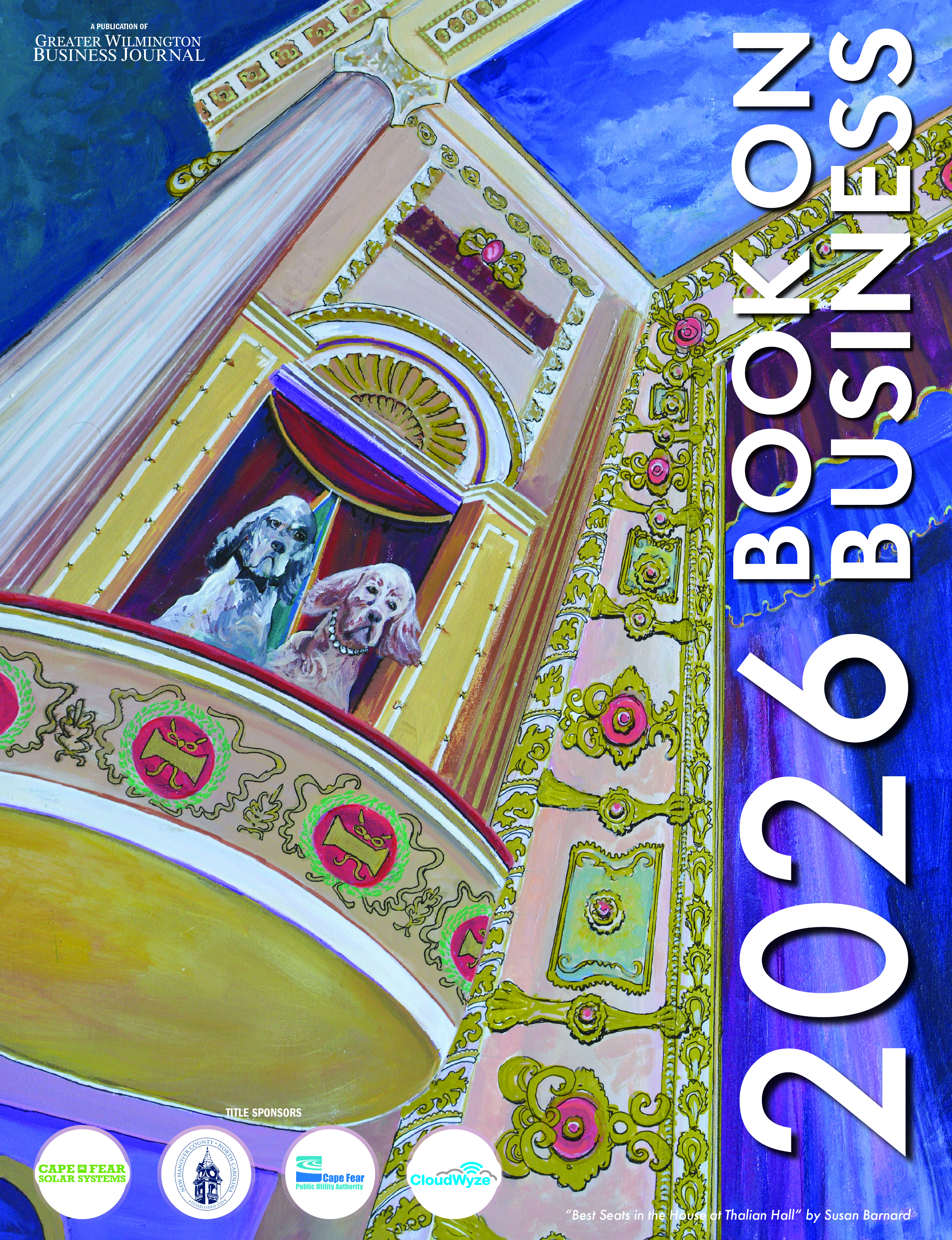
The 2026 WilmingtonBiz: Book on Business is an annual publication showcasing the Wilmington region as a center of business.