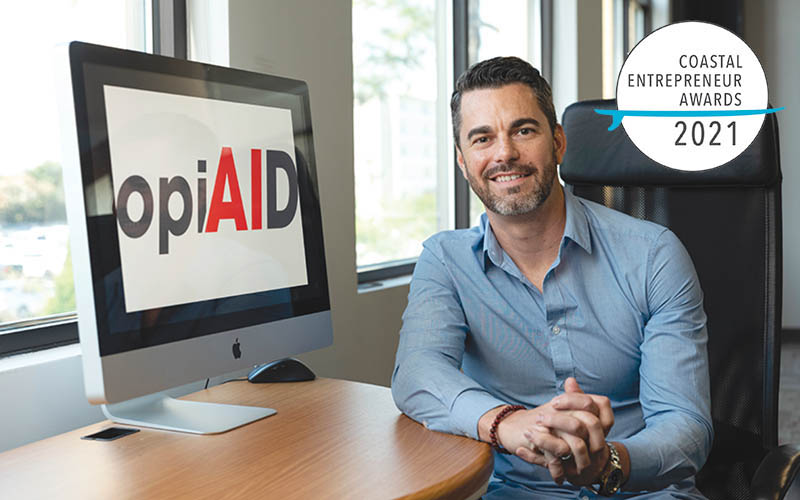
Wilmington-based biotech startup, OpiAID, is finalizing a deal with the state of Alaska to deploy its addiction recovery software using biometric data.
The startup first inked a contract with the state through an Alaska-based health care innovation accelerator Health TIE in November, said OpiAID Founder and CEO David Reeser. Now, he’s received the funds for the project, about $100,000 for now, and is signing contracts with individual clinics across the state, he said.
For now, the tech is being used on about 100 patients. But Reeser’s contract is recurrent with the capacity to expand to a network of about 41,000 patients across the state, he said. Alaska Mental Health Trust Authority, a state corporation, and the non-profit Mat-Su Health Foundation are funding the deal as a pilot project, according to
Alaska Business magazine.
Health TIE looks for innovators across the country to solve problems affecting Alaska’s sparse, and at times isolated, population. The state is looking towards startups and innovation to solve issues like addiction and food contamination. Wilmington startup
SeaTox Research Inc. also signed a deal in September to research Alaska’s commercial seafood industry.
Securing OpiAID’s deal took two years, Reeser said.
“Now we're a vendor for the state of Alaska,” he said. “They pay us from the state level, and because of that, we have the ability to expand across the entire state.”
This pilot program can be replicated in any other state, he said.
The population of Alaska experiences substance abuse disorders, specifically with alcohol, at an elevated rate, Reeser said. But due to the remote conditions of most Alaskan towns and the state’s shrinking population, many clinicians are leaving, creating a shortage of care for those who need it, he said.
“Alaska’s got a lot of money, a shrinking population and big problems,” he said.
Reports from Alaska Business magazine point to the state’s geography and small population as resulting in high health care costs and difficulty establishing proportionate economies. The concern is that high health care costs force prospective entrepreneurs to stay at their day jobs instead of launching startups. By making deals with outside startups, the state can outsource innovation.
Its deal in Alaska is not the only way OpiAID is expanding. Reeser has big plans for 2024, he said.
He hopes to double his current workforce by the end of the year for a total of 50 employees and to lease office space in downtown Wilmington. He's also beginning his FDA trial this year and closing an angel investment round this month, which will end his fundraising for the next year or two.