Libby Moore and the Shuckin’ Shack – both successful Wilmington products – are out to make a name for themselves.
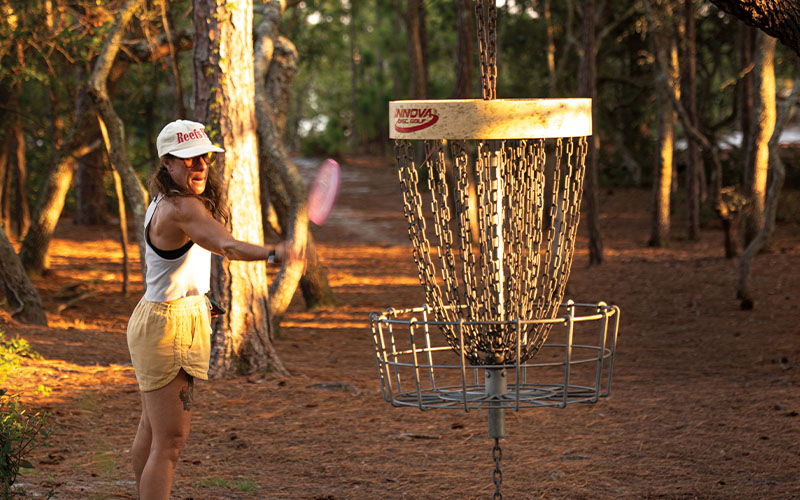
Moore, a 2019 graduate of Cape Fear Academy, is a junior midfielder for the UNC women’s soccer team, which, with 21 national championships to its name, is a perennial power. In a field crowded with national talent, it can take relentless work and a winning attitude for individuals to stand out.
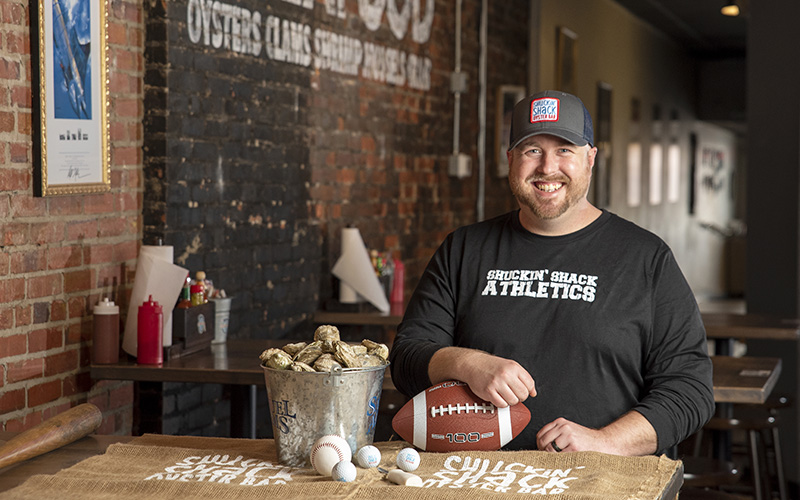
After finding a bushel’s worth of success at home, Shuckin’ Shack is expanding nationwide, competing in a crowded field of big-name seafood restaurants. Co-founders Matt Piccinin and Sean Cook and CEO Jonathan Weathington say they are determined to make Shuckin’ Shack stand out from what they call expensive, white-tablecloth seafood restaurants as well as greasy fast-food joints.
Thanks to recent rule changes in college sports, Moore and Shuckin’ Shack now are on the same team.
After years of enforcing strict regulations, the NCAA (the main governing body of college sports) last year removed its prohibition on student-athletes receiving monetary benefits. The change means athletes now can benefit from deals such as corporate sponsorships.
It’s a new game that Shuckin’ Shack, which was established in 2007 at Carolina Beach, wants to play. Moore and eight other athletes are on Shuckin’ Shack’s team of ambassadors – or “Shackletes,” as they are called. The duties are light – occasional social media posts and an annual appearance at a restaurant grand opening or anniversary.
In turn, Shuckin’ Shack helps cover the students’ expenses, from textbooks to a portion of their housing costs, according to Darren Keeler, the company’s vice president of marketing and creative. The chain has teamed with Icon Source, a firm that specializes in marketing based on athletic endorsements.
With sponsorship opportunities now on the table, the big-name athletes have been gobbled up by big-name corporations. But Keeler said that strategy wouldn’t fit well with Shuckin’ Shack, which, at least for now, is a small fish in a big pond.
Instead of trying to hook the big ones, the 16-store chain has gone after “hard-working [role] players who span a wide range of collegiate sports,” Keeler said.
“Obviously, we want college athletes to promote our brand the way we want them to,” Keeler added. “We don’t want to control how they promote us, but we want them to have the same kind of lifestyle, the same hobbies that we share, the same character that we are as a brand.”
For Keeler, that involved taking a scroll through the Instagram pages of potential athletes.
“I could immediately tell who they are,” he said.
Staying faithful to the restaurant’s homegrown roots, the first round of athletes is from areas near Shuckin’ Shack locations.
Keeler said sponsoring college athletes also is a good avenue to promote Shuckin’ Shack’s brand to a demographic that can be overlooked by some chains: the 19- to 23-year-olds.
“Their families are on board, their friends on campus are on board and we get to hit a group that we normally don’t hit,” he said.
In addition to Moore, Shuckin’ Shack’s lineup of athletes so far includes both in-state players, such as Aliyah Milicia with Western Carolina University women’s soccer, and student-athletes from around the country, including Bryson DeBerry with University of Texas at Arlington track and field.
Milicia, from Greenville, South Carolina, worked at Shuckin’ Shack during high school.
“They are providing an opportunity that includes all athletes, not just the ‘high revenue’ athletes involved in sports such as football and basketball,” she said. “They are ensuring that every athlete is noticed and valued.”
Shuckin’ Shack is not the only Wilmington-based business embracing the new opportunity. Wells and Kelly Struble and Rocco Quaranto, a trio of University of North Carolina Wilmington graduates who started Tama Tea here in 2015, see their healthy alternative to caffeinated energy drinks and sodas as a good fit with college athletes. Wells Struble and Quaranto ran track for UNCW and are directing sponsorships to fellow Seahawks.
All UNCW student-athletes are eligible for the endorsements, which come with $50 and free Tama Tea products and swag. Wells Struble said Tama Tea’s sponsorship benefits are small, but the company – which has locations nationwide – is excited to be part of a new marketing opportunity. If other local businesses step up with even modest sponsorship deals, the benefits would add up for the student-athletes, he said.
Keeler, who describes the agreements as an untapped resource for companies, believes Shuckin’ Shack and its roster of athlete ambassadors have a lot in common.
“As they grow as athletes, we are growing as a brand,” he said. “We’re trying to figure out different ways to move forward and stand out as a seafood franchise that’s about to go nationwide.”