The market has a way of making even seasoned investors feel uncertain. Prices drop sharply, headlines grow alarming, and the instinct to do something to protect what you’ve built becomes almost irresistible. It’s a deeply human response. It’s also, historically, one of the more expensive ones.
Volatility is not a malfunction of the market. It is a feature of it. Understanding that distinction, and having a framework for how to respond, is one of the separators between investors who can build lasting wealth and those who inadvertently work against themselves.
Here is what market history and behavioral finance show: often the investors who fare best are not the ones who navigate volatility most cleverly. They’re the ones who don’t let it change their behavior.
Volatility Is the Price of Admission
Many meaningful financial returns in market history have come packaged with volatility. The two are inseparable. An asset class smooth enough to never cause discomfort is an asset class unlikely to produce growth that outpaces inflation over time.
Volatility is not an anomaly, it is the expected rhythm of a market that, over time, has generally compounded the wealth of long-term participants.
Knowing this doesn’t make drawdowns comfortable. But it can change how you interpret them from signals of something going wrong to confirmation that you are participating in a system that works.
The Risk Is Often Behavioral, Not Market-Based
Research from Dalbar, which has tracked investor returns against market returns for decades, has found that the average investor underperforms the same market benchmarks they invest in. The reason usually isn’t fees or bad fund selection. It’s often timing. Selling during downturns and reinvesting after recoveries, repeatedly, at the wrong moments.
This behavior is not irrational. It is the output of emotional responses to financial stress. The problem is that acting on those emotions, even with the best intentions, can mean selling low and buying high. One of the most valuable things a financial advisor does during periods of volatility is not provide analysis. It is to provide a pause between an emotional impulse and an irreversible action.
What ‘Staying the Course’ Actually Means
Staying the course is not the same as doing nothing. It means maintaining the investment strategy you built for conditions exactly like these. A strategy designed with the expectation that markets would periodically drop.
The right response to volatility depends entirely on the structure of your financial plan, which is why having one, matters so much.
For business owners with concentrated positions, significant liquidity events on the horizon, or income tied closely to market conditions, this distinction is particularly important. The volatility that is merely uncomfortable for a salaried employee can be consequential for someone whose business value, compensation, and investment portfolio are all moving in the same direction at once.
Questions Worth Asking Right Now
If current market conditions have prompted anxiety, that feeling is information. Specifically, it may be telling you one of the following:
Your risk tolerance and your risk exposure are misaligned. A portfolio that causes genuine distress during normal volatility may be a portfolio calibrated incorrectly for the person holding it.
Your liquidity cushion may be thin. If a market decline creates cash flow concerns, the issue likely isn’t the market. It may be the proportion of liquid reserves relative to short-term needs.
Your plan may need refreshing. If you haven’t reviewed your investment strategy, timeline, or goals in the past year, now is an excellent time. Plans built for a prior version of your life may not serve the current one.
Five Principles for Volatile Markets
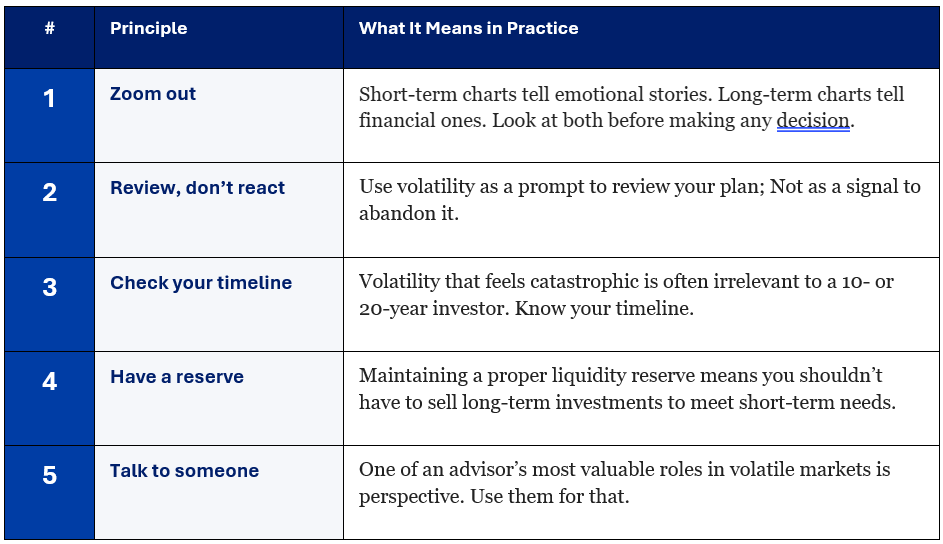
Markets will continue to be volatile. What is not certain is how any individual investor will respond when it happens. The work of good financial planning is building the structure, the strategy, and the perspective to make the right response feel less like discipline and more like clarity.
The Cypress Group works with business owners, executives, and families across the greater Wilmington area. If recent market conditions have prompted questions about your strategy or if you simply haven’t reviewed your plan in a while, we’d welcome the opportunity to help you plan well, invest wisely and live fully.
About The Cypress Group
The Cypress Group of RBC Wealth Management is a wealth management team located in Wilmington, NC, helping families, professionals, and business owners plan, invest, and live with confidence.
910-509-0832 www.cypressgrouprbc.com [email protected]
Investment and insurance products offered through RBC Wealth Management are not insured by the FDIC or any other federal government agency, are not deposits or other obligations of, or guaranteed by, a bank or any bank affiliate, and are subject to investment risks, including possible loss of the principal amount invested.
Past performance is no guarantee of future results.
© 2026 RBC Wealth Management, a division of RBC Capital Markets, LLC, registered investment adviser and Member NYSE/FINRA/SIPC. All rights reserved.

In Lawsuit, Luxury Homebuilder Accuses Defendants Of Defamation
Cece Nunn
-
Jun 5, 2026
|
|
Endowment Appoints New Community Advisory Council Members
Staff Reports
-
Jun 3, 2026
|
|
From A Grocery Store To Convention Center Growth, Officials Talk Downtown Priorities
Emma Dill
-
Jun 3, 2026
|
|
Endowment Fields Questions On School Bond, Food Co-op Funding At Public Meeting
Cierra Noffke
-
Jun 4, 2026
|
|
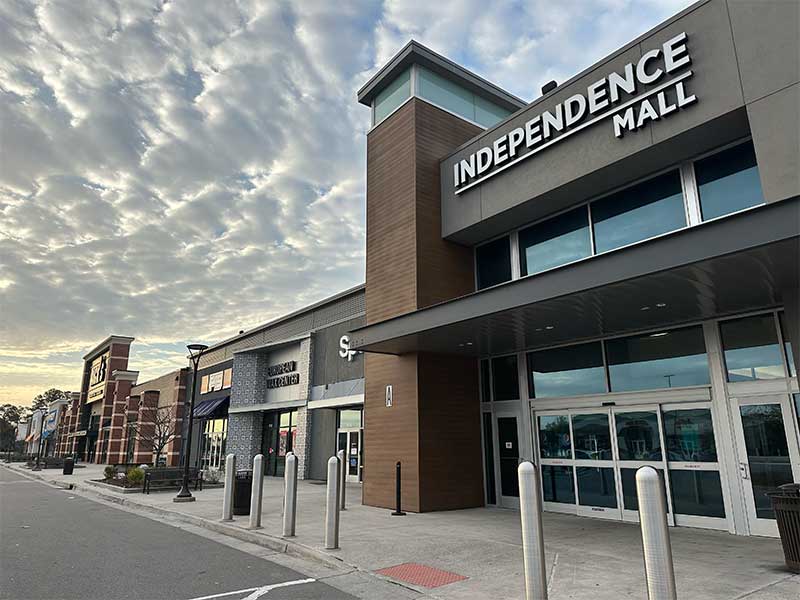
Amid Recent Sales, Independence Mall Owner Talks Real Estate Strategy
Emma Dill
-
Jun 4, 2026
|
|

In a few years’ time, the company's founder hopes to create a digital catalog of biomolecular data – categorized and analyzed with extensive...

The company has more than 80 clients, consisting of local businesses and large national brands, primarily in the home services, healthcare,...

Brunswick County businesses offer a variety of activities for those seeking some adventure....
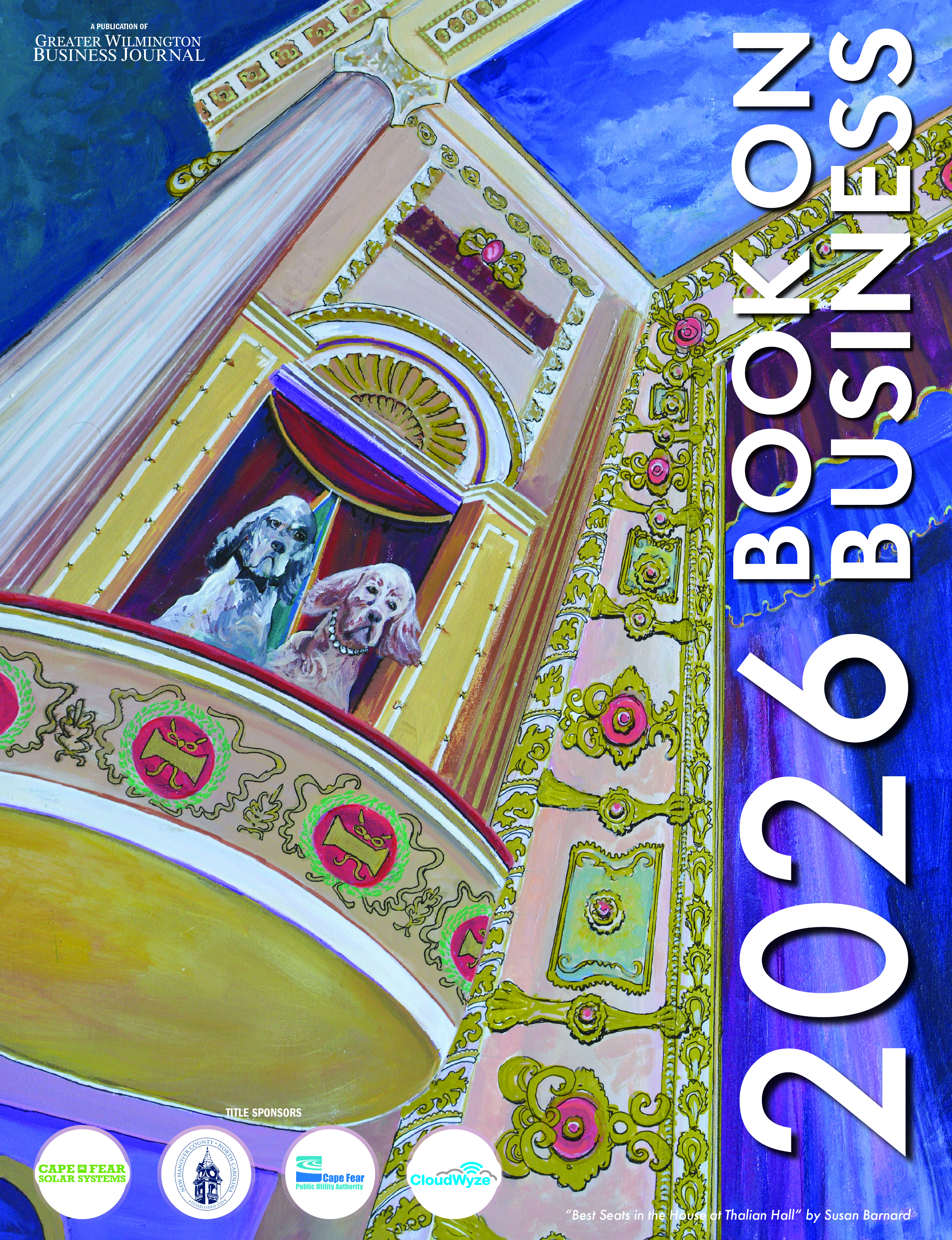
The 2026 WilmingtonBiz: Book on Business is an annual publication showcasing the Wilmington region as a center of business.