Warren Buffett once said, “Interest rates are to asset prices like gravity is to the apple. They power everything in the economic universe.”
That’s a pretty simple way to describe something that can get complicated quickly.
When interest rates rise, stocks face pressure from several directions. Investors are forced to consider whether their stocks are overvalued much like people are forced to consider whether they are overweight after they step on a scale Bonds become more attractive because investors can earn more income with relatively less risk. At the same time, higher rates reduce the present value of the future cash flows that companies are expected to generate. In other words, the higher the discount rate, the less those future dollars are worth today.
Higher rates also make borrowing more expensive for companies. That can squeeze profit margins, particularly for highly leveraged businesses, and potentially slow economic growth.
So, rising rates can create something of a triple whammy for stocks: more attractive bond yields, lower valuations and higher borrowing costs.
That’s why we think investors should take a fresh look at their portfolios.
I’ll be discussing these ideas in more detail at an event Nov. 4 at Cape Fear Country Club. We’ll cover interest rates, stock valuations, the AI investment boom, and what all of this can mean for your portfolio. Meade Van Pelt, the executive director of the Harrelson Center, will also be speaking at the event about the Harrelson Center and current efforts by Wilmington's nonprofit organizations to serve the community.
Attractive Bond Yields
One way we evaluate the effect of rising rates is the comparison of bond yields with the earnings yield on stocks. The S&P 500’s trailing price-to-earnings ratio is currently around 27.5 times, which translates to an earnings yield of about 3.83%. Compared with a 4.82% ten-year Treasury yield, that’s a significant gap and historically high according to Gillian Tett of the Financial Times.
For us, this is a good reminder to take a closer look at valuations and, perhaps even more importantly, the quality of the companies we own.
Stock Valuations Remain High
At the same time, recent earnings growth may be giving investors a false sense of security about stock valuations.
Much of the extraordinary earnings growth we’re seeing is concentrated among companies benefiting from the enormous investment in artificial intelligence, according to Tajillon Dhillon, head of earnings research at LSEG. Companies outside that AI-related group have seen earnings growth much closer to historical norms.
The AI boom may ultimately prove to be well-justified. But I’d caution investors about assuming today’s unusually high earnings growth rates will continue indefinitely.
Earnings growth during capital booms can be skewed upward by an accounting quirk, too. Chip manufacturers and other “picks and shovels” suppliers recognize revenue when they sell their products, while the companies building data centers capitalize those costs and depreciate them over several years.
If AI investment continues at its current pace, that distinction may not matter much. But if the buildout eventually slows, the earnings effect could reverse: suppliers could see revenues decline while data-center operators continue carrying significant depreciation expenses.
Higher Borrowing Costs
The ten-year Treasury yield recently exceeded 5%, and borrowing costs have risen significantly for weaker companies. Companies that took on substantial debt when interest rates were near zero simply weren’t built for an environment where higher rates persist for a long time.
Refinancing that debt becomes considerably more expensive, increasing the risk that financial stress eventually shows up somewhere in the economy or bond market.
Federal Deficit
Then there’s the federal deficit.
The current deficit is roughly 6% of GDP, and we don’t see much evidence of meaningful progress in addressing the government's long-term debt burden. That means the economy needs to grow by 6%, a tall order, or the country's ability to service its debt deteriorates. If economic growth weakens while government spending and debt issuance remain elevated, that could put additional pressure on interest rates.
Ultimately, the question we’re asking isn’t simply, “Will rates go up or down?”
Instead: What happens to your portfolio if higher rates are here for longer than expected, and how should you protect against that?
That’s the conversation we’ll continue at our Nov. 4 event at 5:30 p.m. I hope you’ll join us at
Cape Fear Country Club as we take a closer look at what higher interest rates could mean for markets and your portfolio. If you’d like to attend, please contact South Atlantic Capital at info@SouthAtlanticCap.com.
Meade Van Pelt, who is at the helm of the Harrelson Center’s downtown campus, will speak at the event. The Harrelson Center’s downtown campus is home to 40 humanitarian organizations that tackle basic needs – housing stability, healthcare access, family support, food security, youth development, and crisis response. By providing shared services, affordable space and strategic support, the Harrelson Center saves its nonprofit partners more than $1 million every year, which can be used to support the community. Meade and the Harrelson Center are a unique resource with their hands on the pulse of our nonprofit community.
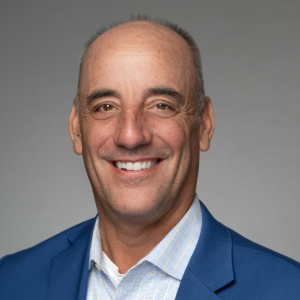
Eddie Nowell, with 30+ years in finance, founded South Atlantic Capital after roles at Bankers Trust (NY), where he arranged bank financing for Kohlberg, Kravis, Roberts & Co. buyouts.
Since founding South Atlantic in 1991, he has been the sole portfolio manager of our Core Equity Composite, which has outperformed the S&P 500 since its inception on January 1, 1992. Mr. Nowell graduated with a B. S. in economics from the University of North Carolina at Chapel Hill and received his MBA from the Darden School of Business at the University of Virginia.
Disclosures
References to investment performance, outperformance, downside protection, or portfolio results are based on historical information and do not guarantee future results. Past performance is not indicative of future results. All investing involves risk, including possible loss of principal. If performance analytics will be referenced, consider linking the statement to a separate compliant performance presentation that contains all required net performance information and disclosures.
There is no guarantee that the strategy will provide downside protection or achieve its investment objectives in future market environments.
Performance comparisons are based on historical results and are available upon request. Investors should not assume that future performance will be comparable.
This material is provided for informational and educational purposes only and does not constitute investment advice, a recommendation, or an offer to buy or sell any security. Any opinions expressed are current as of the date of publication and are subject to change without notice. Past performance does not guarantee future results. Investing involves risk, including the possible loss of principal. Readers should consult with their financial adviser regarding their individual circumstances.



In a tumultuous federal and state funding environment, nonprofits are feeling the pinch and the looming uncertainty of policy changes, offic...

Dan Brawley, head of the Cucalorus Film Festival and founder of Jengo’s Playhouse, recently discussed the venue’s year-round efforts and thi...

John Thomason used the loan he received from the fund, which now provides up to $15,000 for high-demand workforce training, to help cover mo...

The 2026 WilmingtonBiz: Book on Business is an annual publication showcasing the Wilmington region as a center of business.