We’re getting into the stretch of the year where warmer weather becomes the norm. Late spring starts to feel a lot more like early summer.
Most people who know me know I’m good with that. I like sunny, warm – dare I even say hot – weather.
There will be plenty of good days ahead. But in coastal North Carolina, this is also when weather risk starts to pick up.
The first week of May is National Hurricane Preparedness Week. It’s a good reminder that what you do now – before a storm – is what makes the difference when one shows up.
And it’s not just hurricanes. The reality is, emergencies come in a lot of forms, and they’re not always predictable. That’s why the work of our Emergency Management team matters so much.
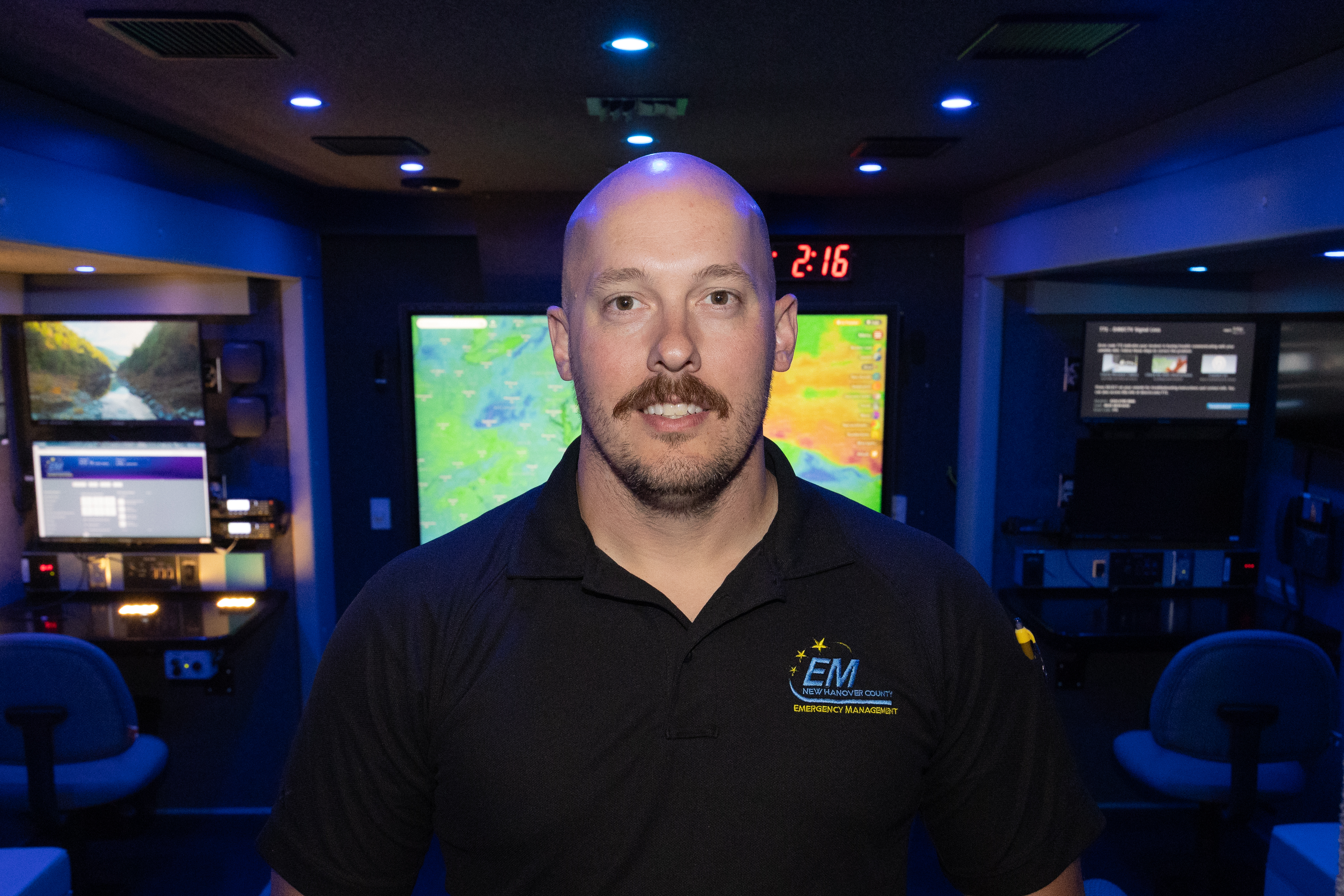
In New Hanover County, Jason Fuller helps lead that effort. His work is focused on an all-hazards approach – making sure we’re prepared across the board, working with local, regional, state, and federal partners, and helping people understand what they need to do to be ready.
For this month’s Public Service Profile, I sat down with Jason to talk about how we prepare, what matters most, and what people should be thinking about to keep themselves and their families safe. That conversation is below …
Jason, adding in your time here at New Hanover County, I know you’ve been involved in responding to emergencies at various levels throughout your career. Walk me through where your passion for this work comes from and some of the opportunities you’ve had to serve the public along the way.
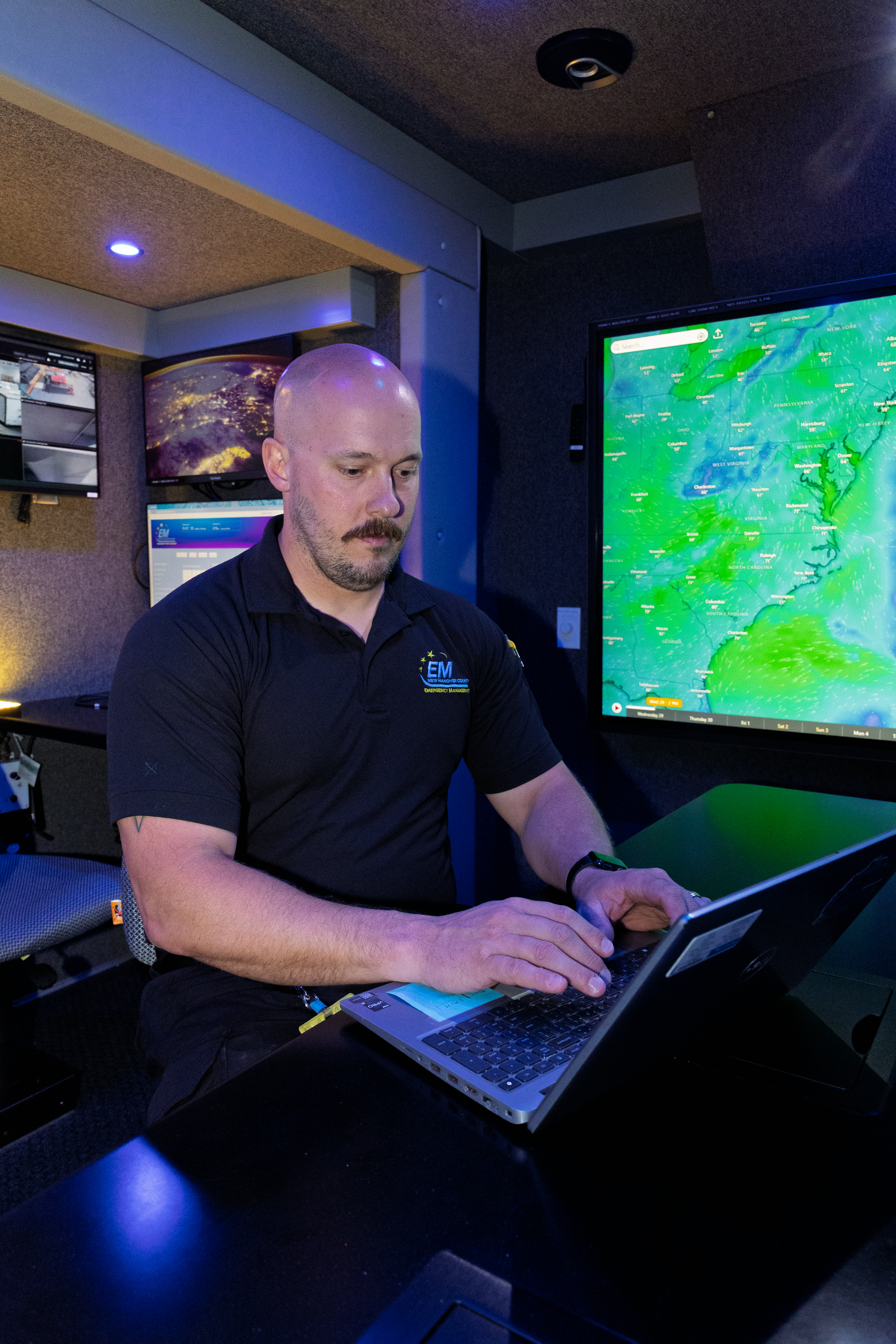 Early in my career, I was drawn to roles where the stakes were high and the impact was immediate. As a paramedic locally and throughout the region, I was able to experience what it is like to help someone directly in their time of need. I expanded my knowledge and experience to include advanced fire and rescue classes, ultimately serving as a Battalion Chief for Leland Fire before transitioning to work for a national consulting firm. I came to realize that it was important to me that I use my skills to help my community, and I’m grateful that New Hanover County gave me that opportunity.
I’ve had the opportunity to work across a variety of situations, from localized incidents, like the recent refurbishment of the Cape Fear Memorial Bridge, to large-scale, complex events like major hurricanes. What keeps me engaged is the ability to help communities before, during, and after disasters. It’s not just about how we respond to events – it’s about preparedness, coordination, and recovery.
I’ve been fortunate to work alongside strong partners at various public safety agencies, nonprofits, and community organizations. Working with those groups has strengthened my understanding of planning, response coordination, and resilience efforts across the whole community we serve. My passion for emergency management really comes from a combination of service and high-level problem-solving in scenarios where failure isn’t an option.
Our community is no stranger to hurricanes and the lingering impacts those storms can have. But there’s also a nearby nuclear plant at the southern tip of the county, one of the biggest ports on the East Coast, two major colleges, large concert venues, and so much more in the county. As someone who plays a key role in our Emergency Management department, how do you focus your efforts to be ready should a major event to occur in our community?
New Hanover County presents a very complex risk environment. You’ve got coastal hazards like hurricanes, but also technological and human-caused risks tied to critical infrastructure. Preparing for that kind of risk profile requires a very deliberate and layered approach. We rely heavily on frameworks from agencies like FEMA to guide how we assess and prioritize risk. That starts with identifying threats through established processes like hazard and capability assessments, and then aligning our planning, training, and exercises to those risks.
A big part of my role is ensuring coordination among our external partners so that we are all aligned before an incident ever happens. That includes public safety, private sector stakeholders, and even institutions like UNCW and the hospital. We focus heavily on exercising our plans ahead of time. The goal is to build a system that is flexible and scalable, so no matter what happens, we’re not starting from scratch. We always want to make sure that we have somewhere to start with a coordinated, practiced approach.
May 3-9 is Hurricane Preparedness Week, with the Atlantic season officially getting underway on June 1. Some of our residents have experienced several hurricanes throughout the years. For others, this might be their first time living in a coastal community. No matter the previous experience level, what’s the message to everyone in our region as we look ahead to the 2026 season?
As we look ahead to the 2026 hurricane season, the message is straightforward: preparedness is personal, and it needs to start happening now versus waiting until a storm is already on the way. Whether you’ve lived here your whole life or you’re new to the coast, every storm is different. Experience can be helpful, but it can also create a false sense of security or even convince us to prepare for certain threats (like flooding) while being under-prepared for other dangers (such as trees being knocked down). Regardless of how “busy” a season is predicted to be, the reality is it only takes one storm to change everything.
We encourage everyone to take a few key steps:
• Know your risks: Understand when it will be appropriate to evacuate.
• Have a plan: For your family, your pets, and your communication.
• Build a kit: With enough supplies to be self-sufficient for several days.
• Stay informed: Use trusted sources and follow guidance from local officials.
Remember that preparedness isn’t just an individual responsibility; it is a community effort and responsibility. The more prepared our residents are, the stronger our entire community is when a storm impacts our area and the faster we will be able to see a return to our normal.
I’m grateful to have people like Jason leading efforts in emergency preparedness. Focusing on being ready for what could happen is incredibly important, even as it can be difficult to fathom.
Ahead of the 2026 hurricane season, I’d encourage everyone to heed Jason’s advice and make plans for yourself, your loved ones and your property. Visit ReadyNHC.com to sign up for the county’s emergency alerting system and learn what you can do today ahead of a potential disaster.



In a tumultuous federal and state funding environment, nonprofits are feeling the pinch and the looming uncertainty of policy changes, offic...

Glass, specifically optical fiber, has become integral to the expansion of the internet and AI infrastructure. And Corning Inc., a leading g...

"We love Wilmington and the live music scene here, and we wanted a way to be a part of the music community without having to start work at 9...

The 2026 WilmingtonBiz: Book on Business is an annual publication showcasing the Wilmington region as a center of business.